The mistletoe bough and New Year’s Eve

Some of the trees in Trendlewood Park play host to mistletoe, an ancient plant with mythological powers. Mistletoe is easiest to see in winter. when the trees have given up their leaves.

When older trees stand bare against the low sky, mistletoe hangs in their branches like dark thoughts. From the ground it looks an accident: round, self-contained worlds lodged high in the branches like lost balloons. Neither leafless nor quite at home.

Mistletoe growing on a tree in Trendlewood Park.
Mistletoe growing on a tree in Trendlewood Park. [Photograph: Neil Ingram]

In fact, evolution has shaped mistletoe into a highly effective machine for stealing space and water from mature trees. Firstly, there are separate male and female plants, each bearing flowers that produce pollen and fruits, respectively.

Female flowers of mistletoe. [Photograph: Neil Ingram]

These are the female flowers, with their orange stigmas that catch pollen carried by late winter insects in February–March. These early insects are attracted by scent rather than colour. As a reward, the insects receive precious food, at a time when few other nectar foods are available. The seed is held inside a white translucent globe, that is the fruit.

White mistletoe berries. [Photograph: Schnobby, under the Creative Commons Attribution-Share Alike 3.0 Unported license. https://commons.wikimedia.org/wiki/File:Mistletoe_with_berries.jpg]

The seed inside is wrapped in viscin, a gluey substance that stretches into threads when pulled apart. Mistle thrushes, blackcaps, and other winter birds gorge on the pearly berries when little else is available.

Birds wipe the sticky remains from their bills onto a branch, or pass the seed whole, leaving it stuck to the bark like a stain. There it waits, fixed fast against rain and frost, until spring warmth draws it into life. Germination begins not with invasion but with patience.

Mistletoe does not grow on a tree so much as into it. Its seeds, carried there by birds, germinate where they land and push a root-like structure—called a haustorium—through the bark and into the living wood. 

Mistletoe growing into a rowan branch. [Photograph: Neil Ingram]

From there it draws water and mineral salts from its host, tapping the tree’s transport system while still making its own sugars by photosynthesis. It is a hemiparasite: dependent, but not helpless; taking, but also growing greenly on its own account. The host tree bears the cost quietly, ring by ring, while the mistletoe thickens above, each year adding another fork to its slow, spherical architecture.

Gradually, over decades, the tree weakens and will eventually fail, as it plays host to more and more uninvited guests.
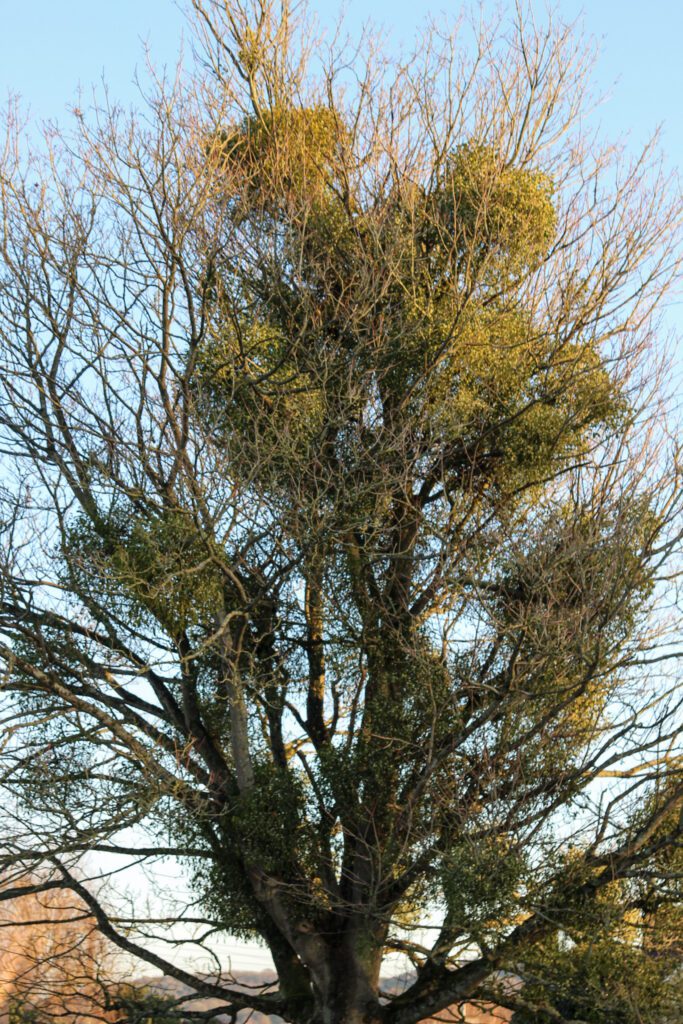
A protected Norway Maple tree, heavy with mistletoe. [Photograph: Neil Ingram]

Despite this quiet parasitism, mistletoe gives generously to the wood. Its evergreen leaves offer shelter in winter; its flowers feed early insects; its berries are a crucial cold-season resource for birds. In Trendlewood Park, the thrush that guards a mistletoe clump does so fiercely, chasing off rivals with sharp calls and sudden wingbeats. The plant becomes a defended territory, a winter larder, a node of life when the rest of the canopy is stripped to essentials.

Long before botanists described haustoria and hemiparasites, mistletoe had already rooted itself in British imagination. To the Druids, it was a plant apart, especially when found on oak, rare and therefore potent. Pliny the Elder described how it was cut with a golden sickle and caught in a white cloth so that it never touched the ground, as if earth itself might dilute its power. It was associated with fertility, protection, and the suspension of ordinary rules—a plant that belonged neither fully to sky nor soil, growing between worlds.

Druids cutting mistletoe with a golden scythe in the style of a medieval woodcut.

That sense of being between has never quite left it. Mistletoe grows easily upon apple trees, and in orchards it has a magical significance. Cut on New Year’s Eve and hung in houses, it provides protections against witches and goblins. The old branch, taken down on New Year’s Eve must be burnt.

Hung in gloomy houses at bleak midwinter, mistletoe became a licence for closeness, an excuse for kissing when the year is at its darkest. The custom is gentler than the old rituals but carries the same implication: that life persists, that green things endure, that intimacy and renewal are possible even now.

In Nowhere Wood, when the light is low and the paths are slick with fallen leaves, the mistletoe bough watches from above, evergreen and unapologetic. It lives by taking, but also by giving—food, shelter, stories. It reminds the trees, and those who walk beneath them, that survival is always a matter of connection, and that even the strangest relationships can bind a landscape together.

Happy New Year from Nowhere Wood.

  1. Summarise how the mistletoe plant makes seeds and how these seeds are spread to new trees

Notes on the story

The Apple Tree Man of Nowhere

Apples and the New Year

The shortest day in Nowhere Wood

On the shortest day, 21st December 2025, under heavy skies, the light arrived reluctantly, like a visitor creeping late into a church service, hoping to be unnoticed. It arrived in Nowhere Wood as a diffused light, fading the dark into a gloomy, dignified grey.

The leaf litter lay sodden and heavy, mud tugging at every step with a damp, muffled pull, as though the wood itself were slowing its thoughts.

Nothing much happened, which was precisely the point. 

Robins rehearsed their winter song from the holly trees, thinner than summer, but more earnest. Magpies bustled about, dodging the raven.

Robin, in Nowhere Wood
Robin, in Nowhere Wood. [Photograph: Neil Ingram]

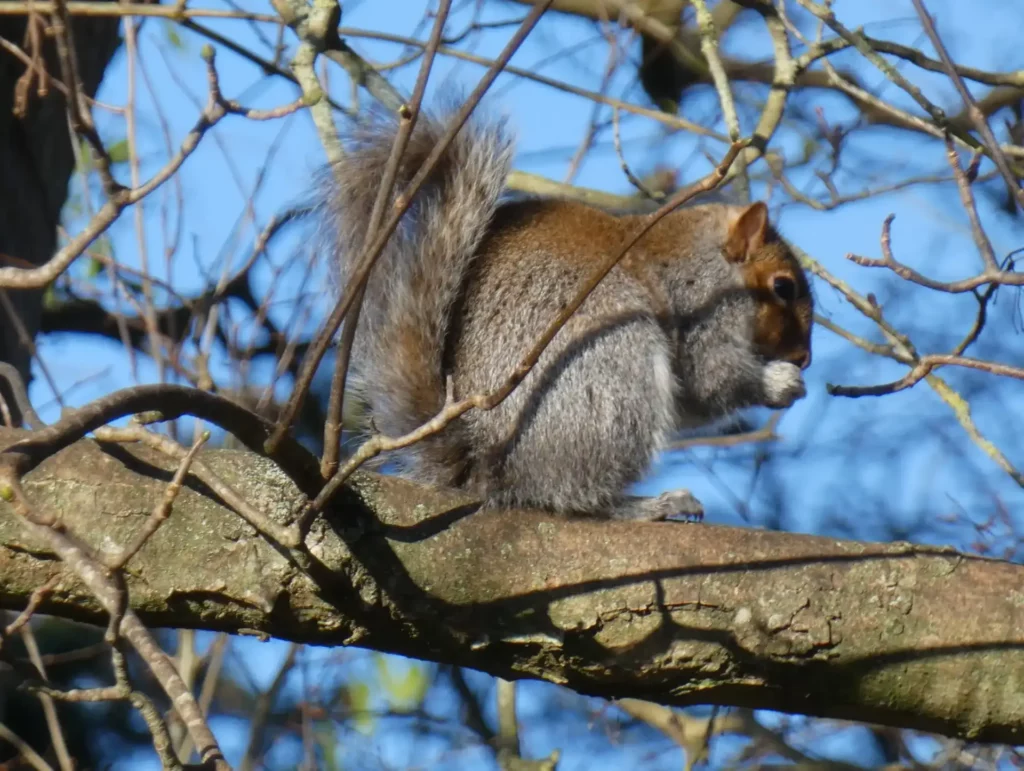
Somewhere deeper in, a squirrel sat high in a tree, eating an acorn. 

A grey squirrel in Nowhere Wood. [Photograph: Andrew Town]

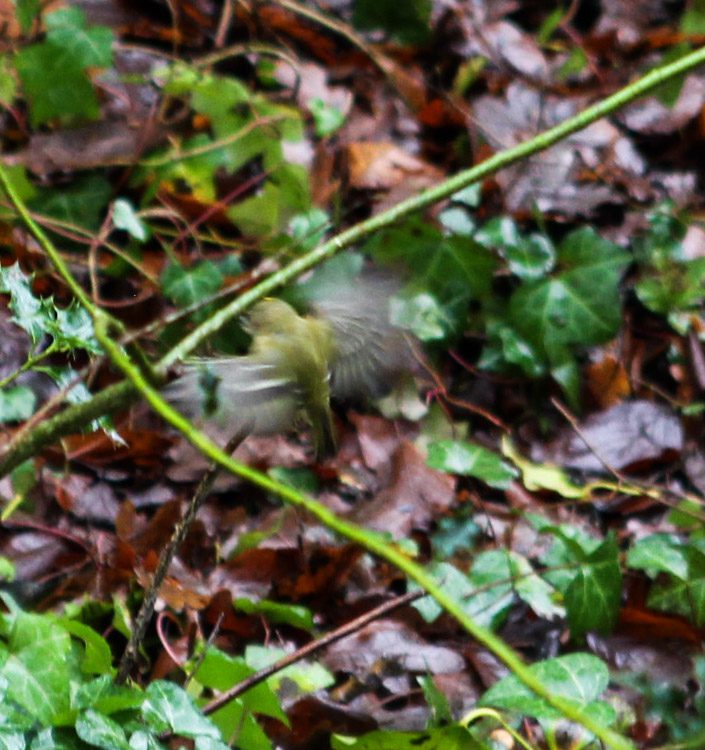
A greenfinch launches an aerial parade, searching up and down for seeds and insects, pecking at the branches of the holly.

A greenfinch in Nowhere Wood on the shortest day. [Photograph: Neil Ingram]

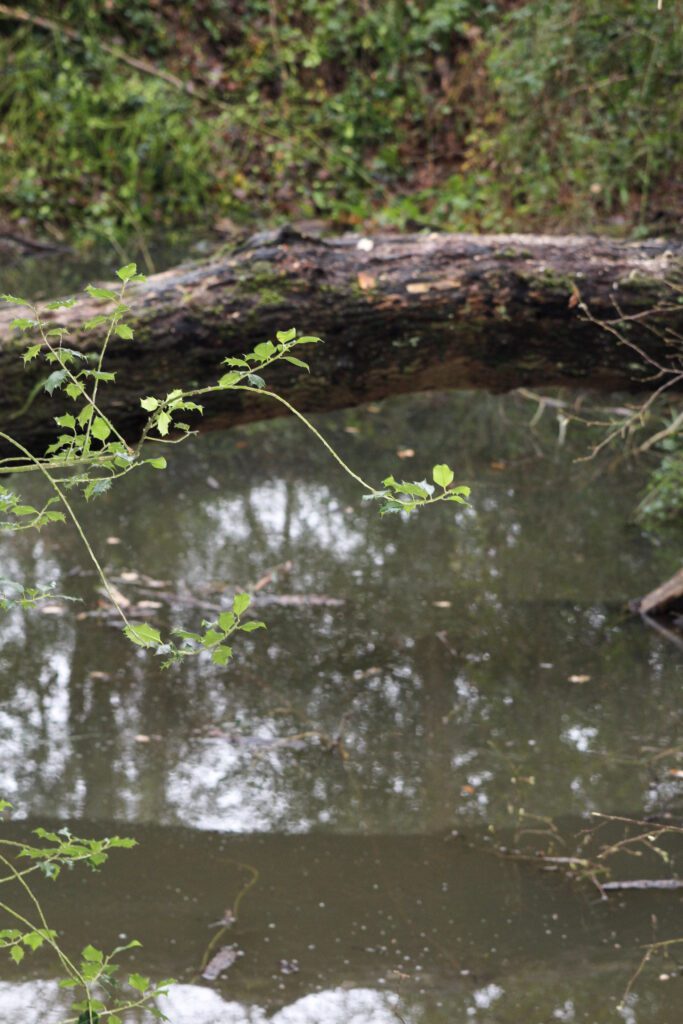
The wood pond lay full to its edges, deep and cloudy, reflecting the grey sky hiding the sun. It is giving little warmth today. There is no wind to disturb the dark surface water, either.

By mid-afternoon the day was already tired. Shadows thickened around the trunks, joining up like old friends. This was the hour when the wood seemed to draw inward, not asleep, not awake, but attentive. If you stood still long enough, you might feel it: a collective pause, the held breath of roots and stones and sleeping insects. The turning point is always quiet. Nothing announces it. There is no drum roll when the year changes its mind.

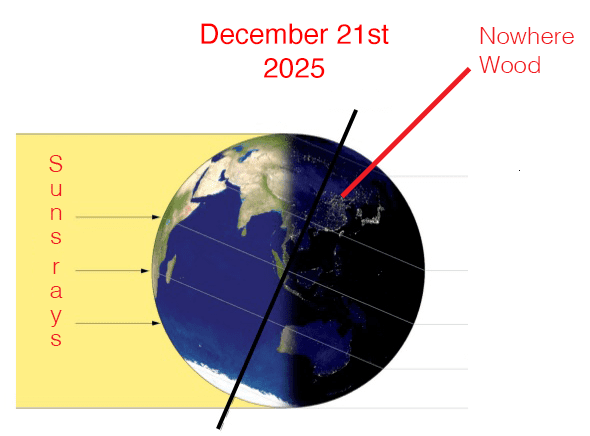
At 3.03 pm, though no one checked a watch, Nowhere Wood reached its farthest point from the sun. This is the winter solstice.

The sun reached its weakest moment and fell below the surface.  It has stopped retreating. The orbit of the Earth round the sun will slowly draw Nowhere Wood closer to the sun. That is enough, for today. Somewhere beneath the cloudy skies, the trees receive the signal of change and keep it to themselves. Spring is coming!

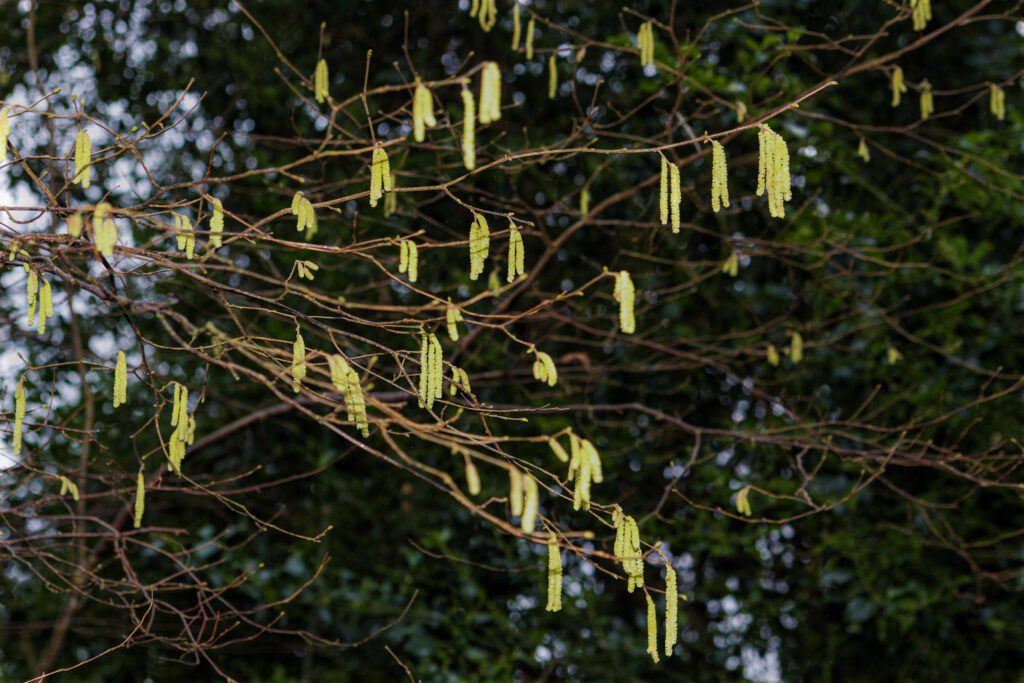
Day length is not the only cue they use, and the warm wet winter has already drawn hazel catkins and alder into flower.

Hazel catkins in Nowhere Wood on the shortest day. [Photograph: Neil Ingram]

Darkness came early and properly, as it should on such a day. Yet it was not an ending. Lights were lit in the houses beyond the wood. Foxes and badgers began their evening patrols. The slivery moon lifted, pale and weak, took over the night.

In Nowhere Wood, the shortest day passed almost unnoticed, which is how the most important things usually happen. The light had given its least—and that, quietly, is the beginning. From now onwards the days will get longer by about two minutes each day until midsummer’s day in July.

Slowly, slowly, Spring is coming. 

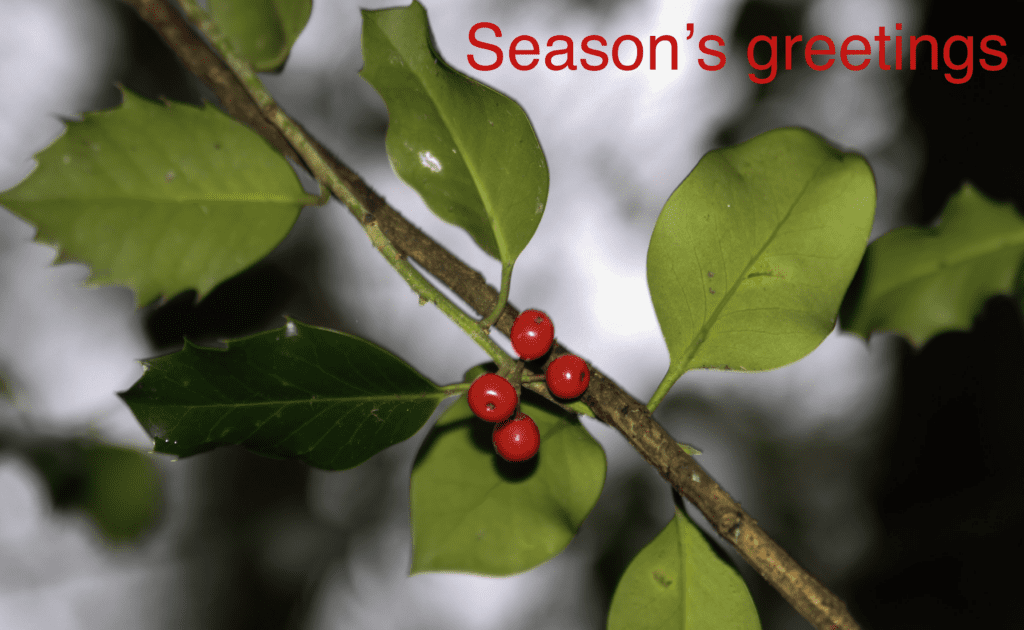
Season’s greetings from Nowhere Wood!

Notes on the story

Spring is coming!

The spring…

This is the first part of a two-part story in the sustainable park series of stories.

First comes the summer rain, after weeks of drought. Then the wet drizzly, misty days, then the powerful storm from the bay of Biscay, and gradually the water table rises from its summer low.

The ancient spring fills and moves to the surface. Two generations ago, this spring fed into a pond where cattle drank. Locals picked water cress from the edges of its clear waters. This spring feeds our ancient oak (See: I bear their homes, too) and the old crack willow.

The old crack willow and the ancient oak in Trendlewood Park. [Photograph: Neil Ingram]

We celebrate the return of the spring like an old friend, as people have done for fifty thousand years or more. Water is our life. We have always known that.

Our spring feeds into a pond that we have built to contain it. Within twenty four hours the pond is full, and life settles down next to it.

All streams and rivers, even the mightiest, start from springs in muddy fields flowing in tiny streamlets, that join together as they travel towards the sea. In the past, people chose to build their homes close to rivers because of their need for water to live and to transport goods from place to place.

Photograph: The river Avon, that flows through Bristol to the Channel, starts life as springs in a field in Acton Turville in Gloucestershire. [Photograph: Derek Harper, https://www.geograph.org.uk/photo/5225584]

People use a lot of water in their homes and businesses, and the water table falls, even in winter. The springs and streamlets can dry up, affecting the flow of rivers. Dryer winters, caused by climate change, can make this even worse.

Rivers and streams are the drainage system of the landscape. When they flow freely, they carry rainwater away from our fields, towns, and roads. Global warming is bringing heavier and more frequent downpours, especially the autumn storms. This means much more water reaches the rivers in a shorter time. If the river channels are blocked by fallen branches, silt, or rubbish, the water cannot move quickly enough. It then spills out over the banks and floods the land around it.

Winter flooding in low lying floods around Nailsea, North Somerset. Small rivers and drainage ditches run next to these fields. [Photograph: Neil Ingram]

Healthy rivers also have space to spread out safely. When wetlands and flood meadows are protected, they act like a sponge. They slow the water, hold some of it back, and release it slowly. If these areas are lost or built over, the river has nowhere to go during a storm. So the extra rainfall caused by global warming becomes a bigger danger.

Keeping rivers clear and giving them room helps both people and wildlife. It reduces the risk of homes and roads being damaged. It also keeps the water cleaner for the plants and animals that depend on it. Maintaining rivers is one of the simplest ways we can prepare for a future with heavier rain.

Some indigenous peoples live by rivers and depend upon them for their survival. They often believe that their rivers are alive in ways that are more than just the lives of all of the organisms living there. These peoples believe that their rivers have rights and should be protected by laws.

  1. What protections do you think rivers should have? Who can protect them?

Notes on the story

Being and becoming in Nowhere Wood

…. and the pond

This is the second part of a two-part story in the sustainable park series.

Every year, the flow of the spring is rather erratic. In some winters it barely registers above ground, in other years it can flood the walkways and paths around the park. To reduce the risk of flooding, the Friends of Trendlewood Park decided to build a permanent pond to hold back the water, reducing the risk of flooding and (hopefully) providing new habitats for wetland creatures.

The pond was to be built next to the old oak and ancient willow, which are listed for protection by North Somerset Council. This means that the construction of the pond needed to be sustainable – with no artificial tools (like earthmovers) or materials (like plastic liners). The pond was to be built the hard way: with lots of manual labour and (mostly) natural ingredients.

Measuring the dimensions of the pond.
Measuring the dimensions of the pond. The ancient crack willow tree is in the background. [Photograph: Simon Stannard]

First, the dimensions of the pond were determined and marked with poles and string.

Digging the foundation of the pond involves a lot of spade work!
Digging the foundation of the pond involves a lot of spade work! [Photograph Simon Stannard]

Then teams of volunteers started the heavy spade work. It took time, but the efforts started to bear fruit.

The pond takes shape.
The pond takes shape. [Photograph: Simon Stannard]

The pond is designed to be tiered into layers. This creates ledges of different depths, that different plants and animals can utilise. It diversifies the habitat and creates new opportunities for animals and plants to live in the pond.

Digging the drainage channel for the pond.
Digging the drainage channel for the pond. [Photograph: Simon Stannard]

An earthen dam has also been built to reduce the risk of the water flooding out of the area onto the path around the park. A drainage channel has been dug into a nearby gulley to take the flood water away. In a rare concession to modern technology, the pipes are plastic sewer pipes. but covered in bentonite clay. We shall see if it can withstand the heavy winter rains.

The pond in November, as it fills after the autumn rains. [Photograph: Simon Stannard]

It has taken over a year to build the pond and we know from last summer’s trial that dragonflies were seen on the dry edges of the pond.

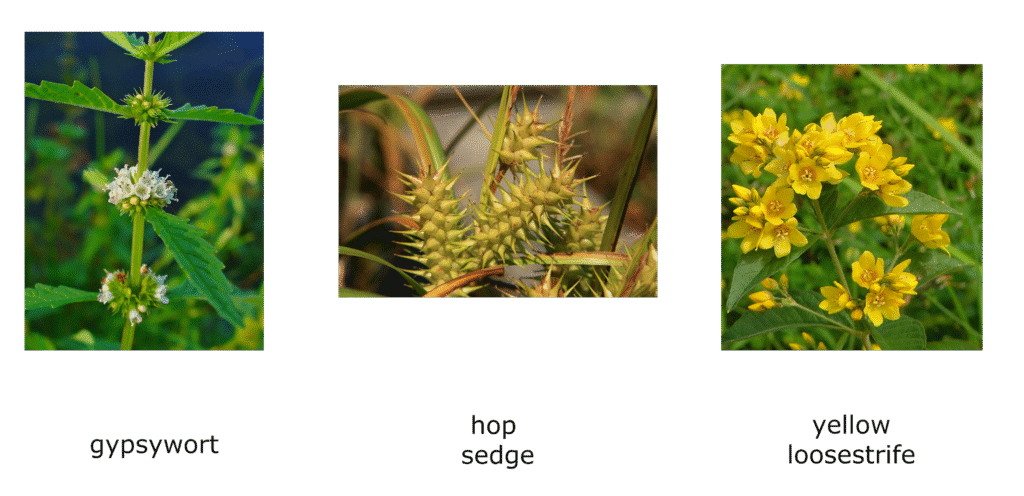
There were plant arrivals, too. ⁠Gypsywort, hop sedge and yellow loosestrife.

New arrivals at Trendlewood Park pond
New arrivals at Trendlewood Park pond. [Photographs: attributions at the end of the story]

It is unlikely that the pond will remain throughout the next year, that will depend on how dry and hot it will be, but it will be interesting finding out.

The Friends of Trendlewood Park Committee would like to thank: North Somerset Council for its permission for us to build the pond and for their ongoing support of the project and whole of Trendlewood Community Park. Nailsea Town Council for its enthusiasm and financial support for the materials needed to build the pond. Linsday Moore for her botanical expertise. Thank you to the many people who gave their time, energy and expertise to work on the project, including the Somerset Wood Recycling (the Green Team), and volunteers from the Wildlife Action Group volunteers, the Belmont Estate corporate workday volunteers and the Friends of Trendlewood Park.

Image attributions:

Yellow loosestrife, Photograph by: NaJina McEnany, under the Creative Commons Attribution-Share Alike 2.5 Generic licence, via Wikimedia Commons,.

Hop Sedge, Photograph by: Quinn Dombrowski, under the Creative Commons Attribution-Share Alike 2.0 Generic licence, via Wikimedia Commons.

‘Creating ponds are ways of increasing the biodiversity of a habitat’. What does this mean, and why is it generally thought to be a good idea?


Notes on the story

The sustainable park (1)