The end of the summer

Nowhere Wood has a weary silence, as the heat stifles its life. It is ready with its autumn plans, which cannot start until it rains. 

Rain, the life-giver. Yet in flood, rain is the also the destroyer. It is a question of balance. Is the balance changing in the wood? Is the balance changing in the world? This has been the hottest summer the wood has ever known. People across the world are saying the same things. 

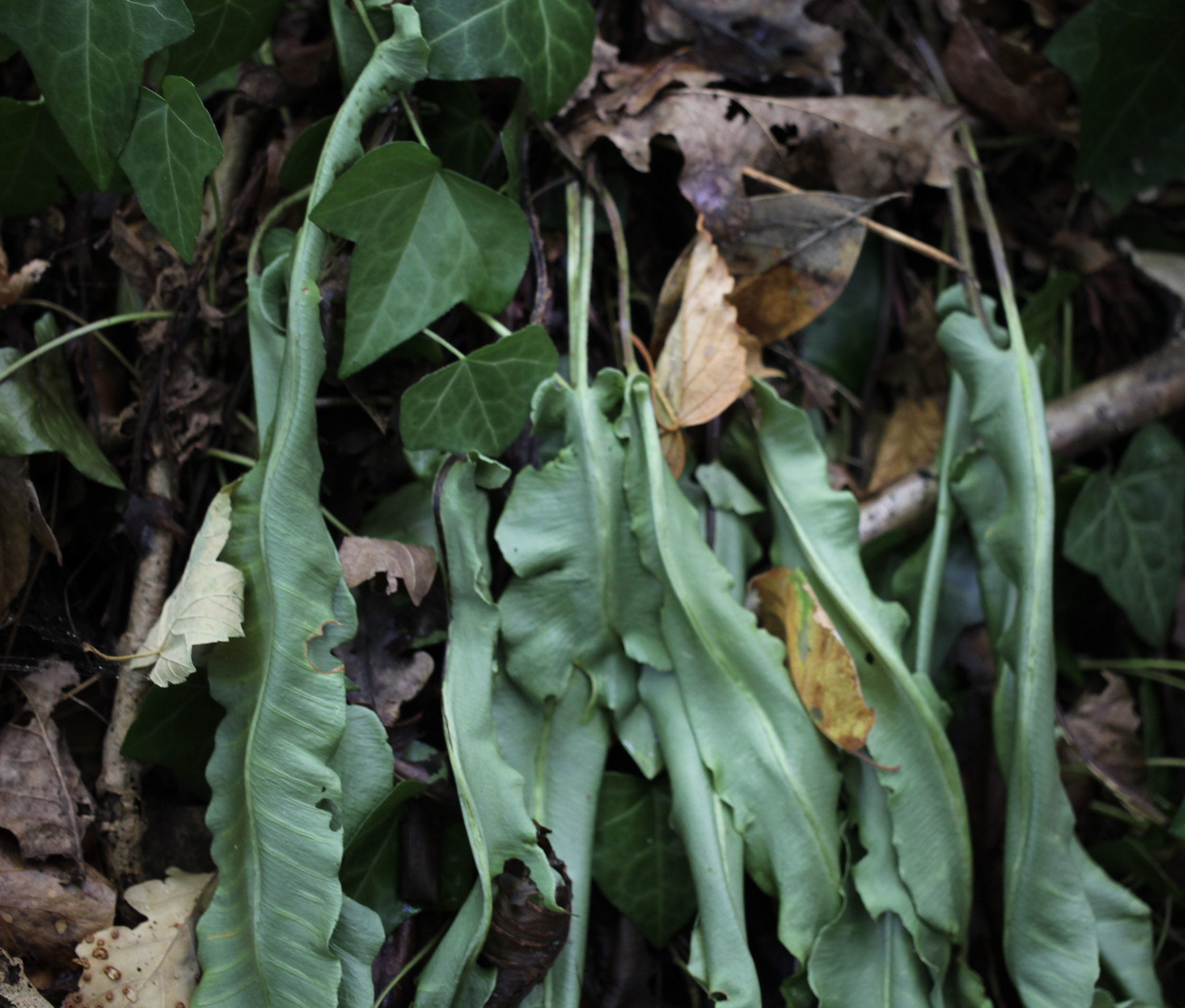
Fern leaves wilting in the summer heat in Nowhere Wood
Fern leaves wilting in the summer heat in Nowhere Wood. [Photograph: Neil Ingram]

Even the fern leaves are wilting for want of water. Holly trees have deeper roots, but they are suffering, too. The soil in the wood is very thin, because it used to be a stone quarry, and the roots cannot grow deep enough to find water.

Holly leaves wilting in the summer heat in Nowhere Wood.
Holly leaves wilting in the summer heat in Nowhere Wood. [Photograph: Neil Ingram]

Then, the remains of a hurricane in the Caribbean barrels westwards, bringing with it strong westerly winds, which blow the summer away in a moment.

The first autumn rain falls in Trendlewood Park.
The first autumn rain falls in Trendlewood Park. [Photograph: Neil Ingram]

The rain falls, gently at first, then much stronger. The smell of the wood changes as the plants take up the water and everything seems to relax.

Droplets of rain on a leaf of a snowberry plant
Droplets of rain on a leaf of a snowberry plant in Nowhere Wood. [Photograph: Neil Ingram]

Nowhere Wood is lucky. Somalia in East Africa it has not had any significant rain for two years and a quarter of the population faces “crisis-level food insecurity” (near-starvation). Yet, in 2023, October floods killed hundreds of people and washed away thousands of homes. The harvest was ruined, leading towards more famine.

It is the unpredictability of the weather that causes most concern. Farmers sow their seeds not knowing whether it will produce enough food. And that is now the same everywhere across the world, including Great Britain. Time will tell what will happen in the future. 

Meanwhile Nowhere Wood celebrates the arrival of the rain in autumn as the fruit ripens and the wood moves forward into the next stage of its adventure.

Apples ripening in the rain in the orchard in Trendlewood Park.
Apples ripening in the rain in the orchard in Trendlewood Park. [Photograph: Neil Ingram]

1. Imagine that the autumn rains did not come. What would happen to Nowhere Wood?


Notes on the story

Climate Change and the Weather


Update: 

A few days alter, after real rain, the fern has recovered and perked up. 

After a few days rain, the fern recovers.
After a few days rain, the fern recovers. [Photograph: Neil Ingram]

Days of gentle ripening

It is mid-July and it has rained for the first time in several weeks. Gentle warm rain, interspersed with strong sunshine. These are the days of gentle ripening, to complete the work that started in in the blossom season of the early spring.

The orchard in Trendlewood Park has a collection of ripening fruit trees and we hope that the Apple Tree Man of Nowhere will bless the harvest of apples, pears and plums.

Apple fruits ripening in the orchard on Trendlewood Park.
Apple fruits ripening in the orchard on Trendlewood Park. [Photograph: Neil Ingram]
Pear fruits ripening in the orchard on Trendlewood Park.
Pear fruits ripening in the orchard on Trendlewood Park. [Photograph: Neil Ingram]
Plum fruits ripening in the orchard on Trendlewood Park.
Plum fruits ripening in the orchard on Trendlewood Park. [Photograph: Neil Ingram]

  1. In the autumn, these fruits will be ripe enough for animals to eat. What happens as fruit ripen?

Update: 22/7/25


I could not resist the ripening of the Guelder Rose, Viburnum opals, but do not eat it them, else you may fall ill.

Guelder rose on Trendlewood Park
Guelder rose on Trendlewood Park. [Photograph: Neil Ingram]


Notes on the story

A spot for parks and town centres

I bear their homes, too

For Jules Acton, author of Oaklore.

The old oak tree said to the traveller passing by:

“You know me, you see me everyday. I am that oak tree that has stood here longer than any of can you remember.”

The oak tree in Trendlewood Park dominating the view
The oak tree in Trendlewood Park, viewed from the author’s study. [Photograph: Neil Ingram]

“I am on the 1840 Ordnance Survey map and I was a sturdy tree, even back then. Let’s say, I’m two hundred years old? I am still in my prime, though. I won’t be celebrated as old for another two or three hundred years. Don’t wait up for me.”

A leaf of an English oak.
A leaf of an English oak. [Photograph: Neil Ingram]

“I am a patriot, a true blue English oak: look at the ear-shaped lobes at the bottom of my leaves and the very short leaf stalks. Pedigree characteristics, those.”

Long stalks on the growing acorns of an English oak tree.
Long stalks on the growing acorns of an English oak tree. [Photograph: Neil Ingram]

“And look at the length of the stalks that hold up my acorns – the longer the better. Need I say more, I am as English as St George, cricket and cider.”

“I have never been a wildwood oak: a farmer’s tree, that’s me. My roots are deep in the clay, fed  by a spring that kept the animals safe and watered. I had space: my limbs lifted upwards to touch the sky. I’ve seen the storms lash the fields and the brambles come and go. I wear the years in my bark and the seasons in my leaves.”

The oak tree is about 200 years old
The oak tree is about 200 years old. [Photograph: Neil Ingram]

“I am a good neighbour – well after all of this time, why not? In the summer I play host to lots of welcome visitors.”

Spangle gall on an oak leaf.
Spangle gall on an oak leaf. [Photograph: Neil Ingram]

“The gall wasp comes to lay her eggs on my new leaves and I make spangle cradles to help to keep them safe.”

oak galls
oak galls. [Photograph” Neil Ingram]

“It happens again and again. Not just the spangles. Look beneath my leaves and you might find round, knobbly balls, like hard brown marbles. These are oak apples, swollen with the same curious purpose. A different gall wasp requests a grander chamber, and I oblige. Within each one lives a single larva, safe and fed by the very cells I’ve grown to protect my own buds.

Why do I do it? I don’t know. Perhaps I am too old to care. Or perhaps I understand that these wasps—these minute engineers—are part of the pattern. They do no great harm. My crown still grows. My acorns still drop. My fungi and birds and lichens still cling and sing and creep through me.

So I let them stay.

When my leaves fall, the spangles fall with them. Some young mothers emerge come spring, and they begin again—quietly weaving their lives into mine, asking nothing more than a shelter made of leaf or bark.

I am not hollowed by this. I am enriched. Insects, wind, rain, rot, and sunlight—they all shape me. I am a home, not a fortress. I bear their homes, too.

And you, traveller —if you lie on your back and look up through my summer canopy, you might see more than green. You might see a world.”

  1. Jules Acton’s book, Oaklore, Greystone books, 2024, is an essential companion piece to this story. Jules helps us to think about all of the things that the English oak tree has given us as society and individuals.

Update, 20/07/25:


A new gall has appeared on our favourite oak tree. This is a Knopper gall, caused by the gall wasp Andricus quercuscalicis. The wasp secretes chemicals that distort the growth of an acorn.  This is a rather more serious pest to the tree than the two show above, because it can reduce fertility of the tree.

Protected inside the gall is a developing larva, which will develop into a pupa and will emerge as an adult wasp in the next spring.


Notes on the story

Being and becoming in Nowhere Wood

A home for the summer

The effects of horse chestnut leaf miners, on a horse chestnut tree in Trendlewood Park
The effects of horse chestnut leaf miners, on a horse chestnut tree in Trendlewood Park, July 2025 {Photograph: Neil Ingram]

By the high summer of July, the new fresh leaves of the horse chestnut are losing their lustre. The proud spread of leaves  are now crumpled and marked—creased with dry, papery wounds edged in rust. At first glance, it looks like disease or drought. But the truth is stranger, and smaller.

These are the workings of a moth barely visible to us—Cameraria ohridella, the horse chestnut leaf miner.

The horse-chestnut leaf miner insect
The horse-chestnut leaf miner insect. [Photograph: Soebe https://commons.wikimedia.org/wiki/File:Cameraria_ohridella_8419.jpg]

The insect arrived in Britain around 1990, a quiet traveller from North Macedonia, and it has found homes wherever horse chestnuts grow. As the climate warms, insects from the southern regions are able to live successfully in more northern areas.

The female lays her eggs on the newly opened leaf, which hatch to form lavae (caterpillars).

The larva of the holly leaf miner insect
The larva of the holly leaf miner insect. [Photograph: Been-tree https://commons.wikimedia.org/wiki/File:Cameraria_ohridella_larva_beentree.jpg]
The larvae feed within the leaf itself, tunnelling through the soft tissue, leaving behind pale blotches that crackle in the sun.

What’s remarkable is how unnoticed it all is. The adult moth is just five millimetres long and flits at dusk, almost never seen. The eggs are microscopic. The caterpillar never breaks the surface of the leaf. And yet, whole avenues of horse chestnut trees wear the evidence every July—brown-scarred leaves fluttering like worn-out flags, months before autumn should arrive.

The tree will survive. The damage is cosmetic, mostly. But it leaves a strange melancholy in the woods: an early whisper of decline in the green heart of summer. A reminder that even the mighty horse chestnut has its unseen vulnerabilities. And that nature’s smallest players are often the most quietly transformative.

  1. What benefits do the horse chestnut leaf miner gain from living with the horse chestnut tree. What benefits does the horse chestnut tree get from the arrangement?


Notes on the story

“I bear their homes, too”

It’s Flying Ant Day!

Today is Flying Ant Day: the day that ants take to the air and fly at the same time. The ants are from different colonies that can be several hundred metres apart.

Let’s celebrate Flying Ant Day!

Swarm of flying yellow ants in Nowhere Wood.
Swarm of flying yellow ants in Nowhere Wood. [Photograph: Andrew Town]
To some, it’s a minor nuisance. They land in your lemonade, tangle in your hair, and make picnics suddenly less romantic. A swarm of tiny aviators with no regard for personal space.

Flying ants on the flowers of common ragwort.
Flying ants on the flowers of common ragwort. [Photograph: Andrew Town]
Is there really anything much to celebrate? Would we not be better off without ants?

But pause a moment—really look. This is the wedding flight, the briefest of honeymoons, when new queens and males take to the skies to mate and search for new grounds and new beginnings. It’s a natural marvel unfolding on our doorsteps, so what is going on below the surface?

It starts underground, beneath a cracked paving stone, under a patch of sun-warmed earth:  this is the colony, the kingdom of the ants. The colony pulses with organised  purpose.

Yellow meadow worker ants.
Yellow meadow worker ants in Nowhere Wood. [Photograph: Andrew Town]
Tunnels and chambers run through the soil, branching and looping. Here, everything has a rhythm. The queen lays eggs, which are tended and nurtured. The queen is guarded with  reverence because she is the provider of life to the colony.

Their larvae are fed and thousands of identical worker ants are formed.  These do not have wings.

The power of ants lie in their numbers.

Some ants are the pirates of the wood: ferocious and aggressive, they will attack those who cannot defend themselves or have not learned to work with the ants. Like pirates, ants will protect anything that gives them what they want – usually food.

Some species roam in teams, tracking down caterpillars, beetle larvae, or even spiders. They subdue them not with brute force, but with strategy: surround, immobilise, overwhelm. A single ant may be no match for a wasp larva, but a dozen? A hundred? That’s a different story. Their venom can paralyse, their mandibles shear, and their numbers do the rest.

These ants are farming blackflies
These ants are farming blackflies. [Photograph: Andrew Town]
Other ants are the gentle manipulators of blackfly insects, tending huge herds of them.

Blackflies suck the juices of a plant, excreting sweet sticky “honey dew”, which feeds the ants in the colony. In exchange, the ants give the blackflies protection and time to reproduce. Some ants actively”farm” the blackflies, by stroking them gently with their antennae to encourage them to produce honeydew. Like milking a cow.

Biologists call ants ‘keystone’ species. In architecture, the keystone is the stone at the top of an arch that holds the whole structure together. Remove it, and everything collapses.

Ants play this role in the architecture of the wood. Their tunnelling aerates the soil, letting water and oxygen reach the roots of plants. They break down waste, dead insects, and fallen leaves—recycling the detritus of life into the ingredients for growth.

Some species plant seeds by accident, dropping them underground where they germinate safely. Others protect plants from pests or farm aphids like cattle. A colony is not just a nest: it’s an engine of fertility, a subterranean society that quietly underpins the world above.

Take them away, and you begin to see the gaps. Soils become compacted. Nutrients stop cycling. Other animals—birds, lizards, even mammals—that feed on ants start to vanish too. The threads of connection begin to unravel.

The world is a better place with ants – and the flying ants are crucial, for this is where new queens mate with males and go to form new colonies, so the cycle of life continues for one more year. As long as the old colonies have healthy queens, they will continue, so that Flying Ant Day is a way of mixing together different colonies, to make and spread new ones.

The ants benefit, and so does Nowhere Wood, so, let’s celebrate Flying Ant Day!

  1. Why is it an advantage for a new queen ant to fly away from the colony before laying her eggs?


Notes on the story

Being and becoming in Nowhere Wood

Echoes from Nowhere

It is twilight on the first warm evening after midsummer: a black shape flickers like a dream above our heads. The bat moves quickly, all in a blur, and it is hard to make out its form. We can see the zig-zag patterns it makes in the air.

Behind her, in the rafters of an old house on Station Road, other bats stir. One by one, they slip into the darkening air, part of an invisible night orchestra tuning up for the hunt. In Nowhere Wood, when the bats fly, night begins not with darkness — but with a single common purpose.

Six months later, the scene is different. A single bat hangs motionless in a quiet, cool corner of a garage, undisturbed and dim. Tucked away, wrapped in its own wings, it waits out the winter by hibernating.

Pipistrelle bat hibernating in garage
Pipistrelle hibernating in a garage on the Trendlewood estate. [Photograph: Andrew Town]
These are pipistrelle bats — the most common bats in Britain. But there is nothing ordinary about them. In summer, they dance in the dusk. In winter, they vanish into the stillness. And in both seasons, they remind us that nature has rhythms of its own, hidden just out of sight.

Some people are scared of bats, with their ugly faces and their associations with vampires and terror.

Pipistrelle bat
Pipistrelle bat, [Photograph by: Dave on Flickr, at https://www.flickr.com/photos/wolf_359/123404678/in/datetaken/ ]
In fact, they are harmless to us and they help to keep the insect populations at bay in the height of the summer.  A bat hunts insects using echolocation, producing clicking sounds that bounce off the insect back into the bat’s ears. The bat then flies towards the insects to catch its prey. Different species of bat produce different frequencies of sound.

In 2017, a survey of the area around Nowhere Wood showed that there were at least five and possibly as many as 13 species of bat in the lands around the wood. This makes it one of the most important sites for bats in the county.

Here are some of the bats that the survey found:

Noctule bat. [Photograph: Dave on Flickr, ttps://www.flickr.com/photos/wolf_359/ Dave]
Noctule bat. [Photograph: Dave on Flickr]
Brown long eared bat
Brown long eared bat. [Photograph by: Dave on Flickr]
A lesser horseshoe bat in flight.
A lesser horseshoe bat in flight. [Photograph by Thomas Winstone on Flickr]
A close up of a serotine bat
A close up of a serotine bat. [Photograph by YACWAG on Flickr ]

We should feel proud of our local bats. They are a special feature of our parkland and wood, that survive because they are able to find food and safe places to hibernate.

  1. How can we ensure that these bats will continue to live and feed in and near Nowhere wood?


Notes on the story

Being and becoming in Nowhere Wood

The Lords and Ladies of Nowhere Wood

Nowhere Wood in late winter is a place of bare branches, weak shadowy light and unspoken secrets, waiting for new leaves start to emerge.

Lords and ladies in January
Lords and Ladies in January [Photograph: Neil Ingram]

On the woodland floor, hidden beneath the shade of hazel and hawthorn, something strange is happening. By April, it is fully revealed.

Lords and ladies, in Nowhere Wood April
Lords and Ladies, in Nowhere Wood, April [Photograph: Neil Ingram]

It’s not flashy, no pretty flower show. Just a apple-green leaf, twisted like a bishop’s cowl. A greenish-purple hood half-hiding something inside. You’d walk past it if you didn’t know better.

The plant is Arum maculatum, but no one calls it that around here. It has lots of ancient names, some of which are so rude that they would make Geoffrey Chaucer blush! In Somerset, it was called ‘Adam and Eve’, but most places call it Lords and Ladies, and there’s a good reason for that. With a little imagination, we can see the tall upright lord dancing with his lady in the flowing green gown.

This is a flower and it is a seed making factory. It does this by subterfuge, luring insects and holding them hostage until it gets what it wants.

Lords and ladies flower exposed
Lords and Ladies flower exposed, [Photograph: Neil Ingram]

One glance inside the sheath and you’ll see the machinery of the deception: “the Lord”  is called a spadix,  sitting on top of a ring of yellow hairs that point downwards. Below them are the orange ovaries, that will become fruits containing the new seeds. These are the “Ladies”.

Beneath the ladies are the yellow pollen-making anthers, that ripen after the ovaries have received pollen from insects.

Down in the gloom of the woodland floor, the spadix heats up,  becoming  warmer than the air around it, which attracts small insects.  It also gives off a  smell of rotting meat and dung — irresistible, if you’re a midge or a small fly looking for a good meal.

They blunder in, hunting decay. Down they fall, past a ring of slippery hairs that trap them in the chamber below. There’s no nectar. No reward. But while they wander round, they give up their pollen to the ovaries. The pollen grows tubes that towards the egg cells, fertilising them, and making new seeds.

The stamens burst open with fresh pollen, which give the insects a quick meal, whilst covering their bodies in pollen.

The yellow hairs of the jail bars have withered overnight, allowing the insects to escape with their pollen load. No harm done, the insects immediately carry the pollen away to the next ripe lords and ladies flower in the wood.

lords and ladies fruits, nowhere Wood, June. [Photograph: Neil Ingram]
Lords and Ladies fruits, Nowhere Wood, June. [Photograph: Neil Ingram]

By June. the sheath is long gone. But what remains is a spike of fruits, ready to ripen in the late summer sun. As bright as traffic lights, the fruits rise like a warning from the shade. Poisonous, yes. But beautiful.

ripe fruits of lords snd ladies in Nowhere wood, July.
ripe fruits of Lords and Ladies in Nowhere Wood, July. [Photograph: Neil Ingram]
 

The autumn is a time for making food, using its large leaves that are designed to capture the dim light of the woodland floor. The food is stored underground in a rhizome.

young leaves of lords and ladies, in Nowhere Wood, January
young leaves of lords and ladies, in Nowhere Wood, January. [Photograph: Neil Ingram]

Later, the leaves disappear and the plant lives underground for the winter.

Rhizome of Lords and Ladies plant
Rhizome of Lords and Ladies plant. [Photograph: Neuchâtel Herbarium, https://commons.wikimedia.org/wiki/File:Neuch%C3%A2tel_Herbarium_-_Arum_maculatum_-_NEU000100869.jpg]

It lives on as a secretive rhizome, sleeping through the summer heat and the turning year, until — just as the bluebells fade — it returns to play its part again.

  1. Each ripe red fruit contains a seed of the Lords and Ladies plant. Birds, like thrushes and backbirds love to eat these fruits. Explain how this helps to disperse the seeds away from the parent plant.
  2. What are the advantages to small insects of going inside a Lord and Ladies flower?


Notes on the story

Echoes from Nowhere

A tale of two butterflies

It is a sunny afternoon in May and two butterflies are flying round each other in a shaft of sunlight. The smaller one chases the larger one away.

I first thought they were a courting pair, but then realised they are different types. Where do they come from and what are they doing in the sunshine?

Specked wood butterfly in Nowhere Wood, May 2025
Specked wood butterfly in Nowhere Wood, May 2025. [Photograph: Neil Ingram]
The chasing butterfly is a specked wood, seen  resting on an ivy leaf,  keen to be photographed. It is a true native of Nowhere. It started life as an egg laid during the previous autumn, perhaps on some of the long grass that skirts the wood. It probably emerged a few days ago, and has taken to flying in the same shaft of sunlight.

It is warm and bright in the sunlight and both males and females are attracted to the same spot. No wonder our male wants to chase rivals and other butterflies away!

The unfortunate butterfly to be caught up in this tussle was a red admiral. It was harder to photograph against the floor of the woodland.

Red admiral butterfly, Nowhere Wood, May 2025
Red admiral butterfly, Nowhere Wood, May 2025. [Photograph: Neil Ingram]
This butterfly was just in the wrong place at the wrong time.

The red admiral butterfly is a summer visitor to the wood, with large numbers arriving in the UK  from southern Europe and North Africa each year. They love to feed on flowers that produce a lot of nectar, so are often found in the gardens that surround the wood.

They will breed whilst they are living in the wood, and some of these new butterflies will try to fly back to Europe in the autumn. It is not clear how many of them will survive the long journey.

Others will try to survive the winter in the UK. In the past, most of these have died because of the cold, but warmer winters mean that more of them are surviving to breed in the spring.

We could be seeing a shift in their behaviour because of climate change, that could lead them to being permanent residents in the wood.

Update:

Two days later, the speckled wood was still patrolling the same patch of sunlight. Let’s hope he gets lucky soon!

A male speckled wood butterfly was found in the same spot two days later.
The male speckled wood butterfly was found in the same spot two days later. [Photograph: Neil Ingram]

  1. In Southern Europe and North Africa, red admiral butterflies can breed continuously throughout the year. Why is important in the survival of the red admiral species?
  2. Why is it an advantage for the specked wood to defend a territory in Nowhere Wood?


Notes on the story

Being and becoming in Nowhere Wood

The story of bluebells

Bluebells at Portishead headland.
Bluebells at Goblin Combe [Photograph: Pat Gilbert, Friends of Trendlewood Park]
If primroses and cowslips are our favourite flowers of early Spring, then it is the bluebells that steal our hearts in early Summer. On a sunny day, they dust the floor of the wood in a blue mist.

Many poets have written in wonder of them. Alfred, Lord Tennyson may have walked the bluebell woods above nearby Clevedon Court with his friend Arthur Hallam. Tennyson compared a carpet of bluebells to “the blue sky, breaking up through the earth”.

Bluebells are important plants in woods. About 50% of the world’s population of English bluebells (Hyacinthoides non-scripta) is found in the United Kingdom. This is largely due to the UK’s relatively mild climate and our widespread ancient woodlands, where bluebells thrive.

But all is not as it seems, because the English bluebell is threatened by a rival Spanish bluebell, (Hyacinthoides hispanica), which was introduced in the 17th and 18th Centuries into formal gardens in large country houses.

English bluebell in Nowhere Wood.
English bluebell in Nowhere Wood. [Photograph: Neil Ingram]
 The flowers of English bluebells are deep violet-blue,  bell-shaped tubes with petals that roll upwards.  They are found mostly on one side of a curving stem, so that the flowers droop downwards. Often they have a strong sweet scent.

Spanish bluebell in Nowhere Wood.
Spanish bluebell in Nowhere Wood. [Photograph: Neill Ingram]
The rival Spanish bluebell has paler flowers that are found all round the stem, not just on one side. The petals are not as curved back as the English bluebell. The stems are thicker and more upright and the leaves are much broader than the English bluebell.

Spanish bluebells
Spanish bluebells. [photograph: Neil Ingram, Nowhere Wood]
These two species are closely related and can breed together to produce plants that can breed with each other and with both parents. These are the hybrids. So, what we find is that in  most English woods we get a range of bluebells, some of which resemble the English and Spanish types as well as many plants that have characteristics of both types.

Recent research suggests that most of the bluebells in UK woods are hybrids and the pure English forms are restricted to very old woodlands that have little human interference. Certainly the ones bought from garden centres are probably hybrids.

However, the good news is that the English bluebell is thriving in these remote woodlands and is likely to survive, as long  as we leave them alone!

  1. Does it matter if the traditional population of English bluebells is gradually replaced by a hybrid form of English-Spanish bluebell. What do you think?


Notes on the story

A tale of two butterflies


The fairy ring

Fairy ring fungus
Fairy ring fungus [Photograph: Andrew Town]

Just outside of Nowhere Wood, next to the school playing fields, you can, on a summer evening, sometimes see a fairy ring. The photograph shows parts of this fairy ring: sometimes you can find rings that form a perfect circle.


How many fungi can you see here? There are about 15 mushrooms – the fruiting bodies, but only one fungus. In the soil, the fungus exists as a tangle of small thin threads called hyphae. The hyphae, which make up bodies of all fungi,  are called mycelia.

Fungal mycelia can grow to enormous sizes. There is a fungus in a forest in Oregon, USA, which is 3.5 miles across and covers over 2000 acres. It could be up to 8.5 thousand years old!

The grass growing around a fairy ring fungus
The grass growing around a fairy ring fungus [Photograph: Andrew Town]

The fungus is good at feeding on dead organisms, and returning the nutrients to the soil. This helps the grass growing around the circle to grow taller than the grass growing further away from the fungus.


Fairies dancing in a fairy ring
Fairies dancing in a fairy ring [image: Walter Jenks, The fairy ring. https://britishfairies.wordpress.com/tag/down-tor/]

People love fairy rings and make up stories about them. In English folklore, fairy rings are caused by fairies dancing in a circle. Be careful if you see one though. The stories say that if people join in the dance they would be punished by the fairies, and made to dance in the ring until they fall asleep. 


  1. Why do you think that fungi are useful in our woods and fields?
  2. William Shakespeare is thought to have written these lines:
“If you see a fairy ring
In a field of grass,
Very lightly step around,
Tiptoe as you pass;
Last night fairies frolicked there,
And they’re sleeping somewhere near.
If you see a tiny fay
Lying fast asleep,
Shut your eyes”


William Shakespeare wrote “A Midsummer’s Night’s Dream” in about 1596.  In the play a group of powerful fairies cast spells on people, making their lives very difficult. Many people believed in such ideas in Elizabethan times.
 
Why do you think many people no longer think like this?


Notes on the story

Hard hats, safety specs and camouflage jackets