The shortest day in Nowhere Wood

On the shortest day, 21st December 2025, under heavy skies, the light arrived reluctantly, like a visitor creeping late into a church service, hoping to be unnoticed. It arrived in Nowhere Wood as a diffused light, fading the dark into a gloomy, dignified grey.

The leaf litter lay sodden and heavy, mud tugging at every step with a damp, muffled pull, as though the wood itself were slowing its thoughts.

Nothing much happened, which was precisely the point. 

Robins rehearsed their winter song from the holly trees, thinner than summer, but more earnest. Magpies bustled about, dodging the raven.

Robin, in Nowhere Wood
Robin, in Nowhere Wood. [Photograph: Neil Ingram]

Somewhere deeper in, a squirrel sat high in a tree, eating an acorn. 

A grey squirrel in Nowhere Wood. [Photograph: Andrew Town]

A greenfinch launches an aerial parade, searching up and down for seeds and insects, pecking at the branches of the holly.

A greenfinch in Nowhere Wood on the shortest day. [Photograph: Neil Ingram]

The wood pond lay full to its edges, deep and cloudy, reflecting the grey sky hiding the sun. It is giving little warmth today. There is no wind to disturb the dark surface water, either.

By mid-afternoon the day was already tired. Shadows thickened around the trunks, joining up like old friends. This was the hour when the wood seemed to draw inward, not asleep, not awake, but attentive. If you stood still long enough, you might feel it: a collective pause, the held breath of roots and stones and sleeping insects. The turning point is always quiet. Nothing announces it. There is no drum roll when the year changes its mind.

At 3.03 pm, though no one checked a watch, Nowhere Wood reached its farthest point from the sun. This is the winter solstice.

The sun reached its weakest moment and fell below the surface.  It has stopped retreating. The orbit of the Earth round the sun will slowly draw Nowhere Wood closer to the sun. That is enough, for today. Somewhere beneath the cloudy skies, the trees receive the signal of change and keep it to themselves. Spring is coming!

Day length is not the only cue they use, and the warm wet winter has already drawn hazel catkins and alder into flower.

Hazel catkins in Nowhere Wood on the shortest day. [Photograph: Neil Ingram]

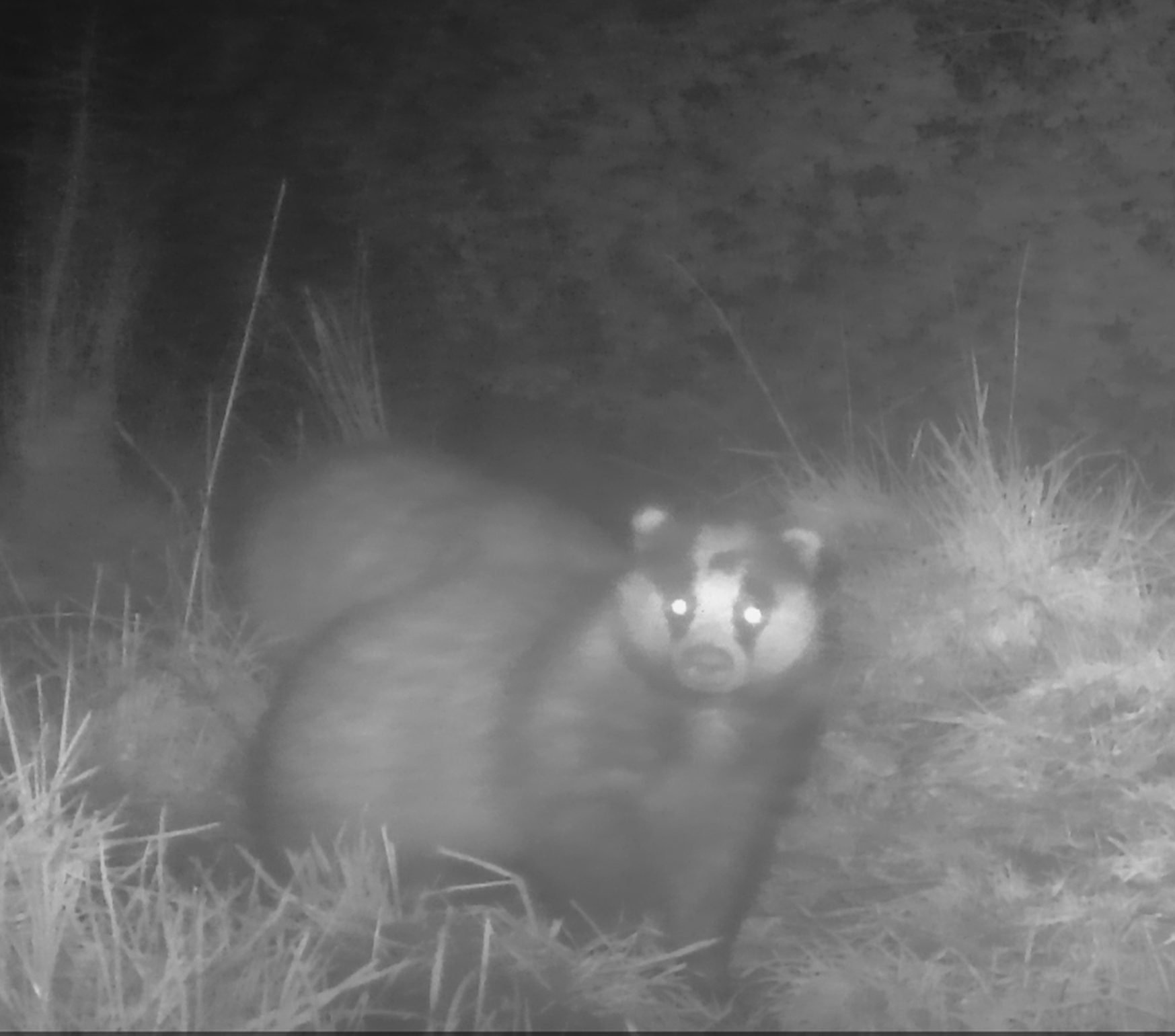
Darkness came early and properly, as it should on such a day. Yet it was not an ending. Lights were lit in the houses beyond the wood. Foxes and badgers began their evening patrols. The slivery moon lifted, pale and weak, took over the night.

In Nowhere Wood, the shortest day passed almost unnoticed, which is how the most important things usually happen. The light had given its least—and that, quietly, is the beginning. From now onwards the days will get longer by about two minutes each day until midsummer’s day in July.

Slowly, slowly, Spring is coming. 

Season’s greetings from Nowhere Wood!

Notes on the story

Spring is coming!

The spring…

This is the first part of a two-part story in the sustainable park series of stories.

First comes the summer rain, after weeks of drought. Then the wet drizzly, misty days, then the powerful storm from the bay of Biscay, and gradually the water table rises from its summer low.

The ancient spring fills and moves to the surface. Two generations ago, this spring fed into a pond where cattle drank. Locals picked water cress from the edges of its clear waters. This spring feeds our ancient oak (See: I bear their homes, too) and the old crack willow.

The old crack willow and the ancient oak in Trendlewood Park. [Photograph: Neil Ingram]

We celebrate the return of the spring like an old friend, as people have done for fifty thousand years or more. Water is our life. We have always known that.

Our spring feeds into a pond that we have built to contain it. Within twenty four hours the pond is full, and life settles down next to it.

All streams and rivers, even the mightiest, start from springs in muddy fields flowing in tiny streamlets, that join together as they travel towards the sea. In the past, people chose to build their homes close to rivers because of their need for water to live and to transport goods from place to place.

Photograph: The river Avon, that flows through Bristol to the Channel, starts life as springs in a field in Acton Turville in Gloucestershire. [Photograph: Derek Harper, https://www.geograph.org.uk/photo/5225584]

People use a lot of water in their homes and businesses, and the water table falls, even in winter. The springs and streamlets can dry up, affecting the flow of rivers. Dryer winters, caused by climate change, can make this even worse.

Rivers and streams are the drainage system of the landscape. When they flow freely, they carry rainwater away from our fields, towns, and roads. Global warming is bringing heavier and more frequent downpours, especially the autumn storms. This means much more water reaches the rivers in a shorter time. If the river channels are blocked by fallen branches, silt, or rubbish, the water cannot move quickly enough. It then spills out over the banks and floods the land around it.

Winter flooding in low lying floods around Nailsea, North Somerset. Small rivers and drainage ditches run next to these fields. [Photograph: Neil Ingram]

Healthy rivers also have space to spread out safely. When wetlands and flood meadows are protected, they act like a sponge. They slow the water, hold some of it back, and release it slowly. If these areas are lost or built over, the river has nowhere to go during a storm. So the extra rainfall caused by global warming becomes a bigger danger.

Keeping rivers clear and giving them room helps both people and wildlife. It reduces the risk of homes and roads being damaged. It also keeps the water cleaner for the plants and animals that depend on it. Maintaining rivers is one of the simplest ways we can prepare for a future with heavier rain.

Some indigenous peoples live by rivers and depend upon them for their survival. They often believe that their rivers are alive in ways that are more than just the lives of all of the organisms living there. These peoples believe that their rivers have rights and should be protected by laws.

  1. What protections do you think rivers should have? Who can protect them?

Notes on the story

Being and becoming in Nowhere Wood

…. and the pond

This is the second part of a two-part story in the sustainable park series.

Every year, the flow of the spring is rather erratic. In some winters it barely registers above ground, in other years it can flood the walkways and paths around the park. To reduce the risk of flooding, the Friends of Trendlewood Park decided to build a permanent pond to hold back the water, reducing the risk of flooding and (hopefully) providing new habitats for wetland creatures.

The pond was to be built next to the old oak and ancient willow, which are listed for protection by North Somerset Council. This means that the construction of the pond needed to be sustainable – with no artificial tools (like earthmovers) or materials (like plastic liners). The pond was to be built the hard way: with lots of manual labour and (mostly) natural ingredients.

Measuring the dimensions of the pond.
Measuring the dimensions of the pond. The ancient crack willow tree is in the background. [Photograph: Simon Stannard]

First, the dimensions of the pond were determined and marked with poles and string.

Digging the foundation of the pond involves a lot of spade work!
Digging the foundation of the pond involves a lot of spade work! [Photograph Simon Stannard]

Then teams of volunteers started the heavy spade work. It took time, but the efforts started to bear fruit.

The pond takes shape.
The pond takes shape. [Photograph: Simon Stannard]

The pond is designed to be tiered into layers. This creates ledges of different depths, that different plants and animals can utilise. It diversifies the habitat and creates new opportunities for animals and plants to live in the pond.

Digging the drainage channel for the pond.
Digging the drainage channel for the pond. [Photograph: Simon Stannard]

An earthen dam has also been built to reduce the risk of the water flooding out of the area onto the path around the park. A drainage channel has been dug into a nearby gulley to take the flood water away. In a rare concession to modern technology, the pipes are plastic sewer pipes. but covered in bentonite clay. We shall see if it can withstand the heavy winter rains.

The pond in November, as it fills after the autumn rains. [Photograph: Simon Stannard]

It has taken over a year to build the pond and we know from last summer’s trial that dragonflies were seen on the dry edges of the pond.

There were plant arrivals, too. ⁠Gypsywort, hop sedge and yellow loosestrife.

New arrivals at Trendlewood Park pond
New arrivals at Trendlewood Park pond. [Photographs: attributions at the end of the story]

It is unlikely that the pond will remain throughout the next year, that will depend on how dry and hot it will be, but it will be interesting finding out.

The Friends of Trendlewood Park Committee would like to thank: North Somerset Council for its permission for us to build the pond and for their ongoing support of the project and whole of Trendlewood Community Park. Nailsea Town Council for its enthusiasm and financial support for the materials needed to build the pond. Linsday Moore for her botanical expertise. Thank you to the many people who gave their time, energy and expertise to work on the project, including the Somerset Wood Recycling (the Green Team), and volunteers from the Wildlife Action Group volunteers, the Belmont Estate corporate workday volunteers and the Friends of Trendlewood Park.

Image attributions:

Yellow loosestrife, Photograph by: NaJina McEnany, under the Creative Commons Attribution-Share Alike 2.5 Generic licence, via Wikimedia Commons,.

Hop Sedge, Photograph by: Quinn Dombrowski, under the Creative Commons Attribution-Share Alike 2.0 Generic licence, via Wikimedia Commons.

‘Creating ponds are ways of increasing the biodiversity of a habitat’. What does this mean, and why is it generally thought to be a good idea?


Notes on the story

The sustainable park (1)

Apples and the new year

Let’s travel back in time three hundred years or more, to the East End Farm, near the hamlet of Nowhere. 

East End farm has a few sheep and goats, some vegetables and several apple orchards.


Children in Bridport, Dorset, wassailing in a community orchard
Children in Bridport, Dorset, wassailing in a community orchard. [Photograph, https://upload.wikimedia.org/wikipedia/commons/thumb/2/25/Bridport_Community_Orchard_Wassail_2022_%2851830797371%29.jpg/1024px-Bridport_Community_Orchard_Wassail_2022_%2851830797371%29.jpg]
Tonight the orchards are surrounded by farm workers and villagers from Nowhere, all singing and banging pots and pans. Children hang pieces of toast soaked in cider from the tree branches. 

For tonight, January 5th, is the wassail, the twelfth night of Christmas.


Small orchards in Somerset
The orchards contain a number of apple trees. [Photograph: David Smith, https://www.geograph.org.uk/photo/5606792
Apples grow all across the county of Somerset, and are especially important to Nowhere and its bigger neighbour, Nailsea. Every farm brews cider, which they give to the farm hands as part of their wages. 

(Centuries later, cider would be brewed and sold in large factories. Nailsea hosted  Coates factory for over 150 years. These days, the Thatcher family brews cider at Sandford, ten miles to the southwest.)  

Wassailing at night
Wassailing at night. [Photograph: Steven Brace, https://www.flickr.com/photos/30399879@N03/3286351432]
Back in Nowhere, apple trees are a sign of a healthy farm. Wise famers celebrate the good health of their orchards with a wassail.

Their people visit the apple trees by the light of burning torches.  Singing songs to them and making a lot of noise to ward off evil spirits. Hopefully, this should be enough to ensure a good harvest in the next year. 

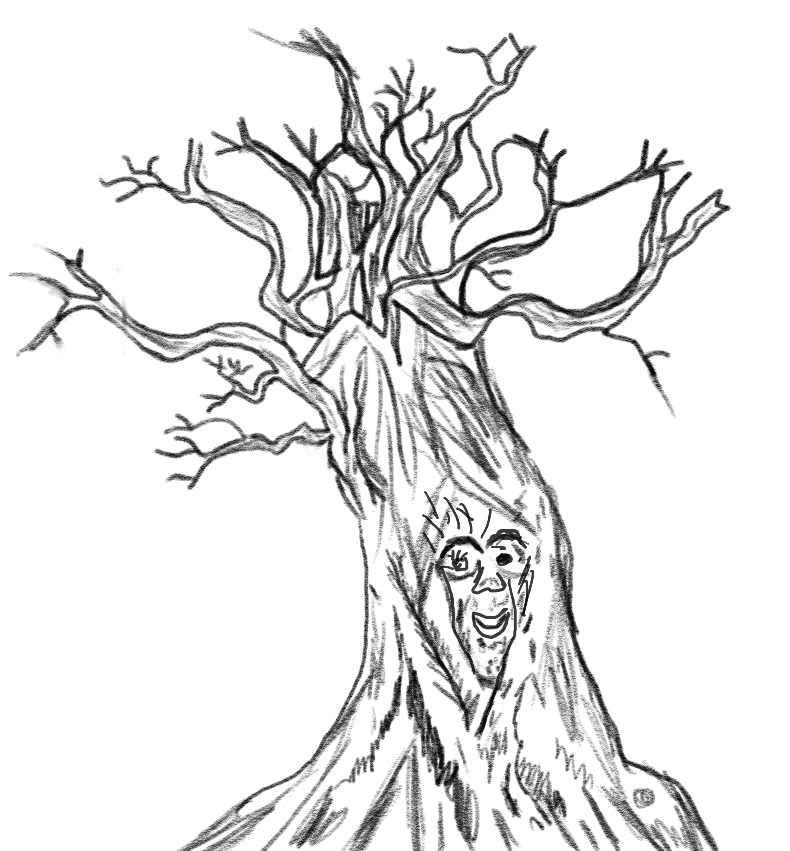
The oldest tree in the orchard is given the greatest respect, and he is called the ‘Apple Tree Man’. [Image: Neil Ingram]

 The Apple Tree Man decides how many apples will grow in the next year. Farmers keep the Apple tree Man happy by pouring cider over his roots. 

There are several old folk tales told in Somerset about the Apple Tree Man. The next story is a modern retelling of one of these old tales.


Notes on the story

The Apple Tree Man of Nowhere

A tribute to fallen trees

The trees in Nowhere Wood are always there, going quietly through the motions of the seasons: noticed only when we stop to look and reflect. But we feel their presence strongly, just out of sight and mind.

Until today, when their absence feels like the loss of dear friends. 

Fallen ash tree trunks at the quarry face of Nowhere Wood. [Picture: Neil Ingram]
Fallen ash tree trunks at the quarry face of Nowhere Wood. [Photograph: Neil Ingram]
It only took a morning, and nearly 100 years of growth has ended. Yes, they had Ash dieback disease and were marked with a red spot. Yes, they were unstable on the quarry floor.  Even so, we feel their loss keenly.

Trees with Ash dieback disease are marked with a red spot. [Picture: Neil Ingram]
Trees with Ash dieback disease are marked with a red spot. [Photograph: Neil Ingram]
The wood will regenerate, but only if we can remove the trunks from the woodland floor. Else we shall see little re-development in our lifetimes. This problem is one that we have to own.

The robin is an optimistic opportunist. Making the best of new opportunities amongst the fallen branches of ash.
The robin is an optimistic opportunist. Making the best of new opportunities amongst the fallen branches of ash. [Photograph: Neil Ingram]
In the mean time, life goes on amidst the debris of fallen trees.


Notes on the story

The sustainable park (2)

The sustainable park (1)

The old willow tree in Trendlewood park
The old willow tree in Trendlewood park. [Photograph: Neil Ingram]
This willow tree in the park is very old. Maybe a hundred years or so. Look how its bark is gnarled and twisted. It is a great friend of the park and is home to many different insects and birds. One year, a female mallard duck even made a nest on the flat top of the tree!

The willow keeps on growing because every few years, it’s friends cut off all of its branches!

This really does encourage the tree to grow strongly. 

We call the removal of the branches ‘pollarding’.

This ancient willow tree has recently been pruned
Pollarding trees is a way of keeping them alive. [Photograph: Neil Ingram]
This week, it was the old willow’s turn to be pollarded. You can see the cut stumps where the branches used to be.

Woods have always been important to people. In the 17th century, new forests were planted to provide enough timber for the boats for the Royal Navy.

People have pollarded woodland trees for thousands of years.  It was their main source of wood for building, making furniture, for charcoal and for fuel to heat their homes.


Wood is a very useful sustainable resource, when managed in this way. It is sustainable because the tree carries on growing and making new wood.

Pollarded willow wood is special. It is used to make cricket bats and weave baskets.  For generations, this provided income for poor families  in Somerset.

It is also a good way of making new fences. This is because cut branches of willow will grow new roots when they are placed in water.

The cut stems will grow into new trees and can become a hedge when they are planted closely together.

Two volunteers from the Friends of Trendlewood Park soaking the branches of willow
Two volunteers from the Friends of Trendlewood Park soaking the branches of willow. [Photograph: Neil Ingram]
The photograph shows two volunteers from the Friends of Trendlewood Park preparing willow branches to build into a new hedge in the area near the playing fields.

They place the cut ends of the branches into water.

A newly planted willow hedge in Tendlewood Park
A newly planted willow hedge in Tendlewood Park. [Photograph: Neil Ingram]
In a few months’ time, when the weather is warmer, this hedge should be growing strongly and could grow for many years.

  1. This species of willow is called the brittle willow, because branches break off easily. Suggest why it is an advantage to the willow for these branches to be able to grow into new trees.
  2. This species of willow has two ways of reproducing. It flowers and makes seed and also can propagate through fallen branches. Find out why it is useful for the species to be able to reproduce in these two ways.

After the story:

Just after I finished writing this story, it was announced that young trees grown from seeds of the Sycamore Gap tree are to be given to charities, groups and individuals as “trees of hope“. This ancient sycamore tree, from Northumberland, was cut down in September 2023.

new growth from there Sycamore gap tree
Image from https://www.thesill.org.uk/sycamore-gap-tree-is-sprouting/

This is a lovely, kind idea. The tree lives on, not only through its seeds, but  also in the new stems that are growing from its cut stem. This shows the power of nature to recover and re-grow. Life is resilient, it does not give up.


Notes on the story

Apples and the New Year

The secret of the winter flowers

A group of winter heliotrope plants.
A group of winter heliotrope plants. [Photograph: Neil Ingram]

It’s January 1st and the floor of the wood is covered with fresh new leaves, growing in dense patches. The first flowers are starting to open. Within a week, the air is scented with a sweet fragrance. This is the winter heliotrope, which is just as much at home in Nowhere as it is in its native North Africa.

The winter heliotrope was probably brought to Britain by Victorian gardeners.

 We have a large Victorian estate called Tyntesfield down the road, so originally it could easily have come from there. The plant has a big secret: its flowers are just for show!

The winter heliotrope.
The winter heliotrope. [Photograph: Neil Ingram]

The winter heliotrope is unusual because it has separate male and female plants. As far as we know, the Victorian gardeners only imported male plants into Britain, because they liked the showy flowers and its rich scent. So, although the flowers make good pollen, there are no female flowers available to receive it. These plants cannot make seeds.

How do the plants reproduce, if they  cannot make seeds?

What is its big secret?

A rhizome. [Image: Neil Ingram]

Below the soil the plant has a special underground stem, called a rhizome. During the year the rhizome stores food ready for the wintertime. Then, early in the new year, it grows new leaves and flowers.

During the summer the rhizomes grow so large, that they eventually break off and become new plants. This is a different way of reproducing, called vegetative reproduction. The plants are all clones, they have the same genetic information, which means that they all flower at more or less the same time.

So good is the winter heliotrope at growing in this way, that the plant is seen by some gardeners as an uwanted pest. It seems to grow well in Nowhere Wood, where it grows undisturbed.

1. What do you think are the advantages of being able to reproduce vegetatively, without making seeds?

2. Are there any disadvantages to having plants that all have the same genetic information. Is variation needed for the survival of plants?


Notes on the story

The greening of Nowhere Wood

Early risers!

The first snowdrops of spring
The first snowdrops of spring. [Photograph: Neil Ingram]
Every year, the snowdrop is the first plant to flower in Nowhere Wood. It is a symbol of the birth of Spring, bringing good cheer and hope at the end of a long winter. This is one reason why people plant snowdrops in their gardens.

Snowdrops in snow
Snowdrops in snow. [Photograph: ERS images, https://uk.pinterest.com/pin/12736811423122699/]
Snowdrops are tougher than they look: they can grow through ice and snow. Their leaves have hardened edges that act as snowploughs and their cells contain a snowdrop antifreeze that stops ice crystals forming. The real secret of the snowdrop’s success is found below the ground, in the frozen soil. There, in the darkness, is a bulb, full of food made in last Spring’s photosynthesis. Like a battery, it is an energy store, so that the plant can start to grow in the weak winter sunshine.

This means that the plant can make leaves to grow in the warming Sun. The leaves make food to store in its bulbs ready for next year. Snowdrops do all of this before the leaves of the big trees open to steal the light, so that the floor of the wood becomes shaded. By then, the work of the snowdrop is over and it can wait for the next winter.

1. How have people helped the snowdrop to survive for so many years?

2. What advantages do snowdrops have by storing their food in underground bulbs. Can you think of any possible disadvantages?

Snowdrops have many more secrets that help them in their adventures in time and in space. We may tell more stories about snowdrops in the coming days! Come back to read them.

Notes on the story

Time travellers to Nowhere (1)

The Apple Tree Man of Nowhere

Once upon a time, there lived a young man called Henry Summers, who lived at the Farmhouse over at the East End, just below the quarry. He was a wise man, strong in the arm and of calm manner. He never beat his animals or his wife. The family farmed ten fields and had several beautiful apple orchards.

Among the trees, there was one particularly ancient apple tree that Henry’s great grandfather planted and around which all of his children had played. The tree stood tall and strong, even though it was very old.

Henry believed that this tree was extra special, and he called it the ‘Apple Tree Man’. Henry always took great care of this tree, speaking to it kindly and ensuring it had plenty of water and cider at the wassail.

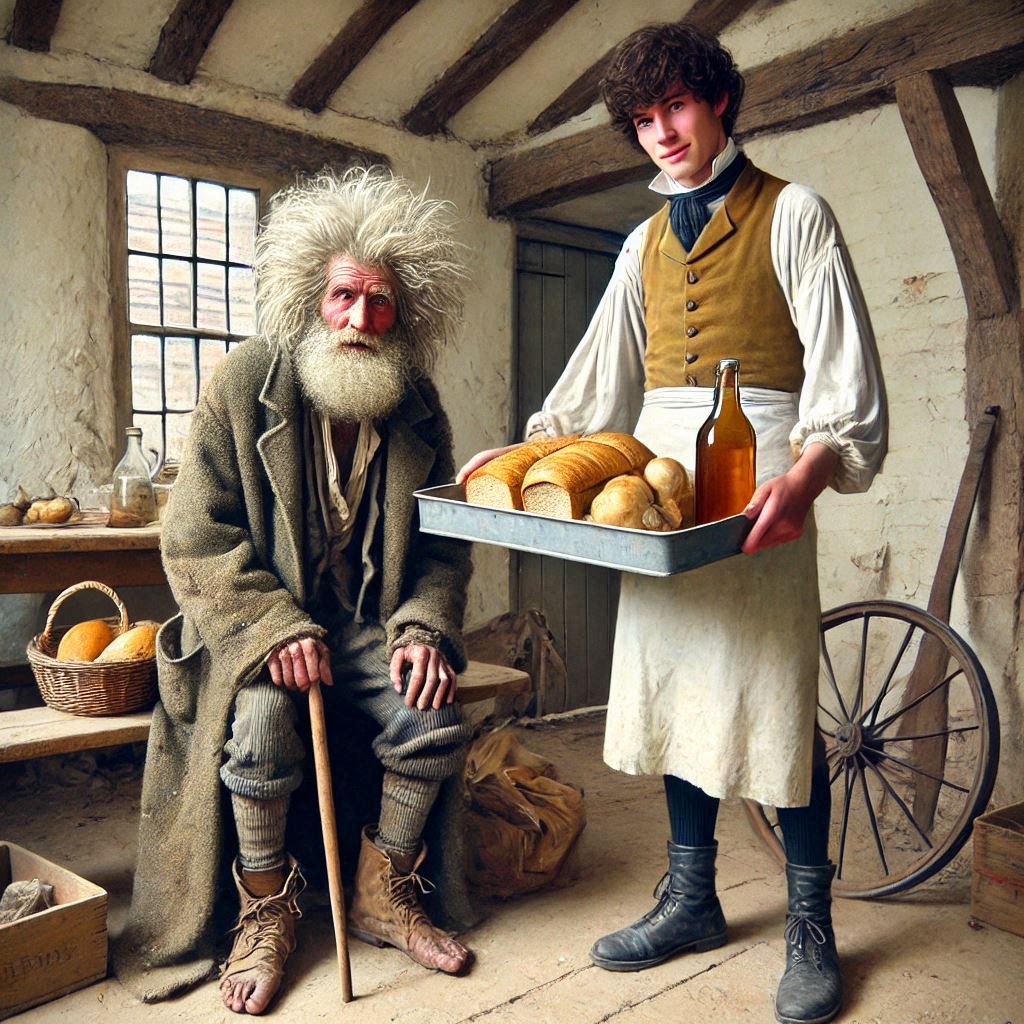
One cold winter’s night, Henry was visited by a stranger who had walked from Bristol and wanted to find friends in Nowhere. His clothes were dirty and his shoes were worn out. Henry was as kind to people as he was to his goats, welcomed the stranger into his home and gave him food and cider.

The wanderer meets the young farmer

His wife looked out some more shoes for him.  The stranger slept soundly in his clean bed that night.

The next day, the happy stranger revealed that he was, in fact, the spirit of the Apple Tree Man who had taken the form of a wanderer to test the farmer’s kindness.

The Apple Tree Man promised the farmer that as long as he continued to care for the apple trees, his orchards would make so many lovely apples every year, that he and his family would be wealthy and  joyful.

The apple trees produced many beautiful apples

The Apple Tree Man was true to his word, the orchards flourished, and the farmer and his descendants enjoyed bountiful harvests for many generations. And the people of Nowhere enjoyed their cider for years to come.


Notes on the story

Climate change: new arrivals in Nowhere Wood


The singing trees

ice freezes the pondWinter has come to Nowhere Wood and ice has formed around the fallen trees in the pond. Everything shivers and wood is silent again. Squirrels search for food in the frozen mud, but everything else is waiting, biding its time.

Silent, except for an ancient overgrown hedge formed from a row of old trees, bound together into a thicket by generations of bramble stems. These trees are singing, for this is the home of the tree sparrows. The trees are just outside the wood, next to a path much used by dogs taking their owners for a daily walk.

The tree sparrows are warm, protected from the icy wind by the layers of dead branches that surround them. Impenetrable, they are hidden amongst the branches, out of harm’s way. In this forgotten place, they thrive and they sing.


Well not quite forgotten. In the garden of a house, less than 10 metres from the singing trees, is a garden with a bird feeder, filled daily by its residents. The sparrows dart from the hedge to the feeder and then back again, hour after hour, making sure they do not go hungry.

Small acts of kindness can make a big difference to the birds in Nowhere Wood. These ancient hedges are important, too, as wildlife corridors, joining ancient woodlands together, giving animals a chance to move safely across the landscape.

  1. Why are the ancient hedges such a good place for the tree sparrows to live?
  2. Why are bird feeders so important in the winter months?


Notes on the story

Spring is coming!