The end of the summer

Nowhere Wood has a weary silence, as the heat stifles its life. It is ready with its autumn plans, which cannot start until it rains. 

Rain, the life-giver. Yet in flood, rain is the also the destroyer. It is a question of balance. Is the balance changing in the wood? Is the balance changing in the world? This has been the hottest summer the wood has ever known. People across the world are saying the same things. 

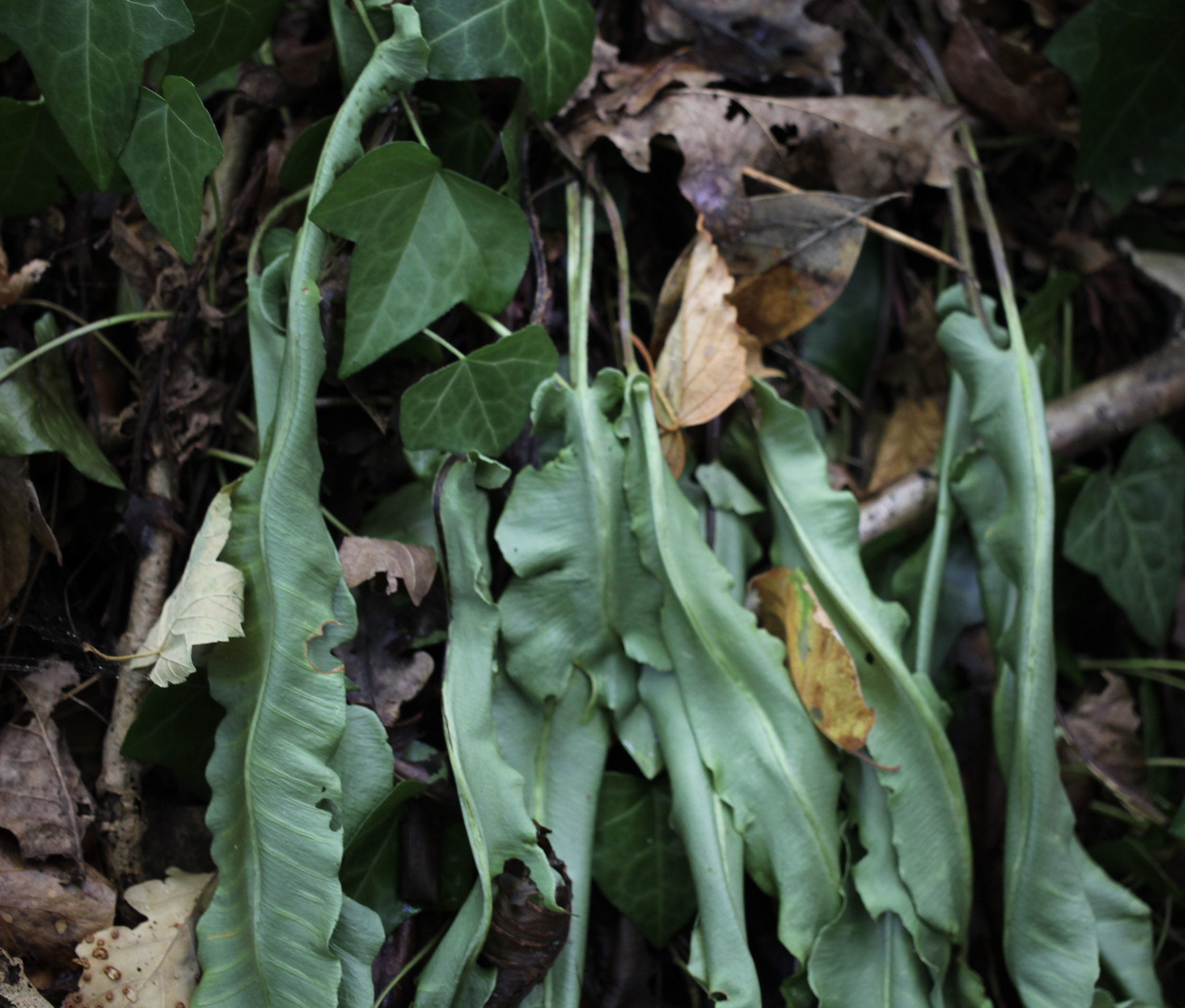
Fern leaves wilting in the summer heat in Nowhere Wood
Fern leaves wilting in the summer heat in Nowhere Wood. [Photograph: Neil Ingram]

Even the fern leaves are wilting for want of water. Holly trees have deeper roots, but they are suffering, too. The soil in the wood is very thin, because it used to be a stone quarry, and the roots cannot grow deep enough to find water.

Holly leaves wilting in the summer heat in Nowhere Wood.
Holly leaves wilting in the summer heat in Nowhere Wood. [Photograph: Neil Ingram]

Then, the remains of a hurricane in the Caribbean barrels westwards, bringing with it strong westerly winds, which blow the summer away in a moment.

The first autumn rain falls in Trendlewood Park.
The first autumn rain falls in Trendlewood Park. [Photograph: Neil Ingram]

The rain falls, gently at first, then much stronger. The smell of the wood changes as the plants take up the water and everything seems to relax.

Droplets of rain on a leaf of a snowberry plant
Droplets of rain on a leaf of a snowberry plant in Nowhere Wood. [Photograph: Neil Ingram]

Nowhere Wood is lucky. Somalia in East Africa it has not had any significant rain for two years and a quarter of the population faces “crisis-level food insecurity” (near-starvation). Yet, in 2023, October floods killed hundreds of people and washed away thousands of homes. The harvest was ruined, leading towards more famine.

It is the unpredictability of the weather that causes most concern. Farmers sow their seeds not knowing whether it will produce enough food. And that is now the same everywhere across the world, including Great Britain. Time will tell what will happen in the future. 

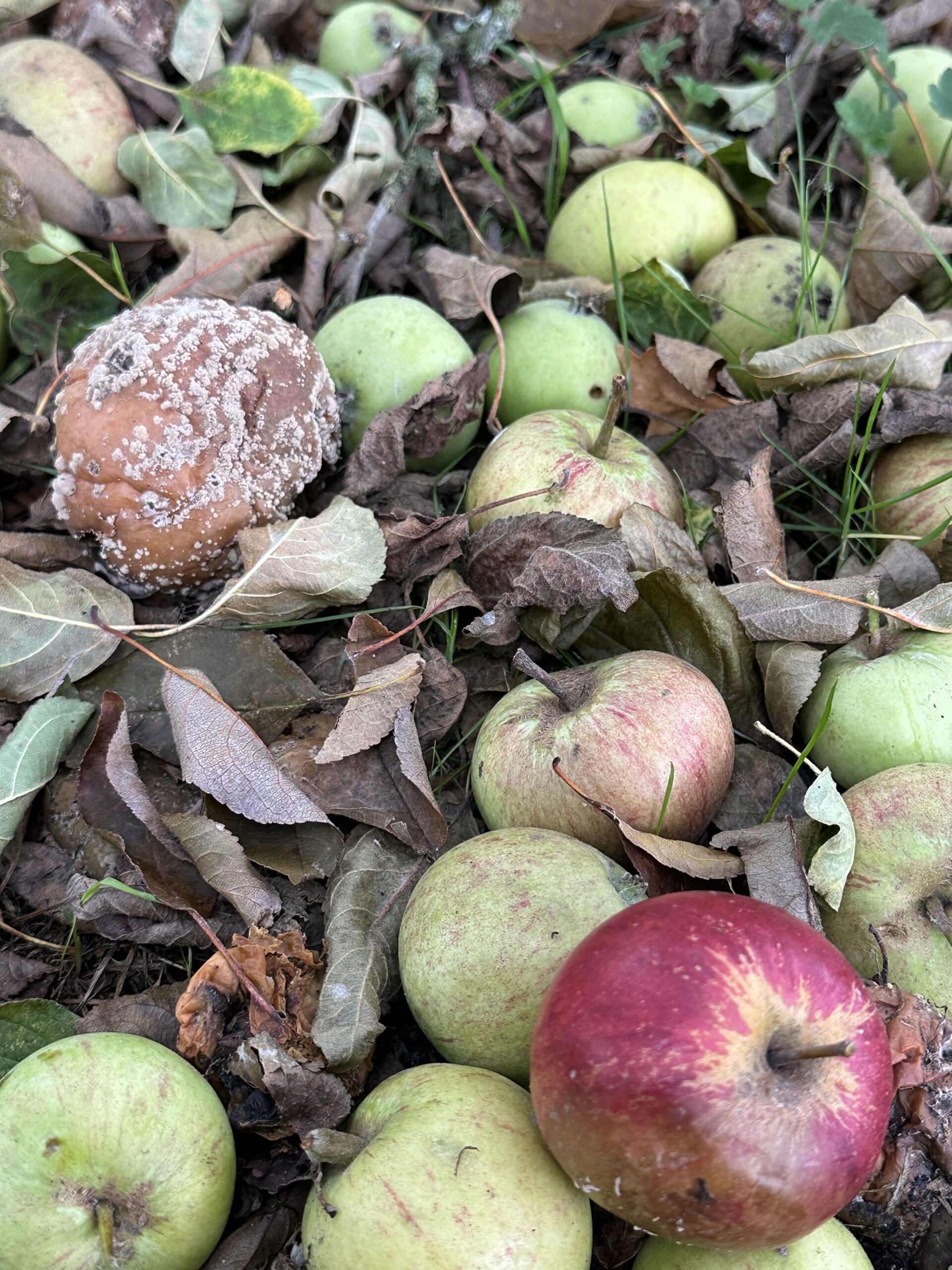
Meanwhile Nowhere Wood celebrates the arrival of the rain in autumn as the fruit ripens and the wood moves forward into the next stage of its adventure.

Apples ripening in the rain in the orchard in Trendlewood Park.
Apples ripening in the rain in the orchard in Trendlewood Park. [Photograph: Neil Ingram]

1. Imagine that the autumn rains did not come. What would happen to Nowhere Wood?


Notes on the story

Climate Change and the Weather


Update: 

A few days alter, after real rain, the fern has recovered and perked up. 

After a few days rain, the fern recovers.
After a few days rain, the fern recovers. [Photograph: Neil Ingram]

I bear their homes, too

For Jules Acton, author of Oaklore.

The old oak tree said to the traveller passing by:

“You know me, you see me everyday. I am that oak tree that has stood here longer than any of can you remember.”

The oak tree in Trendlewood Park dominating the view
The oak tree in Trendlewood Park, viewed from the author’s study. [Photograph: Neil Ingram]

“I am on the 1840 Ordnance Survey map and I was a sturdy tree, even back then. Let’s say, I’m two hundred years old? I am still in my prime, though. I won’t be celebrated as old for another two or three hundred years. Don’t wait up for me.”

A leaf of an English oak.
A leaf of an English oak. [Photograph: Neil Ingram]

“I am a patriot, a true blue English oak: look at the ear-shaped lobes at the bottom of my leaves and the very short leaf stalks. Pedigree characteristics, those.”

Long stalks on the growing acorns of an English oak tree.
Long stalks on the growing acorns of an English oak tree. [Photograph: Neil Ingram]

“And look at the length of the stalks that hold up my acorns – the longer the better. Need I say more, I am as English as St George, cricket and cider.”

“I have never been a wildwood oak: a farmer’s tree, that’s me. My roots are deep in the clay, fed  by a spring that kept the animals safe and watered. I had space: my limbs lifted upwards to touch the sky. I’ve seen the storms lash the fields and the brambles come and go. I wear the years in my bark and the seasons in my leaves.”

The oak tree is about 200 years old
The oak tree is about 200 years old. [Photograph: Neil Ingram]

“I am a good neighbour – well after all of this time, why not? In the summer I play host to lots of welcome visitors.”

Spangle gall on an oak leaf.
Spangle gall on an oak leaf. [Photograph: Neil Ingram]

“The gall wasp comes to lay her eggs on my new leaves and I make spangle cradles to help to keep them safe.”

oak galls
oak galls. [Photograph” Neil Ingram]

“It happens again and again. Not just the spangles. Look beneath my leaves and you might find round, knobbly balls, like hard brown marbles. These are oak apples, swollen with the same curious purpose. A different gall wasp requests a grander chamber, and I oblige. Within each one lives a single larva, safe and fed by the very cells I’ve grown to protect my own buds.

Why do I do it? I don’t know. Perhaps I am too old to care. Or perhaps I understand that these wasps—these minute engineers—are part of the pattern. They do no great harm. My crown still grows. My acorns still drop. My fungi and birds and lichens still cling and sing and creep through me.

So I let them stay.

When my leaves fall, the spangles fall with them. Some young mothers emerge come spring, and they begin again—quietly weaving their lives into mine, asking nothing more than a shelter made of leaf or bark.

I am not hollowed by this. I am enriched. Insects, wind, rain, rot, and sunlight—they all shape me. I am a home, not a fortress. I bear their homes, too.

And you, traveller —if you lie on your back and look up through my summer canopy, you might see more than green. You might see a world.”

  1. Jules Acton’s book, Oaklore, Greystone books, 2024, is an essential companion piece to this story. Jules helps us to think about all of the things that the English oak tree has given us as society and individuals.

Update, 20/07/25:


A new gall has appeared on our favourite oak tree. This is a Knopper gall, caused by the gall wasp Andricus quercuscalicis. The wasp secretes chemicals that distort the growth of an acorn.  This is a rather more serious pest to the tree than the two show above, because it can reduce fertility of the tree.

Protected inside the gall is a developing larva, which will develop into a pupa and will emerge as an adult wasp in the next spring.


Notes on the story

Being and becoming in Nowhere Wood

It’s Flying Ant Day!

Today is Flying Ant Day: the day that ants take to the air and fly at the same time. The ants are from different colonies that can be several hundred metres apart.

Let’s celebrate Flying Ant Day!

Swarm of flying yellow ants in Nowhere Wood.
Swarm of flying yellow ants in Nowhere Wood. [Photograph: Andrew Town]
To some, it’s a minor nuisance. They land in your lemonade, tangle in your hair, and make picnics suddenly less romantic. A swarm of tiny aviators with no regard for personal space.

Flying ants on the flowers of common ragwort.
Flying ants on the flowers of common ragwort. [Photograph: Andrew Town]
Is there really anything much to celebrate? Would we not be better off without ants?

But pause a moment—really look. This is the wedding flight, the briefest of honeymoons, when new queens and males take to the skies to mate and search for new grounds and new beginnings. It’s a natural marvel unfolding on our doorsteps, so what is going on below the surface?

It starts underground, beneath a cracked paving stone, under a patch of sun-warmed earth:  this is the colony, the kingdom of the ants. The colony pulses with organised  purpose.

Yellow meadow worker ants.
Yellow meadow worker ants in Nowhere Wood. [Photograph: Andrew Town]
Tunnels and chambers run through the soil, branching and looping. Here, everything has a rhythm. The queen lays eggs, which are tended and nurtured. The queen is guarded with  reverence because she is the provider of life to the colony.

Their larvae are fed and thousands of identical worker ants are formed.  These do not have wings.

The power of ants lie in their numbers.

Some ants are the pirates of the wood: ferocious and aggressive, they will attack those who cannot defend themselves or have not learned to work with the ants. Like pirates, ants will protect anything that gives them what they want – usually food.

Some species roam in teams, tracking down caterpillars, beetle larvae, or even spiders. They subdue them not with brute force, but with strategy: surround, immobilise, overwhelm. A single ant may be no match for a wasp larva, but a dozen? A hundred? That’s a different story. Their venom can paralyse, their mandibles shear, and their numbers do the rest.

These ants are farming blackflies
These ants are farming blackflies. [Photograph: Andrew Town]
Other ants are the gentle manipulators of blackfly insects, tending huge herds of them.

Blackflies suck the juices of a plant, excreting sweet sticky “honey dew”, which feeds the ants in the colony. In exchange, the ants give the blackflies protection and time to reproduce. Some ants actively”farm” the blackflies, by stroking them gently with their antennae to encourage them to produce honeydew. Like milking a cow.

Biologists call ants ‘keystone’ species. In architecture, the keystone is the stone at the top of an arch that holds the whole structure together. Remove it, and everything collapses.

Ants play this role in the architecture of the wood. Their tunnelling aerates the soil, letting water and oxygen reach the roots of plants. They break down waste, dead insects, and fallen leaves—recycling the detritus of life into the ingredients for growth.

Some species plant seeds by accident, dropping them underground where they germinate safely. Others protect plants from pests or farm aphids like cattle. A colony is not just a nest: it’s an engine of fertility, a subterranean society that quietly underpins the world above.

Take them away, and you begin to see the gaps. Soils become compacted. Nutrients stop cycling. Other animals—birds, lizards, even mammals—that feed on ants start to vanish too. The threads of connection begin to unravel.

The world is a better place with ants – and the flying ants are crucial, for this is where new queens mate with males and go to form new colonies, so the cycle of life continues for one more year. As long as the old colonies have healthy queens, they will continue, so that Flying Ant Day is a way of mixing together different colonies, to make and spread new ones.

The ants benefit, and so does Nowhere Wood, so, let’s celebrate Flying Ant Day!

  1. Why is it an advantage for a new queen ant to fly away from the colony before laying her eggs?


Notes on the story

Being and becoming in Nowhere Wood

The Apple Tree Man of Nowhere

Once upon a time, there lived a young man called Henry Summers, who lived at the Farmhouse over at the East End, just below the quarry. He was a wise man, strong in the arm and of calm manner. He never beat his animals or his wife. The family farmed ten fields and had several beautiful apple orchards.

Among the trees, there was one particularly ancient apple tree that Henry’s great grandfather planted and around which all of his children had played. The tree stood tall and strong, even though it was very old.

Henry believed that this tree was extra special, and he called it the ‘Apple Tree Man’. Henry always took great care of this tree, speaking to it kindly and ensuring it had plenty of water and cider at the wassail.

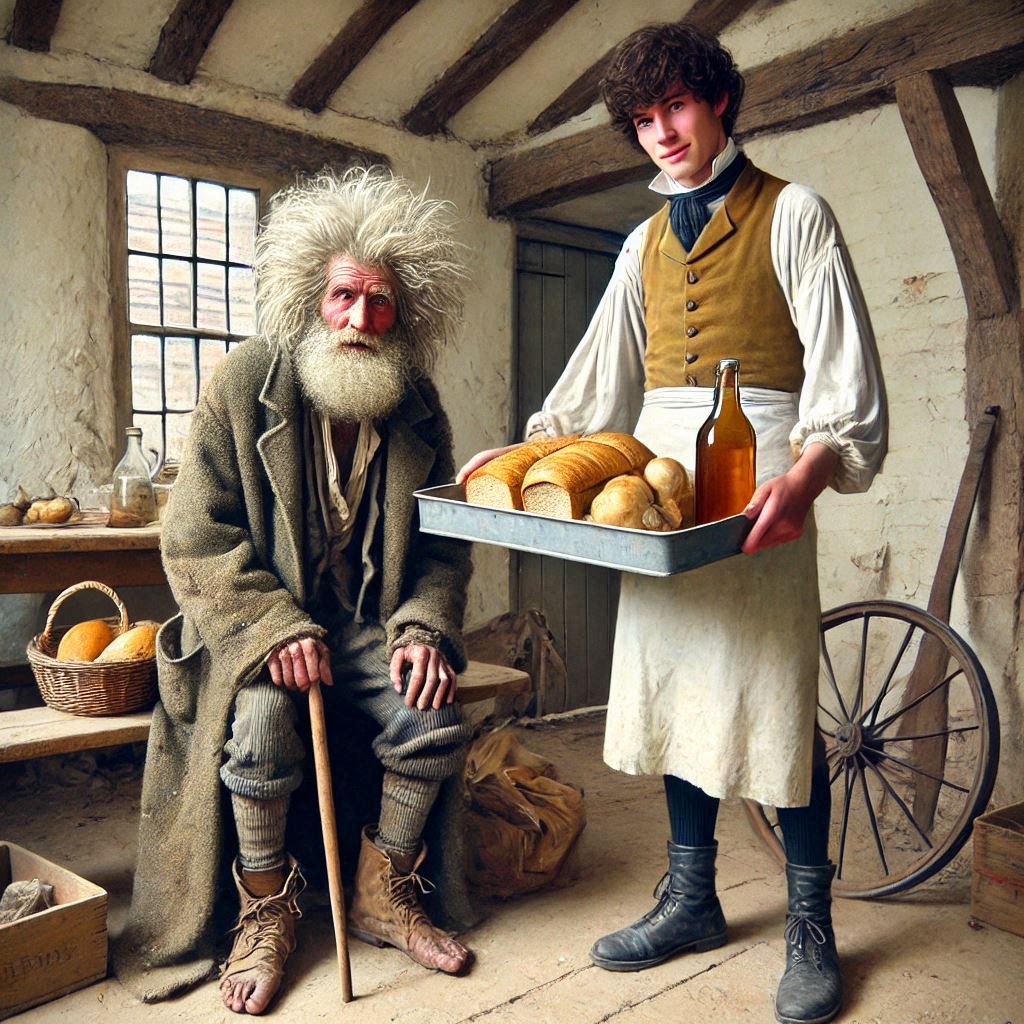
One cold winter’s night, Henry was visited by a stranger who had walked from Bristol and wanted to find friends in Nowhere. His clothes were dirty and his shoes were worn out. Henry was as kind to people as he was to his goats, welcomed the stranger into his home and gave him food and cider.

The wanderer meets the young farmer

His wife looked out some more shoes for him.  The stranger slept soundly in his clean bed that night.

The next day, the happy stranger revealed that he was, in fact, the spirit of the Apple Tree Man who had taken the form of a wanderer to test the farmer’s kindness.

The Apple Tree Man promised the farmer that as long as he continued to care for the apple trees, his orchards would make so many lovely apples every year, that he and his family would be wealthy and  joyful.

The apple trees produced many beautiful apples

The Apple Tree Man was true to his word, the orchards flourished, and the farmer and his descendants enjoyed bountiful harvests for many generations. And the people of Nowhere enjoyed their cider for years to come.


Notes on the story

Climate change: new arrivals in Nowhere Wood


Climate change: what can we do about it?

The average global temperature is now two degrees warmer than it was in the 1700s.
The average global temperature is now two degrees warmer than it was in the 1700s. [Image generated by AI]

The climate of the whole world  is changing because of the rising temperatures. Scientists think that  increasing levels of carbon dioxide gas in the air are  making these changes worse.

The Earth is now an average of two degrees warmer than it was in the 1700s, before the start of the industrial revolution.

We should try to do two things: to reduce the amount of carbon dioxide in the air and to try to look after and encourage the wildlife in our local areas.

Wind energy is renewable and helps to reduce global warming
Wind energy is renewable and helps to reduce global warming. [Image from https://www.peterduffyltd.com/old-whittington-wind-turbine-generator/]

Burning fuels, such as coal, petrol, gas and oil are the main ways that we add carbon dioxide to the air. As a country we are aiming to increase the amount of energy we produce from “renewable ” sources of energy that do produce carbon dioxide. Last year 45% of the UK’s energy was produced from such sources, which include wind, solar, hydroelectric and nuclear power.

We can think about switching from petrol to electric cars and to insulate our homes better to reduce the heat we lose to the air. We use less electricity and gas and save money at the same time!


Food and drink cans inside a recycling bin.
We can recycle our food and drink cans [Photograph: https://commons.wikimedia.org/wiki/File:Food_and_drink_cans_in_recycling_bin.jpg, creative commons licence]

We can recycle our waste, so it gets reused and this reduces the amount of energy needed to produce new goods. Reducing aluminium food trays, cans and foil can save about 95% of the energy needed to replace these products from raw materials.


We can grow more plants and grow more trees. Plants are very good at removing carbon dioxide from the air. Scientists are trying to restore lost habitats like forests, wetlands and marshes, that are very good at removing carbon dioxide from the air. This is called ‘rewilding’.

The Meadows next to Nowhere Wood is a rewilding project.

A bee hotel for sale in a local supermarket
A bee hotel for sale in a local supermarket. [Photograph: Neil Ingram]

We can encourage the wildlife in our gardens, parks and school grounds. Bird and bat boxes and bee hotels can provide places where birds, bats and solitary bees can live safely.

one candle does not produce much light, but many candles can make a bright light.
One candle on its own does not produce much light, but many candles can make a bright light. [Image: Neil Ingram and Google Gemini AI]


Solving the problem of climate change is difficult and needs all of us to work together to make it happen. Every person can make a small difference, but these differences add together to make a big change.


Notes on the story

A tribute to fallen trees

Apples and the new year

Let’s travel back in time three hundred years or more, to the East End Farm, near the hamlet of Nowhere. 

East End farm has a few sheep and goats, some vegetables and several apple orchards.


Children in Bridport, Dorset, wassailing in a community orchard
Children in Bridport, Dorset, wassailing in a community orchard. [Photograph, https://upload.wikimedia.org/wikipedia/commons/thumb/2/25/Bridport_Community_Orchard_Wassail_2022_%2851830797371%29.jpg/1024px-Bridport_Community_Orchard_Wassail_2022_%2851830797371%29.jpg]
Tonight the orchards are surrounded by farm workers and villagers from Nowhere, all singing and banging pots and pans. Children hang pieces of toast soaked in cider from the tree branches. 

For tonight, January 5th, is the wassail, the twelfth night of Christmas.


Small orchards in Somerset
The orchards contain a number of apple trees. [Photograph: David Smith, https://www.geograph.org.uk/photo/5606792
Apples grow all across the county of Somerset, and are especially important to Nowhere and its bigger neighbour, Nailsea. Every farm brews cider, which they give to the farm hands as part of their wages. 

(Centuries later, cider would be brewed and sold in large factories. Nailsea hosted  Coates factory for over 150 years. These days, the Thatcher family brews cider at Sandford, ten miles to the southwest.)  

Wassailing at night
Wassailing at night. [Photograph: Steven Brace, https://www.flickr.com/photos/30399879@N03/3286351432]
Back in Nowhere, apple trees are a sign of a healthy farm. Wise famers celebrate the good health of their orchards with a wassail.

Their people visit the apple trees by the light of burning torches.  Singing songs to them and making a lot of noise to ward off evil spirits. Hopefully, this should be enough to ensure a good harvest in the next year. 

The oldest tree in the orchard is given the greatest respect, and he is called the ‘Apple Tree Man’. [Image: Neil Ingram]

 The Apple Tree Man decides how many apples will grow in the next year. Farmers keep the Apple tree Man happy by pouring cider over his roots. 

There are several old folk tales told in Somerset about the Apple Tree Man. The next story is a modern retelling of one of these old tales.


Notes on the story

The Apple Tree Man of Nowhere

The fairy ring

Fairy ring fungus
Fairy ring fungus [Photograph: Andrew Town]

Just outside of Nowhere Wood, next to the school playing fields, you can, on a summer evening, sometimes see a fairy ring. The photograph shows parts of this fairy ring: sometimes you can find rings that form a perfect circle.


How many fungi can you see here? There are about 15 mushrooms – the fruiting bodies, but only one fungus. In the soil, the fungus exists as a tangle of small thin threads called hyphae. The hyphae, which make up bodies of all fungi,  are called mycelia.

Fungal mycelia can grow to enormous sizes. There is a fungus in a forest in Oregon, USA, which is 3.5 miles across and covers over 2000 acres. It could be up to 8.5 thousand years old!

The grass growing around a fairy ring fungus
The grass growing around a fairy ring fungus [Photograph: Andrew Town]

The fungus is good at feeding on dead organisms, and returning the nutrients to the soil. This helps the grass growing around the circle to grow taller than the grass growing further away from the fungus.


Fairies dancing in a fairy ring
Fairies dancing in a fairy ring [image: Walter Jenks, The fairy ring. https://britishfairies.wordpress.com/tag/down-tor/]

People love fairy rings and make up stories about them. In English folklore, fairy rings are caused by fairies dancing in a circle. Be careful if you see one though. The stories say that if people join in the dance they would be punished by the fairies, and made to dance in the ring until they fall asleep. 


  1. Why do you think that fungi are useful in our woods and fields?
  2. William Shakespeare is thought to have written these lines:
“If you see a fairy ring
In a field of grass,
Very lightly step around,
Tiptoe as you pass;
Last night fairies frolicked there,
And they’re sleeping somewhere near.
If you see a tiny fay
Lying fast asleep,
Shut your eyes”


William Shakespeare wrote “A Midsummer’s Night’s Dream” in about 1596.  In the play a group of powerful fairies cast spells on people, making their lives very difficult. Many people believed in such ideas in Elizabethan times.
 
Why do you think many people no longer think like this?


Notes on the story

Hard hats, safety specs and camouflage jackets

Time travellers to Nowhere (1)

A landscape of the Carboniferous era
A landscape of the Carboniferous era. [Image: https://upload.wikimedia.org/wikipedia/commons/thumb/0/0a/Bulgo_Sandstone_biota.jpg/1456px-Bulgo_Sandstone_biota.jpg]

Imagine you had a Time Machine: where and when would you go to? Come with me back to Nowhere Wood, about 310 million years ago. That is long before humans, mammals or even dinosaurs existed, but frogs laid their eggs in pools, much as they do today.

Today it is hot, humid and very quiet: with no birdsong or animal noise, apart from the distant croaking of frogs.

Extinct tree ferns from the Carboniferous era
Extinct tree ferns from the Carboniferous era. [Image: https://upload.wikimedia.org/wikipedia/commons/thumb/3/3e/Lepidodendrales_reconstrucci%C3%B3n.jpg/1280px-Lepidodendrales_reconstrucci%C3%B3n.jpg]

We are in the northern foothills of an enormous mountain range, bigger than the Himalayas. It is unbearably hot and humid.  We are next to a river flowing from the Southern mountains, surrounded by thin horsetails that grow up to 10 metres tall. Tomorrow, there will be a raging tropical storm and the mountains will be pounded by its violence. The rain will flow in torrents in rivers towards us.

Nowhere Wood is located just below the equator, and we are looking up at the aftermath of a series of global catastrophes, which has taken hundreds of million years to happen. Two continents collided and sent shockwaves through the land, pushing upwards to form the mountains that we can see to the South of us. We are in a valley, downstream from the mountain peaks.

Muddy water flowing in a stream
Muddy water flowing in a stream. [Image: https://upload.wikimedia.org/wikipedia/commons/thumb/3/37/Uruzi_hamwe_n%27ikirere.jpg/2560px-Uruzi_hamwe_n%27ikirere.jpg]

The mountain rock is soft and is easily weathered by the stormy wind and rain. Cascades of small, eroded particles surge down the mountain slopes, transported in the muddy river waters.

Mountains become tiny grains of sand settling at the bottom of the smaller rivers and streams running through and around Nowhere Wood. The streams are running from South to North, and criss-cross each other to form  a network of channels.

Layers of sandstone on Nowhere Wood.
Layers of sandstone on Nowhere Wood. [Photograph: Neil Ingram]

Layers upon layers of sediment are depositing in the streams, blocking the channels. Over time, the increasing weight of sand squeezes the water out. Minerals like feldspar and mica help to cement the grains together to form sandstone. These are the cliffs that we can see today at the far end of Nowhere Wood.

Pennant sandstone was used to make flat roof tiles
Pennant sandstone was used to make flat roof tiles. [Photograph: https://www.beechfieldreclamation.co.uk/shop/paving/reclaimed-welsh-pennant/]

Pennant sandstone used to be  quarried to make roof tiles for the people of the town and local areas.

It is easy to think of living organisms having uncertain adventures through time and space. But the same is true of rocks, although on a much larger time scale.

[updated 14/02/2025]

1. Find out where the matter that makes up planet Earth originally came from.

2. Think about what has happened to the sandstone in Nowhere Wood since it was formed.

Notes on the story

Time travellers to Nowhere (2)

The sustainable park (2)


An ash tree showing symptoms of ash dieback disease
An ash tree showing symptoms of ash dieback disease. [Photograph: M. J. Richardson, https://www.geograph.org.uk/photo/5465604]
We did not want those trees in Nowhere Wood to be felled, but we accepted that the trees were infected with Ash die-back disease and had to go. 

Growing and managing trees is something that people of done for tens of thousands of years. One secret is to use every part of the tree mindfully, to benefit the community.

And so it was that fifteen volunteers from the Friends of Trendlewood group came together to drag the fallen branches (“brash”) to the edge of the pond.

Dragging Ash branches to the pond
Dragging Ash branches to the pond. [Photograph: Neil Ingram]
We worked alongside the council parks team, who piled wooden stakes in the ground across the edge of the pond. We then weaved layers of  branches between the stakes to create a “dead hedge”, separating the pond from the children’s playground. 

Laying a dead hedge, using ash branches
Laying a dead hedge, using ash branches. [Photograph: Neil Ingram]
The pond is fed by streams and disappeared for many decades, only to return as a permanent feature in the last few years. Watercress plants grow in the water, as they would have done in the 1800’s, when people used to collect them to eat.

Water cress plants
Water cress is a salad crop. [Photograph: Laura Whitehead, https://www.flickr.com/photos/thewhiteheads/8693844036]
It took a morning to build the dead hedge, which will help to protect children and dogs from getting wet in the pond. It is a good use of waste wood  that would otherwise be burned. Burning wood releases stored carbon into the atmosphere as carbon dioxide.

The completed dead hedge.
The completed dead hedge. [Photograph: Simon Stannard]
It is another example of how the park is managed in sustainable ways.

Sustainability is an important idea. The United Nations has a sustainable development goal for life on land, (number 15). Find out what it says and why it is important.


Notes on the story

What can eat a tree like this?

What’s in a name?

Dryads Saddle
Dryad’s saddle [photograph: Andrew Town]

This fungus grows in Nowhere Wood. It has the glorious scientific name of Polyporus squamous. That’s hard to say, harder to spell and even harder to remember!!

Scientific names are important though: they give the accurate name of the organism, and they also tell scientists quite a lot about how the organism lives. These scientific names are a kind of code that give the name and address of the organism in the living world.

However, the names that ordinary people give organisms are just as important. They are easy to remember and often tell an interesting story.  This fungus above is called the Dryad’s saddle. If you look carefully, you can see that it shaped a bit like a saddle that someone would use when riding a horse.

Is this what a dryads looks like?
Is this what a dryad looks like? [An AI generated image]

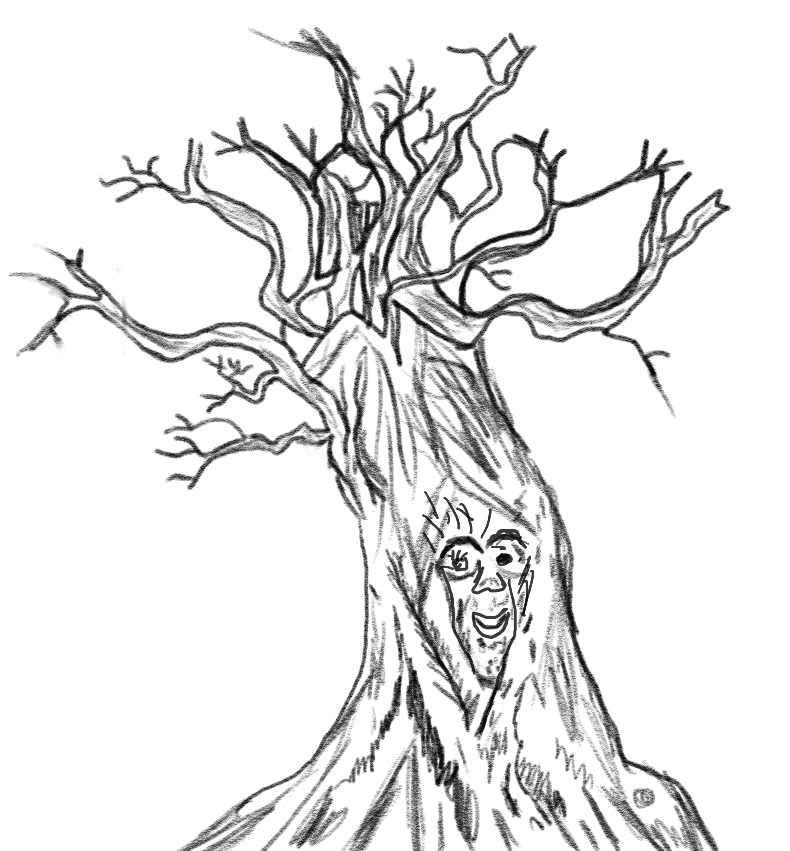
Dryads are nymphs that live in the world of myths and legends. They live inside trees, often oaks.

Oak trees can live for a 1 000 years, and the dryads are the spirits of the woods, protecting and nurturing the trees. They are the guardians of the woodlands. They are invisible, unless they choose to reveal themselves to us.

Perhaps you will see a dryad in Nowhere Wood? You will have to be quiet and be thinking the right kinds of thoughts.


Dryads observe the changes in the seasons, the rhythms of nature and their deep connection to the Earth. Perhaps we need to think the same way if we are to be allowed to see them for ourselves.

Scarlet elf cup
Scarlet elf cup [photograph: Andrew Town

There are lots of fungi with interesting fairy names. This is the scarlet elf cup and grows in Nowhere Wood, feeding on fallen sycamore and hazel wood.

  1. Find out what the scientific name is for our human species. What do the words mean in English? Do you think they are a good description of us?
  2. Very few people believe that there are dryads protecting our woods. Can you think of any benefits to thinking like this? Are there any disadvantages?

Notes on the story

The fairy ring


A tribute to fallen trees

The trees in Nowhere Wood are always there, going quietly through the motions of the seasons: noticed only when we stop to look and reflect. But we feel their presence strongly, just out of sight and mind.

Until today, when their absence feels like the loss of dear friends. 

Fallen ash tree trunks at the quarry face of Nowhere Wood. [Picture: Neil Ingram]
Fallen ash tree trunks at the quarry face of Nowhere Wood. [Photograph: Neil Ingram]
It only took a morning, and nearly 100 years of growth has ended. Yes, they had Ash dieback disease and were marked with a red spot. Yes, they were unstable on the quarry floor.  Even so, we feel their loss keenly.

Trees with Ash dieback disease are marked with a red spot. [Picture: Neil Ingram]
Trees with Ash dieback disease are marked with a red spot. [Photograph: Neil Ingram]
The wood will regenerate, but only if we can remove the trunks from the woodland floor. Else we shall see little re-development in our lifetimes. This problem is one that we have to own.

The robin is an optimistic opportunist. Making the best of new opportunities amongst the fallen branches of ash.
The robin is an optimistic opportunist. Making the best of new opportunities amongst the fallen branches of ash. [Photograph: Neil Ingram]
In the mean time, life goes on amidst the debris of fallen trees.


Notes on the story

The sustainable park (2)

The sustainable park (1)

The old willow tree in Trendlewood park
The old willow tree in Trendlewood park. [Photograph: Neil Ingram]
This willow tree in the park is very old. Maybe a hundred years or so. Look how its bark is gnarled and twisted. It is a great friend of the park and is home to many different insects and birds. One year, a female mallard duck even made a nest on the flat top of the tree!

The willow keeps on growing because every few years, it’s friends cut off all of its branches!

This really does encourage the tree to grow strongly. 

We call the removal of the branches ‘pollarding’.

This ancient willow tree has recently been pruned
Pollarding trees is a way of keeping them alive. [Photograph: Neil Ingram]
This week, it was the old willow’s turn to be pollarded. You can see the cut stumps where the branches used to be.

Woods have always been important to people. In the 17th century, new forests were planted to provide enough timber for the boats for the Royal Navy.

People have pollarded woodland trees for thousands of years.  It was their main source of wood for building, making furniture, for charcoal and for fuel to heat their homes.


Wood is a very useful sustainable resource, when managed in this way. It is sustainable because the tree carries on growing and making new wood.

Pollarded willow wood is special. It is used to make cricket bats and weave baskets.  For generations, this provided income for poor families  in Somerset.

It is also a good way of making new fences. This is because cut branches of willow will grow new roots when they are placed in water.

The cut stems will grow into new trees and can become a hedge when they are planted closely together.

Two volunteers from the Friends of Trendlewood Park soaking the branches of willow
Two volunteers from the Friends of Trendlewood Park soaking the branches of willow. [Photograph: Neil Ingram]
The photograph shows two volunteers from the Friends of Trendlewood Park preparing willow branches to build into a new hedge in the area near the playing fields.

They place the cut ends of the branches into water.

A newly planted willow hedge in Tendlewood Park
A newly planted willow hedge in Tendlewood Park. [Photograph: Neil Ingram]
In a few months’ time, when the weather is warmer, this hedge should be growing strongly and could grow for many years.

  1. This species of willow is called the brittle willow, because branches break off easily. Suggest why it is an advantage to the willow for these branches to be able to grow into new trees.
  2. This species of willow has two ways of reproducing. It flowers and makes seed and also can propagate through fallen branches. Find out why it is useful for the species to be able to reproduce in these two ways.

After the story:

Just after I finished writing this story, it was announced that young trees grown from seeds of the Sycamore Gap tree are to be given to charities, groups and individuals as “trees of hope“. This ancient sycamore tree, from Northumberland, was cut down in September 2023.

new growth from there Sycamore gap tree
Image from https://www.thesill.org.uk/sycamore-gap-tree-is-sprouting/

This is a lovely, kind idea. The tree lives on, not only through its seeds, but  also in the new stems that are growing from its cut stem. This shows the power of nature to recover and re-grow. Life is resilient, it does not give up.


Notes on the story

Apples and the New Year

Climate change and the air

The air is all round us and is a mixture of many different gases. 78% of the air is made of nitrogen, which  is the most common gas. This story is about two other gases found in the air – oxygen and carbon dioxide.


girl breathing out carbon dioxide and breathing in oxygen
The girl breathes out carbon dioxide and breathes in oxygen

We breathe in oxygen and use it to release energy from sugar. At the same time we make carbon dioxide – all living organisms do the same. We all  do this to stay alive.

People  also make carbon dioxide when we burn fuels, such as coal, oil, petrol and wood.

Nailsea was once a very small village. [Image from Nailsea Town.com]

If we go back over three hundred years to the 1700’s, Nailsea was a a tiny village surrounded by farms. Few people lived there, then. People burned wood or peat (from the moors) to stay warm.  They walked everywhere or travelled horse and cart.

Carbon dioxide in the air is measured in units called ‘parts per million’. Scientists  have estimated that in the early 1700’s the carbon dioxide in the air was about 280 parts per million.

An artist’s reconstruction of Middle Engine Pit, Nailsea. Artwork by Mark Hornby. From https://www.nailseatown.com/heritage-trail/middle-engine-pit/

However, things were beginning to change in Nailsea: the first coalmine was opened in 1700 and this would transform the village into a town in the next ninety years. The mines employed experienced miners who came to live in the town as well as local farmworkers.


Oil on canvas of The Old Glass Works, Nailsea in about 1810
This painting shows an appoach to Nailsea from the North. The cone of the glassworks is shown. Nailsea is changing from countryside into a town.
[Bristol City Museum and Art Gallery. Attributed to the British School.]

Plenty of cheap coal led to the opening of the glass factory and more migration of people into the town.  The arrival of the railway in 1841 provided new opportunities to trade with Bristol and its ports. The steam trains were powerful and burned coal.

In Nailsea, new houses were built together with  new roads and shops. Trendlewood quarry was opened in 1850 to provide sandstone tiles for the roofs of the new houses.


All of this activity added carbon dioxide to the air in increasing amounts.  Trees can take carbon dioxide out of the air, but the local woods were gradually chopped down to make way for the new town and for farmland. The wood was burned as fuel.

This pattern of industrialisation has taken place everywhere, all over the world since then. It continues to do so, too. In 2024, the amount of carbon dioxide in the air is estimated at 423 parts per million. This is a rise of 51% since the 1700s.

Does all of this matter? Most scientists think it matters a lot, but some politicians want to disagree.

a diagram of the greenhouse effect
The diagram shows the rays of the Sum being trapped in the atmosphere of the Earth by a layer of carbon dioxide

Carbon dioxide in the air acts like a blanket, reflecting heat energy back towards the land and the sea. In this way, it acts like glass in a greenhouse. The warming caused by the increased carbon dioxide is sometimes called “the greenhouse effect”.

Increased levels of carbon dioxide in the air affects the climate and weather patterns across the world, as we shall see in the next story.

Do you think that the businessmen of the 1700s were aware that the burning of coal could affect the climate of the Earth?

If were are aware of this now, should this affect whether  we choose to burn coal and oil.

What do you think?


Notes on the story

Climate change and the weather

The greening of Nowhere Wood

It is a cold and wet April in Nowhere Wood, which is full of birdsong and flowers.

The trees are becoming green with new leaves. Leaves grow silently that we can miss their unfolding, noticing only when they are fully opened. If you look carefully, you can see new leaves opening today.

It raises our spirits, and makes us look forward to warmer days.

New leaves grow from buds. Buds are covers that protect the developing leaves from damage during the frosty winter days.

Emerging horse chestnut leaves in Nowhere Wood.
Emerging chestnut leaves in Nowhere Wood. [Photograph: Neil Ingram]

New leaves are a special shade of green called Kelly Green. Later in the year the leaves become a darker shade of green.

The greening of Nowhere Wood.
The greening of Nowhere Wood. [Photograph: Neil Ingram]
Emerging oak leaves
Emerging oak leaves in Nowhere Wood. [Photograph: Neil Ingram]

  1. What happens to these new leaves in the autumn?
  2. Why do plants make new leaves during the summer, ready for the next spring?

Read more about leaves in the A year in the life of a sugar factory.


Notes on a story

If a tree falls…

Time travellers to Nowhere (2)

A forest of tree ferns.
A forest of tree ferns. [Image: ttps://www.laterredufutur.com/accueil/la-plus-vieille-foret-du-monde-a-ete-decouverte-dans-letat-de-new-york/foret-380millions-dannees/]

We are not alone in Nowhere Wood, about 300 million years ago. We are deep in a forest of tree ferns, towering above us, fifteen metres high. The damp air has a sweet and woody fragrance, heavy with spores, heavy with promise.

Carboniferous trees
Carboniferous trees [Image: https://forces.si.edu/atmosphere/02_02_06.html]

The plants are silently photosynthesising, growing ever taller and adding oxygen to the air. Year after year, generation after generation.

Stages in the formation of coal.
Stages in the formation of coal. [Image: https://www.manalifelab.com/the-science]
The wood in the tree stems is a new invention of evolution: no other plants have wood and fungi have yet to discover a way to eat it. This means that when the trees die and fall into the swampy wet soil, they do not decay, but stayed for thousands of years, gradually becoming compressed together to form deposits of coal.

The formation of most of our coal brought Earth close to global glaciation.
The formation of most of our coal brought Earth close to global glaciation. [Image: George Feulner, https://www.pnas.org/doi/10.1073/pnas.1712062114]

The tree ferns took carbon dioxide from the air and locked it away as wood and coal. They took so much and the amount of carbon dioxide in the air fell so much, that the  climate cooled, lead to the destruction of the tropical forests.

Today, humans have found the coal and burned it, putting the hidden carbon dioxide back into the air, re-warming the planet. No we face a global warming, not a global cooling. Perhaps, one day, Nowhere Wood will be destroyed for a second time.

  1. Think about how interconnected the rocks, the trees, the atmosphere and the climate are. How does a change to one thing affect everything else?
  2. Ferns are the first group of plants to develop proper roots. Think about why it would be an advantage for the early tree ferns to grow into sandstone.

Back then, the tree ferns grew through sandstone much as the smaller ferns in Nowhere Wood do today. Read more about this in another story: Climbing the walls.

Notes on the story

Time travellers to Nowhere (3)

Time travellers to Nowhere (3)

Carboniferous dragonfly
Carboniferous dragonfly, with 1.5m wingspan. [image: https://upload.wikimedia.org/wikipedia/commons/thumb/8/81/Meganeura.png/1280px-Meganeura.png]

We are in Nowhere Wood, about 300 million years ago, staring at a forest of tree ferns, watching them make oxygen. Over the years, these tree ferns have made so much oxygen that its concentration in the air has risen to about 35%, (compare that with the 21% found in the 21st century).

Wildfires in Chile
Wildfires in Chile. [Photograph: https://globalclimatecare.in/climate-asia/f/man-made-or-nature-made-chile%E2%80%99s-forest-fire-creates-global-threat]
There is so much oxygen that the lightning strikes produce frequent explosions in the air, causing forest fires. Nowhere Wood is a dangerous place to be, sometimes.

Arthropleura, a giant millipede.
Arthropleura, a giant millipede. [Image: https://en.wikipedia.org/wiki/Arthropleura#/media/File:ArthropleuraSide.jpg]
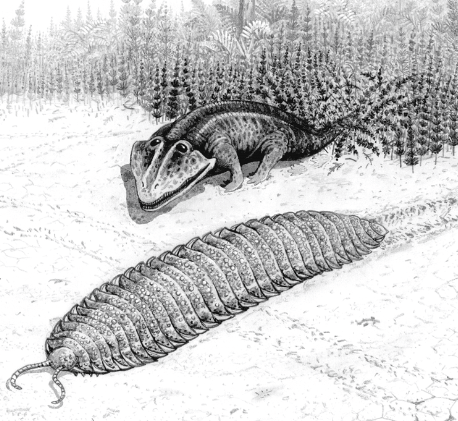
The animals are using the oxygen to grown large: some millipedes are 1.5 metres in length and 0.5 metres wide. Some dragonflies have 70 cm wingspans.

Hylonomous lizard
Hylonomous lizard [Image: https://commons.wikimedia.org/wiki/File:Hylonomus_BW.jpg]
 With all of this food available, there are opportunities for new  carnivorous lizards to appear, including Hylonomus. This is one of the first creatures to have a new  eggs with membranes inside, a characteristic later shown by all birds.

Eryops stalking Arthropleura in the Carboniferous period
[Image: https://www.darwinsdoor.co.uk/feed/the-giant-arthropods-of-the-carboniferous.html]
 Also the flesh-eating Anthracosaurs first appeared at this time. These are the direct ancestors of the dinosaurs, that appeared millions of years later.

In Nowhere Wood, everything is connected together, in space and in time.

So many adventures in space and time, so much opportunity for the evolution of new forms. All of which depends on the formation of sandstone in Nowhere Wood.

  1. Imagine what it was like to live in Nowhere Wood 300 million years ago. What would be the same and what would be different.
  2. How do you think the world will change in the future?

Notes on the story

Safety in numbers

Spring is coming!

The shortest day
The shortest day. [Image adapted from https://simple.wikipedia.org/wiki/Winter_solstice#/media/File:Earth-lighting-winter-solstice_EN.png]
Nowhere Wood on December 23rd was silent and still. The wood was in midwinter, at its furthest point from the Sun on its journey through the seasons. At only 7 hours and 49 minutes, this was the shortest day  and darkness ruled the wood. From now onwards the days will get longer by about two minutes each day until midsummer’s day in July.

The air was was misty and damp. No birds sang. The only movements were from ten or more baby squirrels running up and down trees, looking for food. The plentiful acorns in the autumn gave their parents the nutrients the needed to produce a special autumn litter.

Robin, in Nowhere Wood
Robin, in Nowhere Wood. [Photograph: Neil Ingram]
Even by January, the wood had moved onwards and the days were drawing out. Robins sang from high branches of trees, marking out the wood into their territories, preparing for the coming spring.

Jay versus magpie
Jay versus magpie. [Photograph: Alex Appleby, https://www.ephotozine.com/photo/magpie-vs-jackdaw-59874975]
Jackdaws and magpies fought for the right to control the high airspaces and the food that the neighbouring houses throw away. The wood was bustling with movement and sound.

Snowdrops in Nowhere Wood
Snowdrops in Nowhere Wood. [Photograph: Neil Ingram]
Today is February 1st, the day that the Celtic peoples call Imbolc, the first day of spring. The flowers are opening and the frogs will soon return to our ponds to breed. Look upwards to the sky.

Spring is coming!

  1. Think about the acorns that filled the floor of Nowhere Wood in September. How have they led to the birth of the new squirrels?
  2. What changes have you seen in your neighbourhood in the last few weeks since January?

Notes on the story

What is a frog?

All change!

[Image: https://www.clipartof.com/portfolio/sajem/illustration/happy-moodie-character-looking-at-his-reflection-in-a-mirror-227335.html]
When you next look into a mirror ask yourself if you are the same person as you were yesterday. Well, of course you are.

Even people who last met you ten years ago can still recognise you and call you by your name. Although they might add, “My, how you have grown!”

And yet, if we could see under your skin, we would find that you are not the same. One of the biggest mysteries in biology is how we can change all of the time, whilst still staying the same.

Your skin cells live for about two weeks, so every month they are completely replaced. Red blood cells live for about 100 days and about two million are made in your body in every second.

Some of the chemicals in your cells exist for only minutes or seconds.

There is an energy store called ATP, which is needed for muscle contraction. ATP is made and broken down within 15 seconds.  Cells need glucose to make ATP and this explains why muscle cells need a continuous supply of glucose to stay alive. This comes from our food.

[Image: https://www.clipartmax.com/middle/m2i8d3m2Z5d3G6d3_hm00260-%5B1%5D-digestive-system-close-up/]
Even large organs, like the liver, are replaced regularly. You grow a new liver every year. The cells in the alveoli of your lungs are renewed every eight days. Even the bone cells in our skeleton are replaced every three months. Your entire skeleton is remade every ten years.


[Image: http://halloween.phillipmartin.info/halloween_skeleton.htm]
So, when your friend sees you after ten years and calls out your name, there is not a single part of your body that was the same as when you last met. You have been completely remade and remodelled. And the same is true of your friend.


So, how can this be? New cells are made when one cell divides to make two cells. The information in the genome is copied before cells divide, so the new cells always receive the same information as the old cells.

The new cells use this information to grow bigger and to develop. So, you stay the same because of how your new cells use the information in their genomes.

Living organisms are alive because they actively remake themselves. No man-made machine can do this. Which is, perhaps, just as well.

  1. In what ways have you changed in the last ten years?
  2. In what ways have you stayed the same?
  3. Why do need to eat food everyday?

Notes on the story

A year in the life of a sugar factory

Life is a relay race

This story continues the adventures of the ferns in Nowhere Wood. The first part of the story is Climbing the walls.

The genome of the fern contains essential information that the fern needs to grow and  make new cells. At different times the fern produces spores, sperm and eggs and the two forms of the plant. The genome contains information on the growth of each of these stages.

The information in the genome is the same in every cell of the fern because an identical copy of the genome is found inside the nuclei of all the cells of this fern at every stage of its life.

The genome is found in the nucleus of each cell.

Fern chromosomes

The genome is divided between a number of chromosomes. The diagram shows the genome of the Adder’s tongue fern. It has about 1440 chromosomes. This is the largest number of chromosomes of any organism in the world!

Fern genomes are larger than the genomes of other organisms, because they contain the information the fern needs to grow spores, sperms and eggs as well as the two forms of plant.

The genome contains the secrets of how to be a fern and how to move forward in the adventure. This information has been copied and passed on to each generation of ferns, ever since the first ferns evolved about 390 million years ago.

Life is like a relay race: genetic information is passed on from one generation to the next in the genomes of sperms, eggs and other gametes.

These ferns are having risky and uncertain adventures in time as well as space. If the secret information is not passed on correctly, then the species may become extinct. History shows us that most species that have ever lived on Earth are now extinct.

    1. Why do you think it is essential that the genetic information from parents to offspring is copied accurately?
    2. Why do you think the fern genome is so large, compared with other types of plant?

Notes on the story

All change!

Moving things on

The weather is warm and wet in Nowhere Wood.

These are perfect conditions for growing the fungi that spread  everywhere throughout the soil of Nowhere Wood. Fungi are Nature’s recyclers, feeding on the fallen leaves, fruits and wood.

Mycelia of fungi. [Photograph: Neil Ingram]
Fungi feed on the wood of the dead oak trees, turning it into nutrients that provide energy and chemicals needed  to grow new fungal cells.  (These cells form long threads called hyphae). Some fungi can spread out over really large areas, several kilometres wide.

At this time of the year, the fungi are busy ‘ being’.

Fungi in Nowhere Wood. [Photograph: Neil Ingram]
Then one night, silently and without warning, the fungi do something else.

They produce structures that we call “mushrooms” **.

Mushrooms are  fruiting bodies. They produce thousands of tiny spores.

Spores are small and light. They are carried on air currents to new places in Nowhere Wood, where they will germinate and grow into new hyphae.

Fungus in Nowhere Wood. [Photograph: Neil Ingram]
Spores have often been found in the filters of jet aircraft flying at the edge of the atmosphere, so some spores can travel right round the world. When fungi produce spores they are ‘becoming’ something new: small, light and mobile versions of themselves.

Decaying fungus in Nowhere Wood. [Photograph: Neil ingram]
Then, almost as soon as they arrive, it is all over. The fruiting bodies die and become food for other fungi and bacteria in Nowhere Wood.

This is how it is. The precious molecules are used, recycled and become part of the growth of new organisms. Nothing is ever wasted.

  1. Nearly all of the atoms present on Earth when life began to evolve about 3.7 billion years ago are still found on Earth today. Many of them are found locked inside living organisms. Sooner or later, all of these organisms will die. Imagine what life would be like without Nature’s recyclers.
  2. You are a collection of recycled atoms. Think about how carbon atoms enter and leave your body. [Hint, carbon atoms are found in carbohydrates and in carbon dioxide.]

You can read more about ‘being and becoming’ here.


**Some mushrooms are good to eat, others are really poisonous and can kill us. It is hard to tell them apart unless you are an expert, so it is sensible not to touch or eat any mushrooms you find in a wood.

Notes on the story

Climbing the walls