Safety in numbers

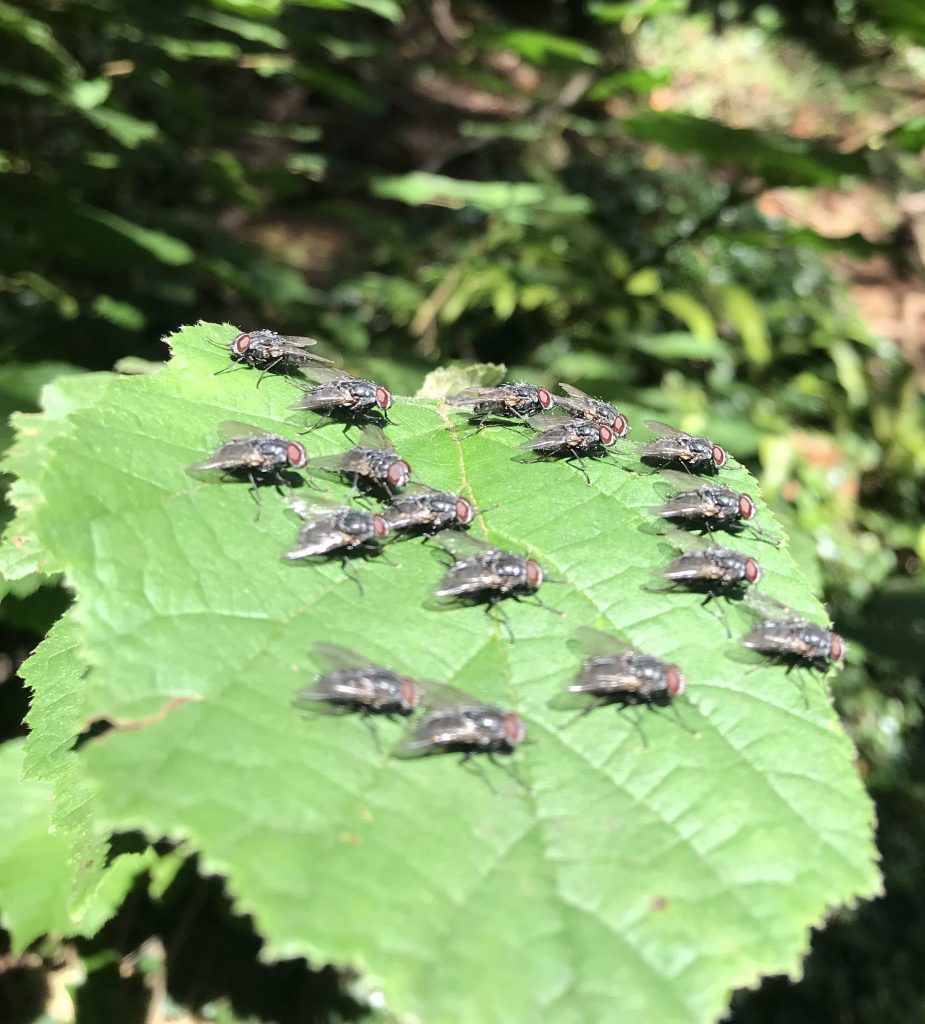
cluster flies on a leaf in Nowhere Wood
Cluster flies on a leaf in Nowhere Wood. [Photograph: Neil Ingram]

These animals look like cars parked in the autumn sunshine. They look harmless enough, but they have some gruesome secrets.

What are they and what are they doing? They are called cluster flies, and they are warming their bodies in the sun, before flying to feed on the fruits of the wood.

They are having adventures in time and space in Nowhere Wood.  Life in the wood is dangerous and the animals are busy being alive: feeding, drinking and staying warm.

The animals certainly look like flies: with one pair of wings, a large head and huge compound eyes. Look closer and you might see their mouthparts, sucking water from the surface of the leaf.
More cluster flies gather on the leaf in Nowhere Wood, October 2021
More cluster flies gather on the leaf in Nowhere Wood, October 2021. [Photograph: Neil Ingram]

The flies have lived their whole lives in Nowhere Wood. Their mothers laid their eggs in the soil last autumn. In the Spring, the eggs hatched to release larvae into the soil that burrowed into the bodies of earthworms.

They spent the early summer feeding on the worms before pupating. The adults emerged in the early summer, killing their earthworm hosts.

The flies are in a hurry to breed before it goes colder, later in the month. They are becoming mature enough to produce the next generation of flies.

Then the cycle of ‘being and becoming’ will begin again.

There is safety in numbers. The main predator of these flies is a type of wasp. There are twenty pairs of eyes looking out for danger and when one senses the wasps, they all fly away.

Life is so uncertain in Nowhere Wood. As well as wasps, the air contains the spores of dangerous fungi, that can infect and grow inside the adults,  eating them up from the inside! In spite of the dangers, enough cluster flies survive to breed to be present in the wood next year.

Life is an uncertain adventure for the cluster flies, the earthworms, the wasps and the fungi. Everything is connected in Nowhere Wood.

  1. Suggest why cluster flies need to warm their bodies in the morning, before they can fly.
  2. Suggest why there is safety in numbers.

Notes on the story

Goodbye, for now

Time travellers to Nowhere (2)

A forest of tree ferns.
A forest of tree ferns. [Image: ttps://www.laterredufutur.com/accueil/la-plus-vieille-foret-du-monde-a-ete-decouverte-dans-letat-de-new-york/foret-380millions-dannees/]

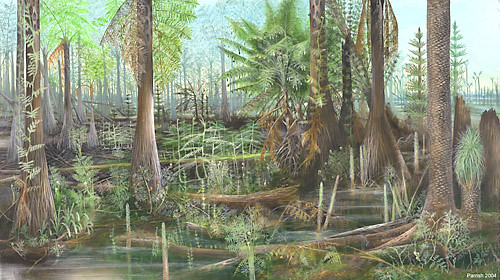
We are not alone in Nowhere Wood, about 300 million years ago. We are deep in a forest of tree ferns, towering above us, fifteen metres high. The damp air has a sweet and woody fragrance, heavy with spores, heavy with promise.

Carboniferous trees
Carboniferous trees [Image: https://forces.si.edu/atmosphere/02_02_06.html]

The plants are silently photosynthesising, growing ever taller and adding oxygen to the air. Year after year, generation after generation.

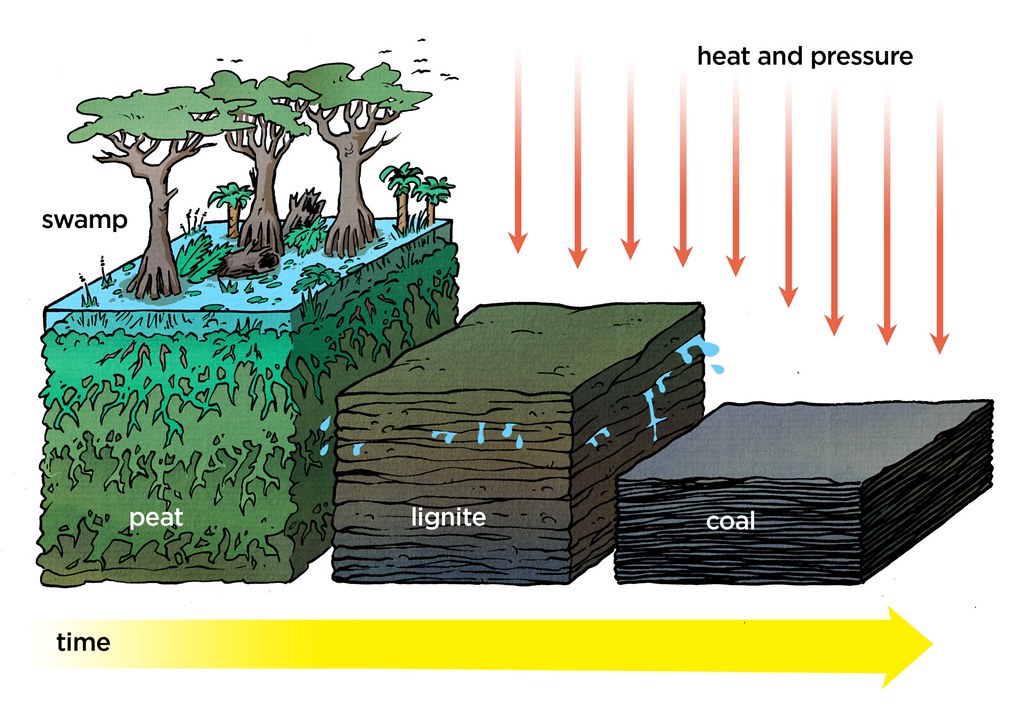
Stages in the formation of coal.
Stages in the formation of coal. [Image: https://www.manalifelab.com/the-science]
The wood in the tree stems is a new invention of evolution: no other plants have wood and fungi have yet to discover a way to eat it. This means that when the trees die and fall into the swampy wet soil, they do not decay, but stayed for thousands of years, gradually becoming compressed together to form deposits of coal.

The formation of most of our coal brought Earth close to global glaciation.
The formation of most of our coal brought Earth close to global glaciation. [Image: George Feulner, https://www.pnas.org/doi/10.1073/pnas.1712062114]

The tree ferns took carbon dioxide from the air and locked it away as wood and coal. They took so much and the amount of carbon dioxide in the air fell so much, that the  climate cooled, lead to the destruction of the tropical forests.

Today, humans have found the coal and burned it, putting the hidden carbon dioxide back into the air, re-warming the planet. No we face a global warming, not a global cooling. Perhaps, one day, Nowhere Wood will be destroyed for a second time.

  1. Think about how interconnected the rocks, the trees, the atmosphere and the climate are. How does a change to one thing affect everything else?
  2. Ferns are the first group of plants to develop proper roots. Think about why it would be an advantage for the early tree ferns to grow into sandstone.

Back then, the tree ferns grew through sandstone much as the smaller ferns in Nowhere Wood do today. Read more about this in another story: Climbing the walls.

Notes on the story

Time travellers to Nowhere (3)

Time travellers to Nowhere (3)

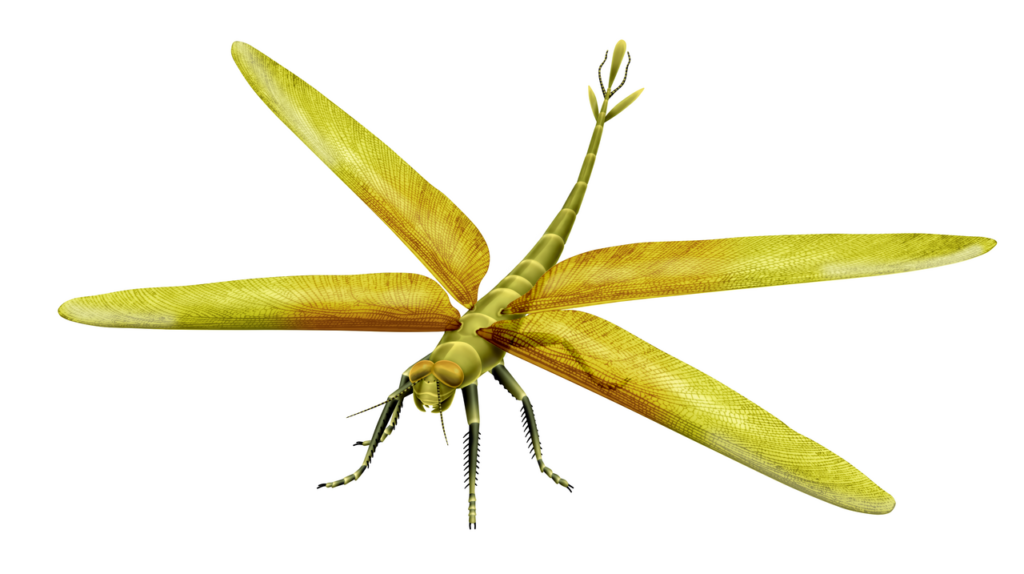
Carboniferous dragonfly
Carboniferous dragonfly, with 1.5m wingspan. [image: https://upload.wikimedia.org/wikipedia/commons/thumb/8/81/Meganeura.png/1280px-Meganeura.png]

We are in Nowhere Wood, about 300 million years ago, staring at a forest of tree ferns, watching them make oxygen. Over the years, these tree ferns have made so much oxygen that its concentration in the air has risen to about 35%, (compare that with the 21% found in the 21st century).

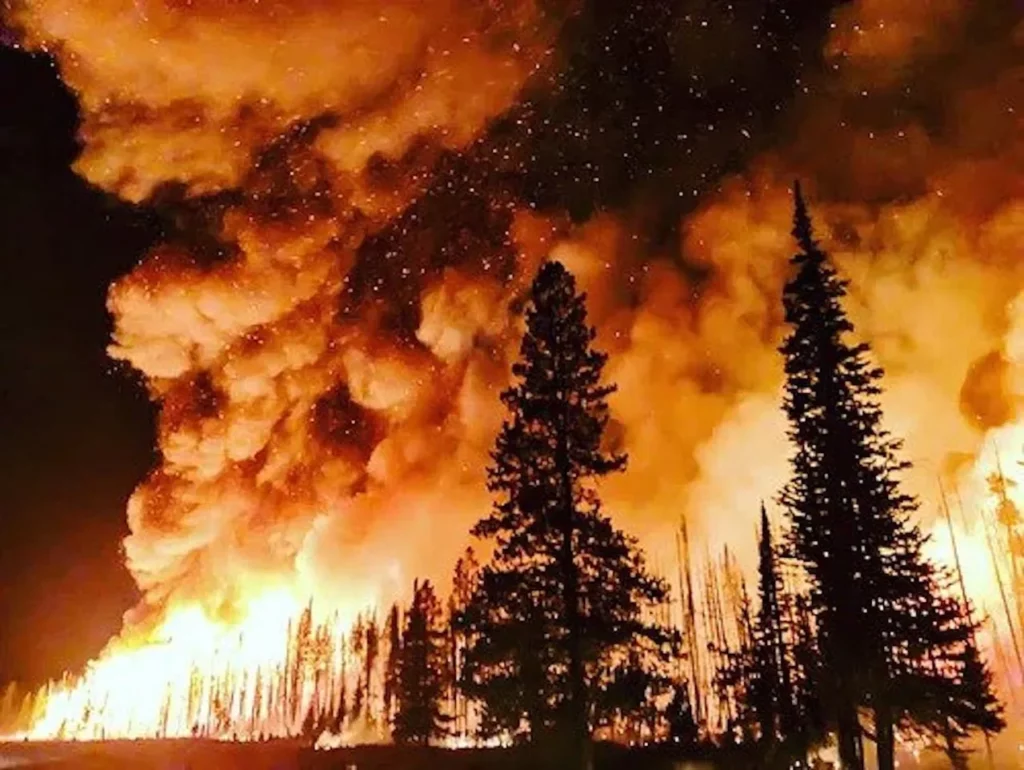
Wildfires in Chile
Wildfires in Chile. [Photograph: https://globalclimatecare.in/climate-asia/f/man-made-or-nature-made-chile%E2%80%99s-forest-fire-creates-global-threat]
There is so much oxygen that the lightning strikes produce frequent explosions in the air, causing forest fires. Nowhere Wood is a dangerous place to be, sometimes.

Arthropleura, a giant millipede.
Arthropleura, a giant millipede. [Image: https://en.wikipedia.org/wiki/Arthropleura#/media/File:ArthropleuraSide.jpg]
The animals are using the oxygen to grown large: some millipedes are 1.5 metres in length and 0.5 metres wide. Some dragonflies have 70 cm wingspans.

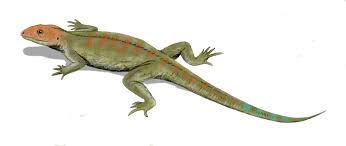
Hylonomous lizard
Hylonomous lizard [Image: https://commons.wikimedia.org/wiki/File:Hylonomus_BW.jpg]
 With all of this food available, there are opportunities for new  carnivorous lizards to appear, including Hylonomus. This is one of the first creatures to have a new  eggs with membranes inside, a characteristic later shown by all birds.

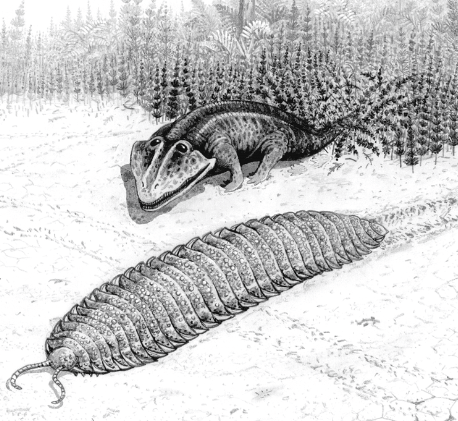
Eryops stalking Arthropleura in the Carboniferous period
[Image: https://www.darwinsdoor.co.uk/feed/the-giant-arthropods-of-the-carboniferous.html]
 Also the flesh-eating Anthracosaurs first appeared at this time. These are the direct ancestors of the dinosaurs, that appeared millions of years later.

In Nowhere Wood, everything is connected together, in space and in time.

So many adventures in space and time, so much opportunity for the evolution of new forms. All of which depends on the formation of sandstone in Nowhere Wood.

  1. Imagine what it was like to live in Nowhere Wood 300 million years ago. What would be the same and what would be different.
  2. How do you think the world will change in the future?

Notes on the story

Safety in numbers

The story of bluebells

Bluebells at Portishead headland.
Bluebells at Goblin Combe [Photograph: Pat Gilbert, Friends of Trendlewood Park]
If primroses and cowslips are our favourite flowers of early Spring, then it is the bluebells that steal our hearts in early Summer. On a sunny day, they dust the floor of the wood in a blue mist.

Many poets have written in wonder of them. Alfred, Lord Tennyson may have walked the bluebell woods above nearby Clevedon Court with his friend Arthur Hallam. Tennyson compared a carpet of bluebells to “the blue sky, breaking up through the earth”.

Bluebells are important plants in woods. About 50% of the world’s population of English bluebells (Hyacinthoides non-scripta) is found in the United Kingdom. This is largely due to the UK’s relatively mild climate and our widespread ancient woodlands, where bluebells thrive.

But all is not as it seems, because the English bluebell is threatened by a rival Spanish bluebell, (Hyacinthoides hispanica), which was introduced in the 17th and 18th Centuries into formal gardens in large country houses.

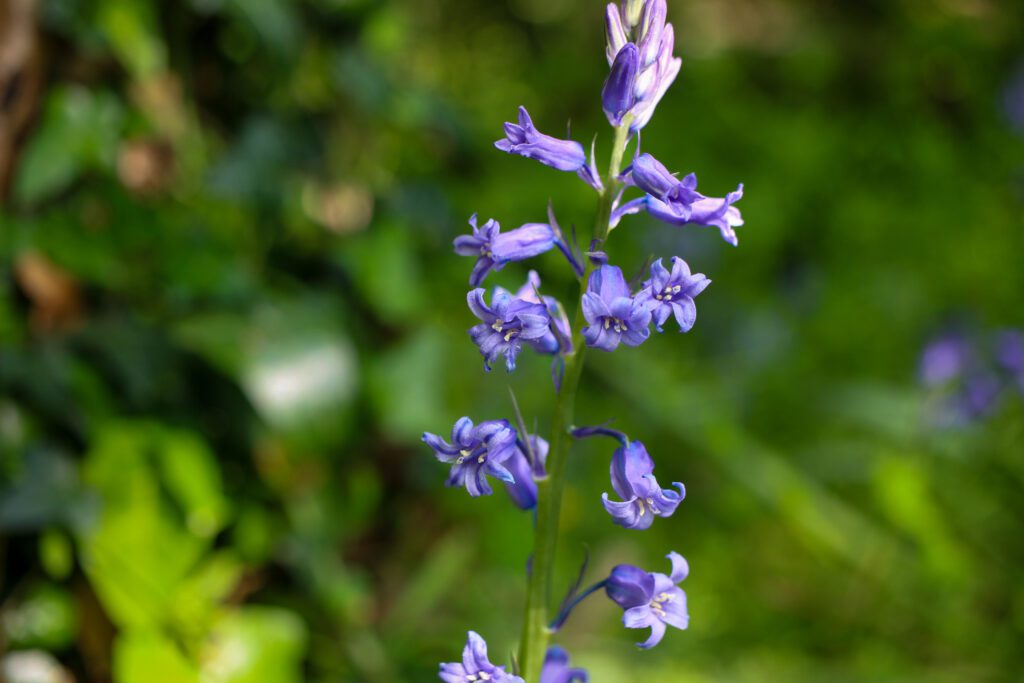
English bluebell in Nowhere Wood.
English bluebell in Nowhere Wood. [Photograph: Neil Ingram]
 The flowers of English bluebells are deep violet-blue,  bell-shaped tubes with petals that roll upwards.  They are found mostly on one side of a curving stem, so that the flowers droop downwards. Often they have a strong sweet scent.

Spanish bluebell in Nowhere Wood.
Spanish bluebell in Nowhere Wood. [Photograph: Neill Ingram]
The rival Spanish bluebell has paler flowers that are found all round the stem, not just on one side. The petals are not as curved back as the English bluebell. The stems are thicker and more upright and the leaves are much broader than the English bluebell.

Spanish bluebells
Spanish bluebells. [photograph: Neil Ingram, Nowhere Wood]
These two species are closely related and can breed together to produce plants that can breed with each other and with both parents. These are the hybrids. So, what we find is that in  most English woods we get a range of bluebells, some of which resemble the English and Spanish types as well as many plants that have characteristics of both types.

Recent research suggests that most of the bluebells in UK woods are hybrids and the pure English forms are restricted to very old woodlands that have little human interference. Certainly the ones bought from garden centres are probably hybrids.

However, the good news is that the English bluebell is thriving in these remote woodlands and is likely to survive, as long  as we leave them alone!

  1. Does it matter if the traditional population of English bluebells is gradually replaced by a hybrid form of English-Spanish bluebell. What do you think?


Notes on the story

A tale of two butterflies


The Apple Tree Man of Nowhere

Once upon a time, there lived a young man called Henry Summers, who lived at the Farmhouse over at the East End, just below the quarry. He was a wise man, strong in the arm and of calm manner. He never beat his animals or his wife. The family farmed ten fields and had several beautiful apple orchards.

Among the trees, there was one particularly ancient apple tree that Henry’s great grandfather planted and around which all of his children had played. The tree stood tall and strong, even though it was very old.

Henry believed that this tree was extra special, and he called it the ‘Apple Tree Man’. Henry always took great care of this tree, speaking to it kindly and ensuring it had plenty of water and cider at the wassail.

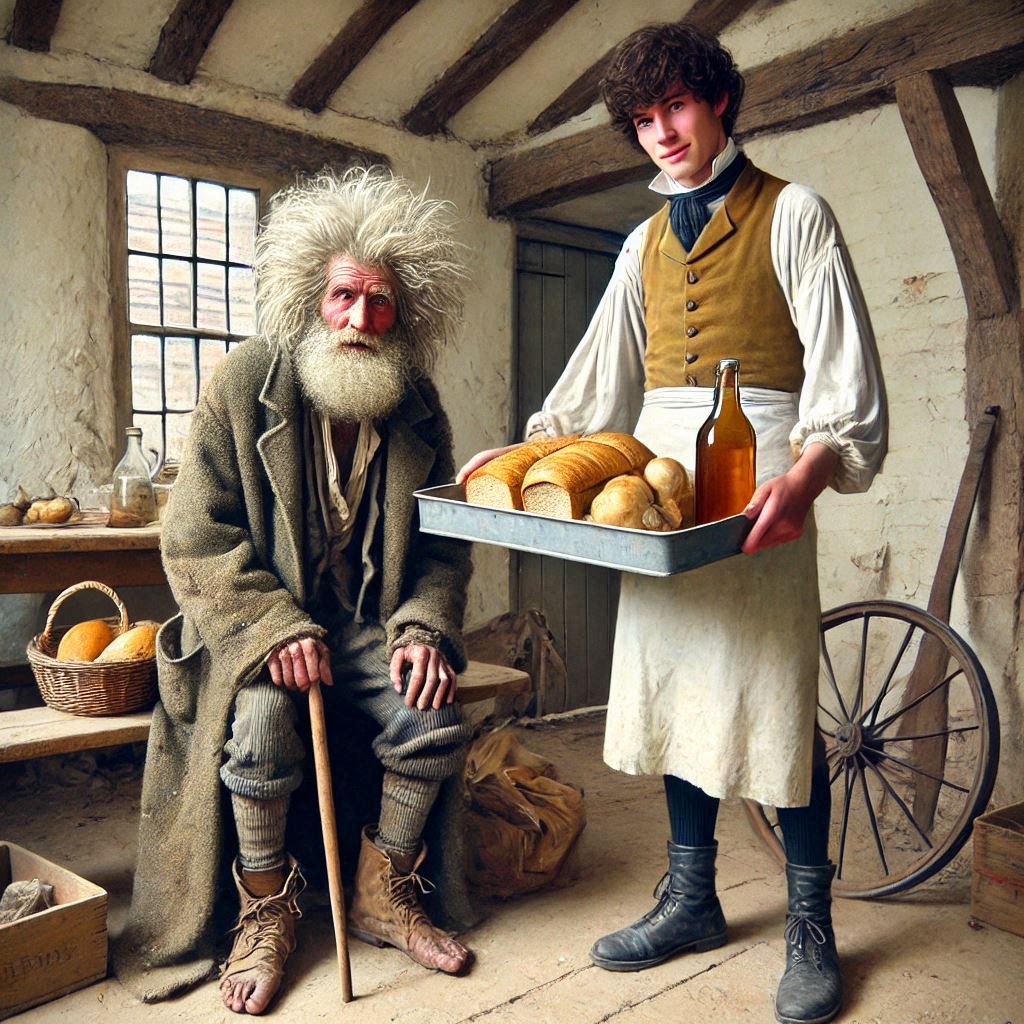
One cold winter’s night, Henry was visited by a stranger who had walked from Bristol and wanted to find friends in Nowhere. His clothes were dirty and his shoes were worn out. Henry was as kind to people as he was to his goats, welcomed the stranger into his home and gave him food and cider.

The wanderer meets the young farmer

His wife looked out some more shoes for him.  The stranger slept soundly in his clean bed that night.

The next day, the happy stranger revealed that he was, in fact, the spirit of the Apple Tree Man who had taken the form of a wanderer to test the farmer’s kindness.

The Apple Tree Man promised the farmer that as long as he continued to care for the apple trees, his orchards would make so many lovely apples every year, that he and his family would be wealthy and  joyful.

The apple trees produced many beautiful apples

The Apple Tree Man was true to his word, the orchards flourished, and the farmer and his descendants enjoyed bountiful harvests for many generations. And the people of Nowhere enjoyed their cider for years to come.


Notes on the story

Climate change: new arrivals in Nowhere Wood


Early risers!

The first snowdrops of spring
The first snowdrops of spring. [Photograph: Neil Ingram]
Every year, the snowdrop is the first plant to flower in Nowhere Wood. It is a symbol of the birth of Spring, bringing good cheer and hope at the end of a long winter. This is one reason why people plant snowdrops in their gardens.

Snowdrops in snow
Snowdrops in snow. [Photograph: ERS images, https://uk.pinterest.com/pin/12736811423122699/]
Snowdrops are tougher than they look: they can grow through ice and snow. Their leaves have hardened edges that act as snowploughs and their cells contain a snowdrop antifreeze that stops ice crystals forming. The real secret of the snowdrop’s success is found below the ground, in the frozen soil. There, in the darkness, is a bulb, full of food made in last Spring’s photosynthesis. Like a battery, it is an energy store, so that the plant can start to grow in the weak winter sunshine.

This means that the plant can make leaves to grow in the warming Sun. The leaves make food to store in its bulbs ready for next year. Snowdrops do all of this before the leaves of the big trees open to steal the light, so that the floor of the wood becomes shaded. By then, the work of the snowdrop is over and it can wait for the next winter.
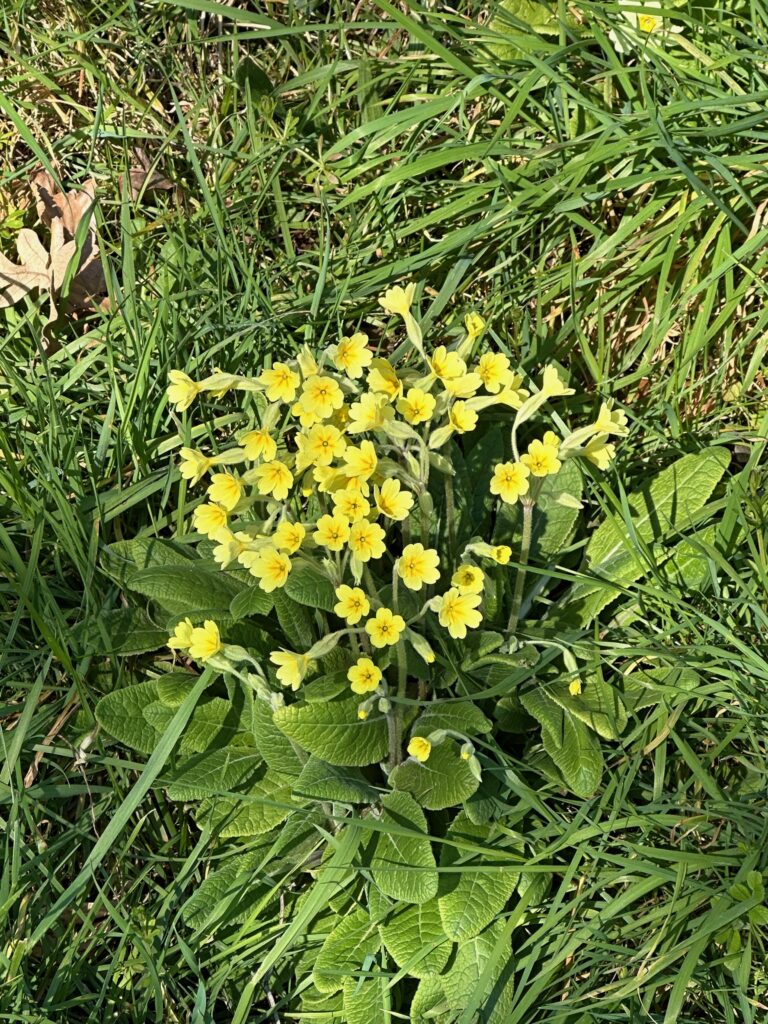
1. How have people helped the snowdrop to survive for so many years?

2. What advantages do snowdrops have by storing their food in underground bulbs. Can you think of any possible disadvantages?

Snowdrops have many more secrets that help them in their adventures in time and in space. We may tell more stories about snowdrops in the coming days! Come back to read them.

Notes on the story

Time travellers to Nowhere (1)

Yellow flowers

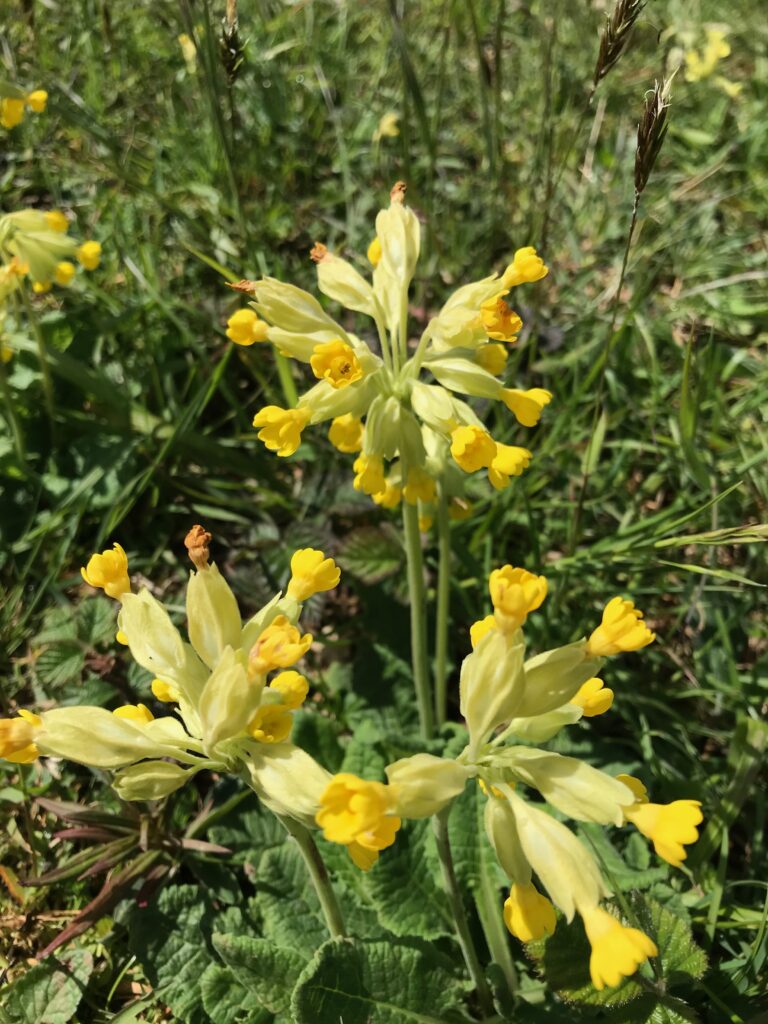
Early spring in Nowhere Wood is the season of yellow flowers. Cowslips have an inelegant name: originally called ‘cow slops’, they were thought to grow where cows have trodden their poo into the ground. The old Somerset name of “bunch of keys” is much nicer – the arrangement of flowers on the head were thought to look like a set of jangling keys.

Cowslips on the edge of Nowhere Wood.
Cowslips on the edge of Nowhere Wood. [Photograph: Neil Ingram]
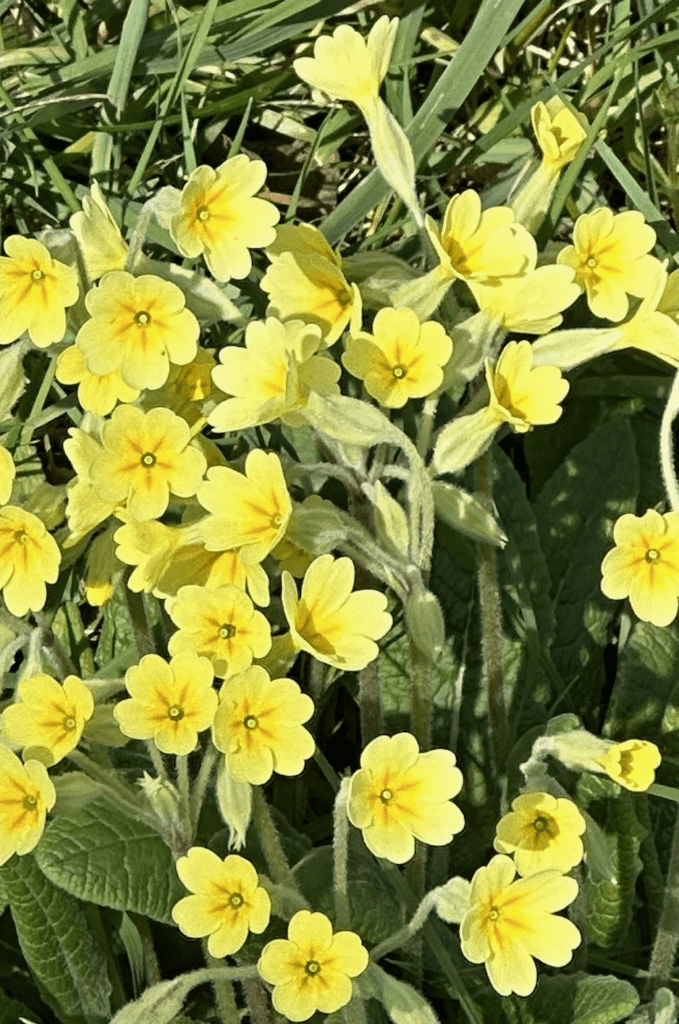
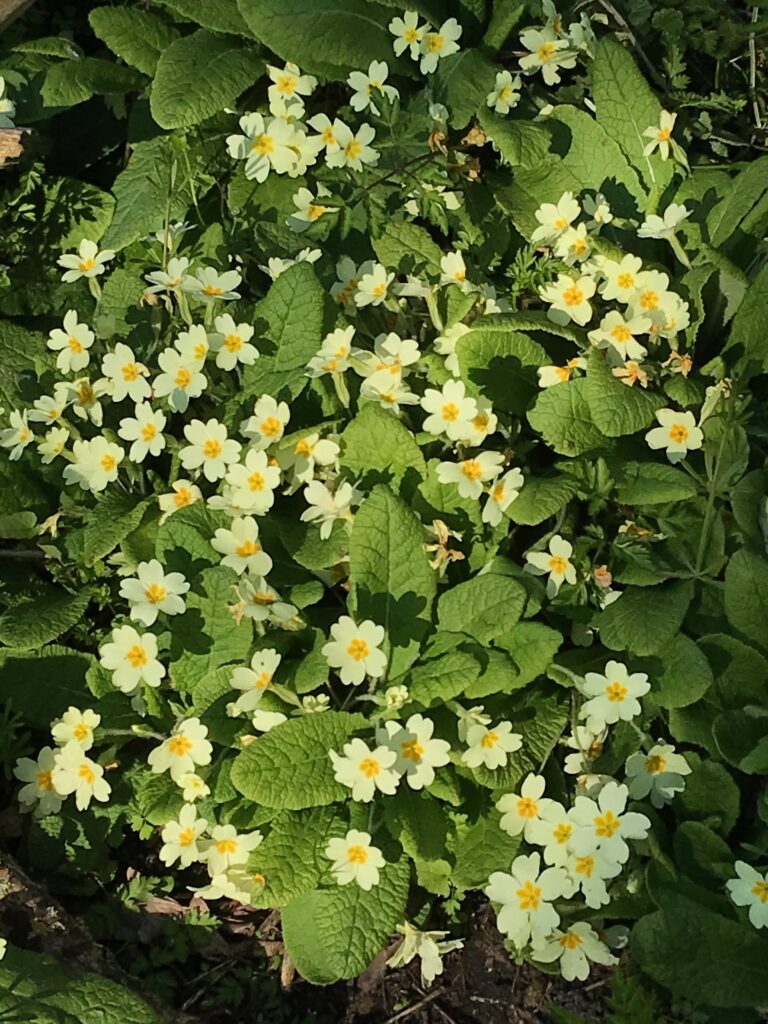
Primroses are a most loved flower of Springtime. Called the “early rose” in Somerset, they are the flowers of Easter displays, with bunnies and eggs.

Primroses on the edge of Nowhere Wood
Primroses on the edge of Nowhere Wood. [Photograph: Neil Ingram]
 

But look at this:

A hybrid between primrose x cowslip on the edge of nowhere Wood
A hybrid between primrose x cowslip on the edge of nowhere Wood [Photograph: Neil Ingram]
Growing between the cowslip and the primrose is a plant that is similar to both, but different, too. It looks as if it is half way between the two types of plant.

Cowslips and primroses are quite closely related plants. This new plant has both cowslip and primrose as parents. It is called the “false oxlip” and is a hybrid.

close up of the hybrid
close up of the hybrid [Photograph: Neil Ingram]

  1. The hybrid has formed naturally as a result of “cross-pollination” between cowslip and primrose parents. Hybrids can sometimes occur in animals, too. Find about how mules and ligers form.


Notes on the story

The story of bluebells

The singing trees

ice freezes the pondWinter has come to Nowhere Wood and ice has formed around the fallen trees in the pond. Everything shivers and wood is silent again. Squirrels search for food in the frozen mud, but everything else is waiting, biding its time.
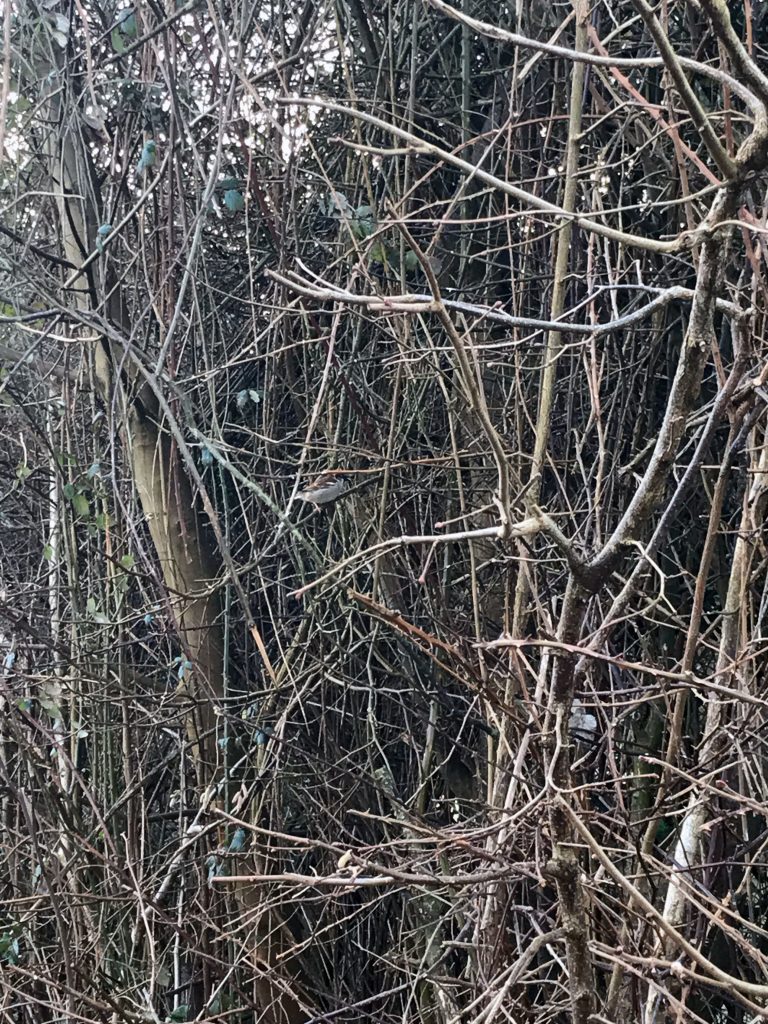
Silent, except for an ancient overgrown hedge formed from a row of old trees, bound together into a thicket by generations of bramble stems. These trees are singing, for this is the home of the tree sparrows. The trees are just outside the wood, next to a path much used by dogs taking their owners for a daily walk.

The tree sparrows are warm, protected from the icy wind by the layers of dead branches that surround them. Impenetrable, they are hidden amongst the branches, out of harm’s way. In this forgotten place, they thrive and they sing.
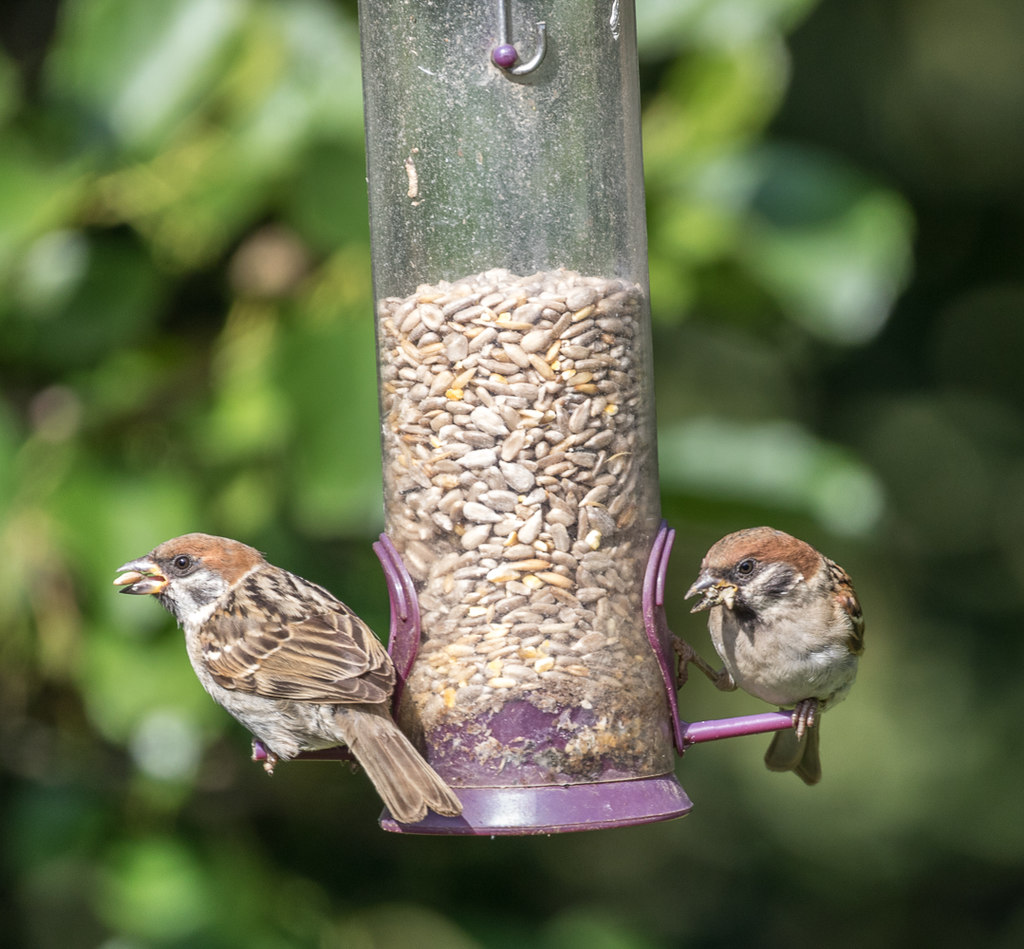
 

Well not quite forgotten. In the garden of a house, less than 10 metres from the singing trees, is a garden with a bird feeder, filled daily by its residents. The sparrows dart from the hedge to the feeder and then back again, hour after hour, making sure they do not go hungry.

Small acts of kindness can make a big difference to the birds in Nowhere Wood. These ancient hedges are important, too, as wildlife corridors, joining ancient woodlands together, giving animals a chance to move safely across the landscape.

  1. Why are the ancient hedges such a good place for the tree sparrows to live?
  2. Why are bird feeders so important in the winter months?


Notes on the story

Spring is coming!

A year in the life of a sugar factory

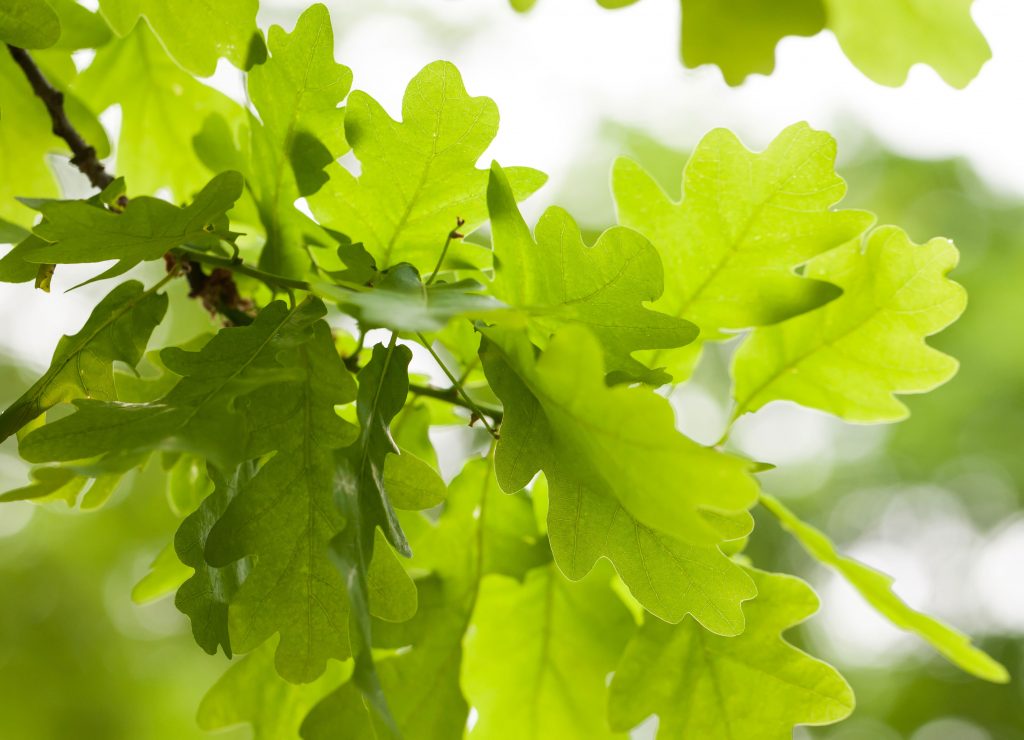
The leaves of plants are everywhere in Nowhere Wood, helping to keep the wood alive. Leaves are organs: collections of living tissues and cells, having adventures in time and space. This is the story of a year in the life of an oak leaf.

Leaves are factories for making sugar from sunlight, water and carbon dioxide from the air. No human factory can do this, which is why we, and all other organisms, are so dependent on plants. Leaves are the producers of food.

Buds of the English oak.
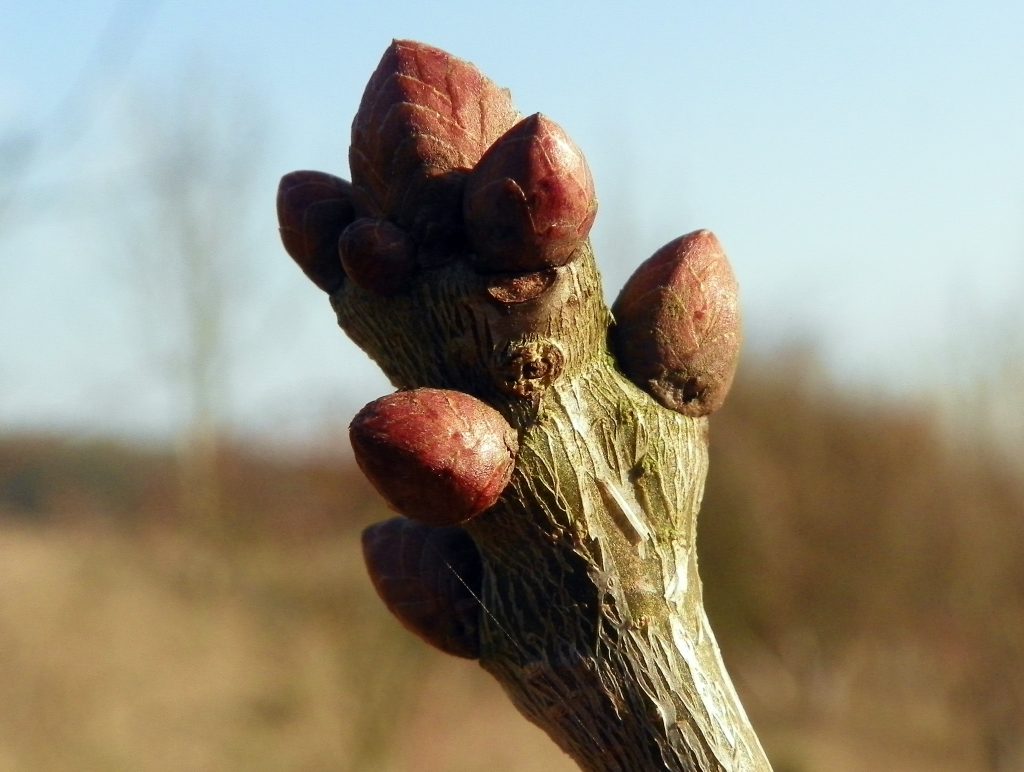
Buds of the English oak. [Photograph: https://commons.wikimedia.org/wiki/File:English_Oak_(Quercus_robur)_buds_(8535459373).jpg]
In is late November and the cells that will divide to make the new leaf are protected safely inside the scales of the bud. Early in March, when the days warm and get longer, stem cells within the bud start to divide many times, producing all of the cells of the new leaf. To start with, the cells are very small and all look the same.

Emerging leaves. [Photograph: shutterstock_244078297, licensed by NI]
Soon, the cells take up water and get much larger. They escape the protection of the bud and the new leaf emerges. The new cells no longer look the same: they are on different journeys of development, becoming all of the different cells and tissues that make up the leaf.


New leaves. [Photograph: Stutterstock 671376856, licensed by NI]
The leaf is a factory for making sugar. Like any factory, it has a source of energy and transport systems to get the raw materials into the factory.  It also moves the manufactured sugar out to the places in the plant where it is needed. The heart of the factory is the production line where sugar is made. These are called chloroplasts and the leaf has millions of them, all making sugar whenever the sun shines. The Spring and Summer are sugar making seasons.

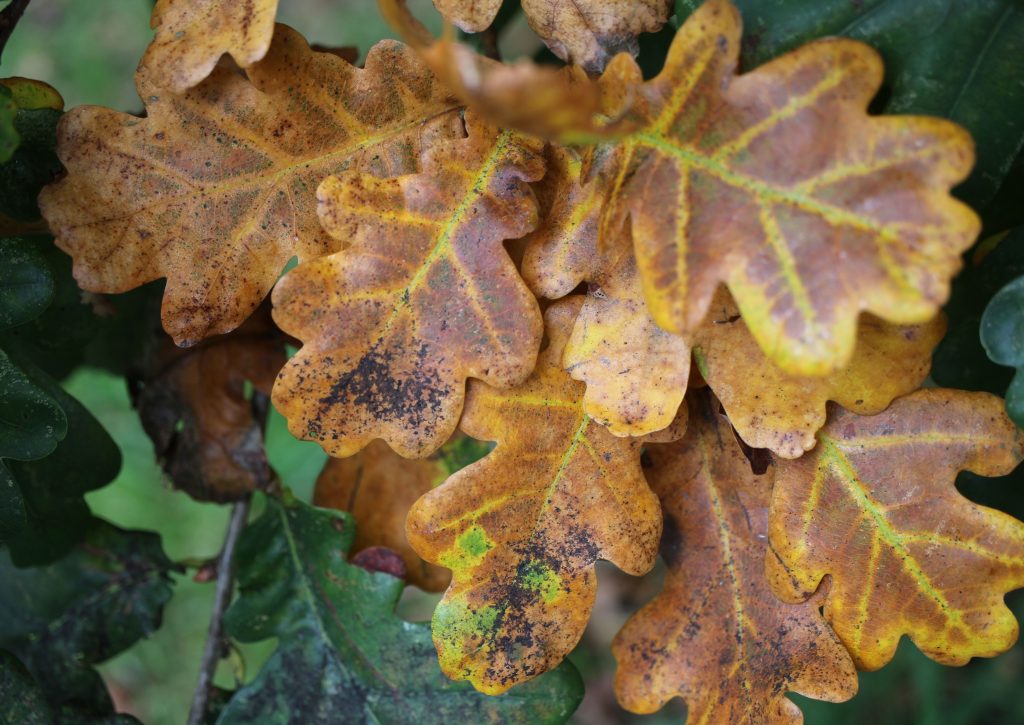
Oak leaves in autumn. [Photograph: Neil Ingram]
Gradually, in the autumn, when the days get cooler and shorter, the sugar factories are shut down and abandoned. The chloroplasts lie in ruins as everything useful is recycled back into the branches of the tree. All that remain are the frameworks of cell walls, turning brown as they dry in the autumn air.


Dead leaves
Dead leaves. [Photograph: Neil Ingram]
Finally, the oak tree makes a special layer of cells that separates the old leaf from the stem, and the leaf is ready to fall when the wind blows strongly. The fallen leaves are not wasted, becoming energy stores for the organisms that feed on them. Next year’s buds are forming and wait for spring and the production of new leaves.

If leaves are factories form making sugar, then trees are factories for making leaves.

Everything has its own season in Nowhere Wood.

  1. Think about how the leaf is a factory for making sugar. Where does its energy store come from? How do the raw materials get to the production line?
  2. The production of leaves is sustainable in Nowhere Wood. What do you think this sentence means?

Notes on the story

Subterranean superheroes

Life is a relay race

This story continues the adventures of the ferns in Nowhere Wood. The first part of the story is Climbing the walls.

The genome of the fern contains essential information that the fern needs to grow and  make new cells. At different times the fern produces spores, sperm and eggs and the two forms of the plant. The genome contains information on the growth of each of these stages.

The information in the genome is the same in every cell of the fern because an identical copy of the genome is found inside the nuclei of all the cells of this fern at every stage of its life.

The genome is found in the nucleus of each cell.

Fern chromosomes

The genome is divided between a number of chromosomes. The diagram shows the genome of the Adder’s tongue fern. It has about 1440 chromosomes. This is the largest number of chromosomes of any organism in the world!

Fern genomes are larger than the genomes of other organisms, because they contain the information the fern needs to grow spores, sperms and eggs as well as the two forms of plant.

The genome contains the secrets of how to be a fern and how to move forward in the adventure. This information has been copied and passed on to each generation of ferns, ever since the first ferns evolved about 390 million years ago.

Life is like a relay race: genetic information is passed on from one generation to the next in the genomes of sperms, eggs and other gametes.

These ferns are having risky and uncertain adventures in time as well as space. If the secret information is not passed on correctly, then the species may become extinct. History shows us that most species that have ever lived on Earth are now extinct.

    1. Why do you think it is essential that the genetic information from parents to offspring is copied accurately?
    2. Why do you think the fern genome is so large, compared with other types of plant?

Notes on the story

All change!

Climbing the walls

Hart’s tongue fern growing on the sandstone walls of Nowhere Wood. [Photograph: Neil Ingram]
A hundred years ago, Nowhere Wood was a sandstone quarry, and there is still a cliff face at the end of the wood.
How can this hart’s tongue fern grow on a vertical cliff face about two metres from the ground.

That is quite an adventure in time and space. This story explains how this fern can climb walls.


Ferns are an ancient group of plants, first appearing on Earth about 390 million years ago. That’s about 260 million years before the emergence of flowering plants.

Spores on the under surface of a fern leaf. Nowhere Wood. [Photograph: Neil Ingram]
Like fungi, another ancient group, ferns produce spores. They are the brown dots on the underside of this fern leaf. Spores are light and float in the air like particles of dust.

One spore floats up to a small crack in the rock face. Rainwater and the decaying remains of a leaf have formed a sticky, jam-like, humus inside the crack.  The spore sticks to the humus and germinates, developing into a tiny little plant, about 10 mm long.

Drawing of a gametophyte of a fern. [Image: https://picryl.com/media/prothallus-gametophyte-0bab1a ]
This is a fern, but it is not the mature adult form. It has tiny roots that grow into the humus, drawing nutrients from it.
This small plant is called a gametophyte because it makes gametes for sexual reproduction. Gametes are sperm and egg cells. 


These gametes will come together to make the adult fern on the surface of the tiny gametophyte.

Sperm from ferns. [Image: https://upload.wikimedia.org/wikipedia/commons/d/d7/Fern_sperm.jpg]
The gametophyte makes many small sperm that swim in the water on the surface of the plant. They swim towards eggs, which are much larger. This photograph shows a fern sperm fertilising a fern egg.

The sperm and the egg join together. A single cell is produced that will grow into the adult fern. Eventually this fern will make spores of its own.

This may sound like a long-winded and complicated adventure, but it seems to work well, because there are so many ferns in Nowhere Wood.

The fern exists in several different forms during its adventure: spores, eggs, sperm, gametophyte and adult plants. What do they have in common?

Each of these forms is made of one or many cells. Each cell contains a nucleus, and inside each nucleus is a genome. Genomes contain information. The information in the genome is the same in all of the different forms of the fern.

The genome contains the secrets of how to be a fern and how to move forward in the next step of the adventure.

  1. The fern exist in several different forms during its adventure: spores, eggs, sperm, gametophyte and adult plants. Think why is important that the genome in every form is the same? 

Notes on the story

Life is a relay race

Moving things on

The weather is warm and wet in Nowhere Wood.

These are perfect conditions for growing the fungi that spread  everywhere throughout the soil of Nowhere Wood. Fungi are Nature’s recyclers, feeding on the fallen leaves, fruits and wood.

Mycelia of fungi. [Photograph: Neil Ingram]
Fungi feed on the wood of the dead oak trees, turning it into nutrients that provide energy and chemicals needed  to grow new fungal cells.  (These cells form long threads called hyphae). Some fungi can spread out over really large areas, several kilometres wide.

At this time of the year, the fungi are busy ‘ being’.

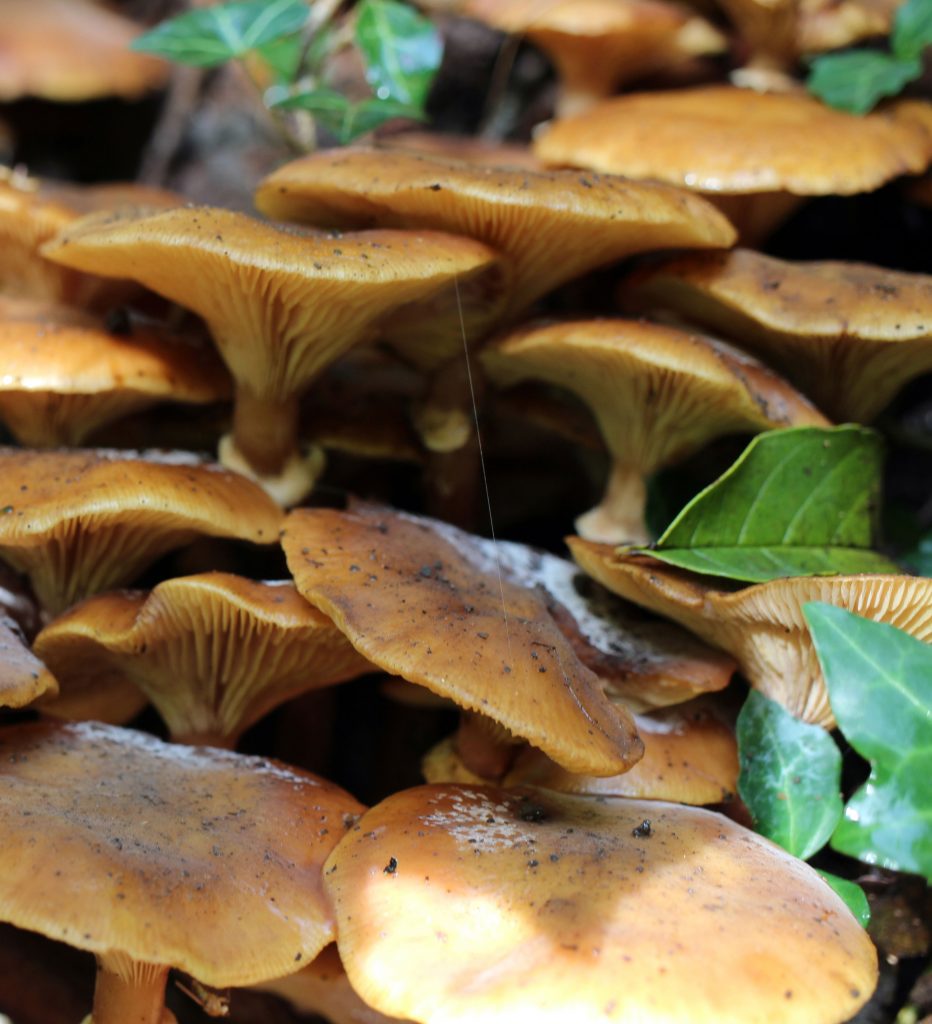
Fungi in Nowhere Wood. [Photograph: Neil Ingram]
Then one night, silently and without warning, the fungi do something else.

They produce structures that we call “mushrooms” **.

Mushrooms are  fruiting bodies. They produce thousands of tiny spores.

Spores are small and light. They are carried on air currents to new places in Nowhere Wood, where they will germinate and grow into new hyphae.

Fungus in Nowhere Wood. [Photograph: Neil Ingram]
Spores have often been found in the filters of jet aircraft flying at the edge of the atmosphere, so some spores can travel right round the world. When fungi produce spores they are ‘becoming’ something new: small, light and mobile versions of themselves.

Decaying fungus in Nowhere Wood. [Photograph: Neil ingram]
Then, almost as soon as they arrive, it is all over. The fruiting bodies die and become food for other fungi and bacteria in Nowhere Wood.

This is how it is. The precious molecules are used, recycled and become part of the growth of new organisms. Nothing is ever wasted.

  1. Nearly all of the atoms present on Earth when life began to evolve about 3.7 billion years ago are still found on Earth today. Many of them are found locked inside living organisms. Sooner or later, all of these organisms will die. Imagine what life would be like without Nature’s recyclers.
  2. You are a collection of recycled atoms. Think about how carbon atoms enter and leave your body. [Hint, carbon atoms are found in carbohydrates and in carbon dioxide.]

You can read more about ‘being and becoming’ here.


**Some mushrooms are good to eat, others are really poisonous and can kill us. It is hard to tell them apart unless you are an expert, so it is sensible not to touch or eat any mushrooms you find in a wood.

Notes on the story

Climbing the walls

Squirrel wars

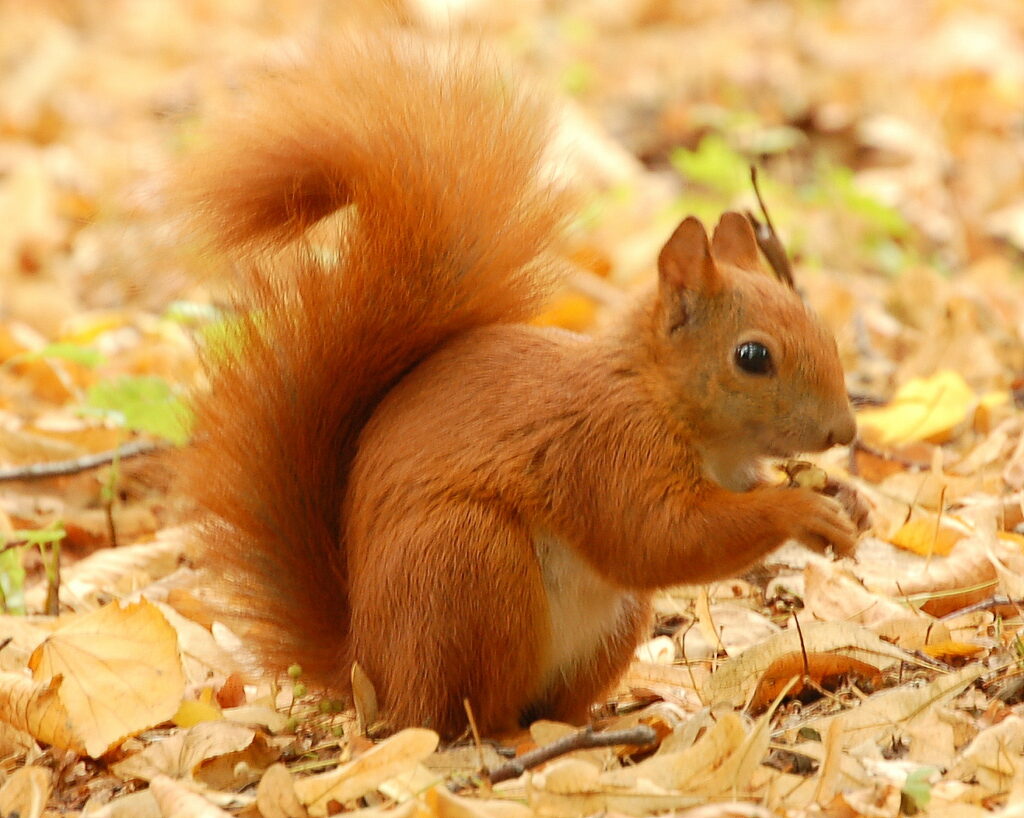
One hundred and fifty years ago, the oak woods near Nowhere would have been home to red squirrels. Now they have all disappeared.

A red squirrel. [Photograph: https://upload.wikimedia.org/wikipedia/commons/e/e1/Red_Squirrel_-_Lazienki.JPG]
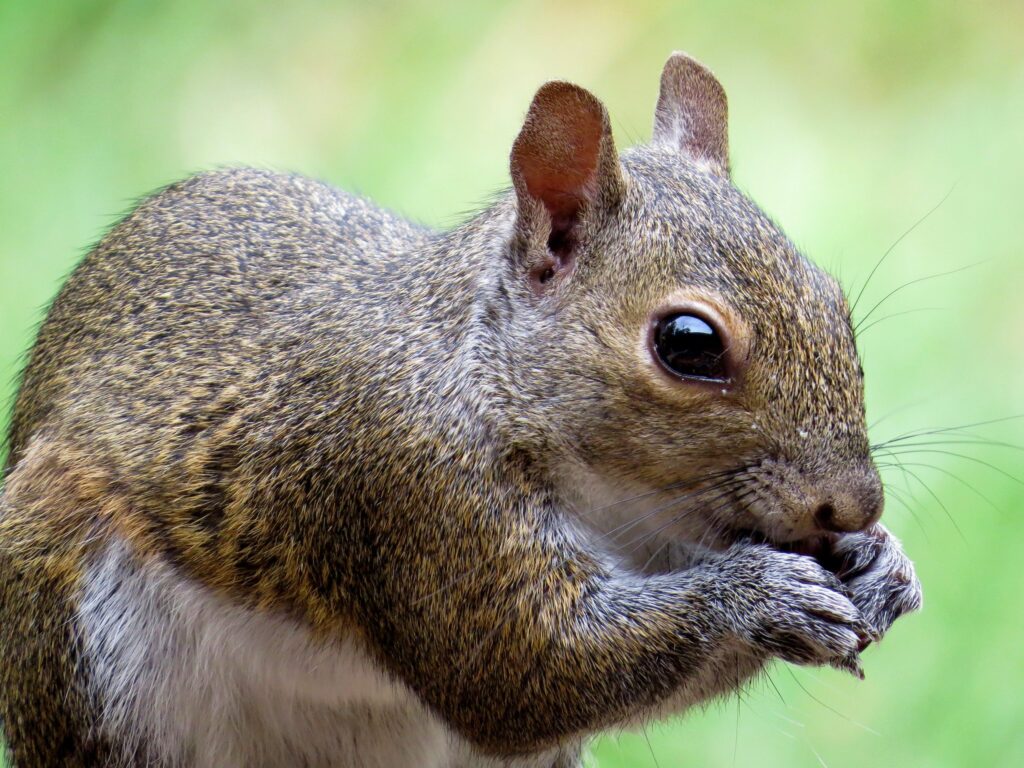
The red squirrels have been replaced by grey squirrels that were introduced into the UK from the United States in the 1870s.

Grey squirrels spread to nearly all parts of the UK, replacing the red squirrels wherever they went. Now red squirrels are only found in a few places, where they are protected.

Grey squirrels are 60% better at digesting oak acorns than red squirrels, which seem to prefer hazel nuts. Oak acorns are much more common in Nowhere Wood than hazel nuts, and this favours the grey squirrel.

Grey Squirrel. [Photograph: Gary Helm, https://www.flickr.com/photos/ghelm/8645487905]
The success of grey squirrels at surviving and breeding in Nowhere Wood is due to the production of acorns, which varies from year to year.

Survival is a risky journey for any squirrel: the arrival of new competitors or interruptions to the food supply can pose real challenges.


Their lives are  adventures.

The word ‘adventure’ has two parts:

Ad means moving towards something.

Venture means attempting something dangerous or difficult, that is risky, with no guarantee of success.

Put the two together and you get the idea that the lives of all living organisms are risky journeys into the future, with no guarantee of success or survival.

If you like, you can think of life as:

organisms having adventures in time and space

  1. Think about the squirrels and the oak trees. In what ways are their lives adventures?  [Hint: think about what the word adventure means.]


Notes on the story

Moving things on