

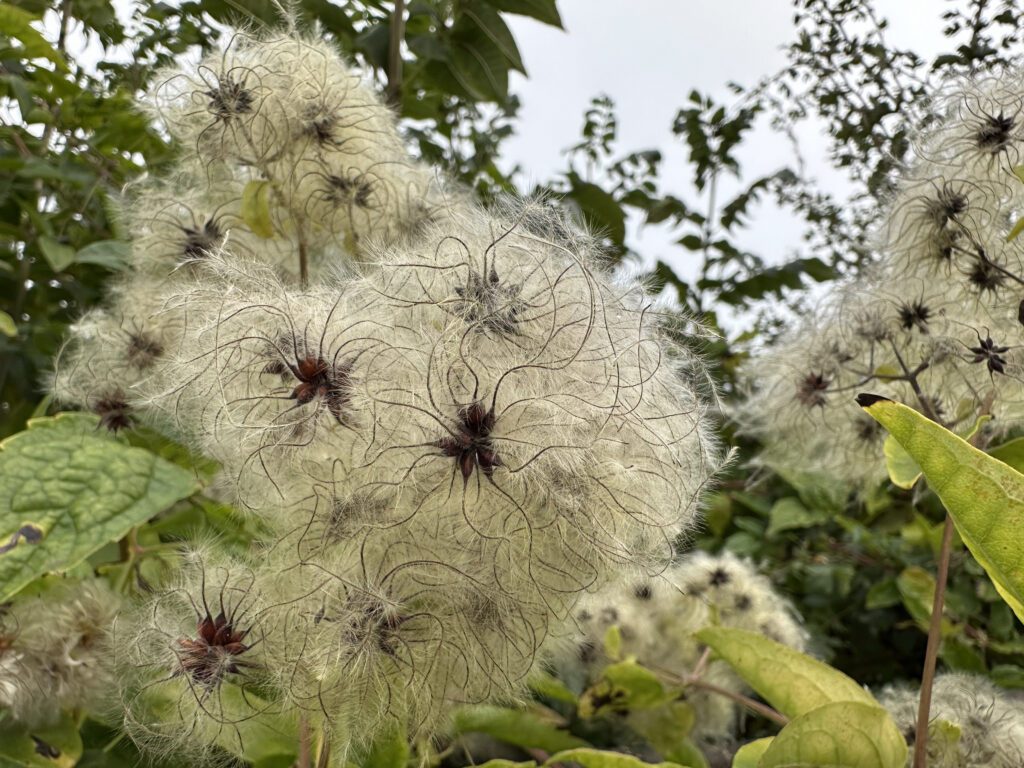
A traveller on the pathways, weary after many miles of walking, looks up into the hedgerow and sees the silky feathery threads surrounding the dark fruits. The sight brings the traveller an uplifting joy, at least according to John Gerard in his 1597 herbal. He called it ‘travellers joy’.
It has other names. It is ‘old man’s beard’ in Hampshire and Wiltshire and called the delightful ‘Withywine’ in Somerset. Its formal name is Clematis vitalba and it has distinctive flowers and fruits.

Vitalba means ‘vital’, full of energy. It certainly grows rapidly, especially in new habitats, where it can form dense thickets. This is the secret of its success as a coloniser of hedges and woodlands.
But, its rope-like branches can choke and strangle the trees over which it invades. Little wonder that frustrated woodsmen have given it a range of darker names, such as ‘devil’s twister and ‘devil’s guts’.
Trick or treat? It is halloween, and it is for you to decide.
- Given the large number of local names for plant species, why was it important to create a recognised system of formal names?

Leave a Reply